The key facts
- The EBRD's project portfolio in Uzbekistan has exceeded $7 billion, and operations surpassed $1 billion for the first time in 2025
- A sovereign loan of up to $57.69 million is under consideration for a 500/220/110/10 kV substation in the Kosonsoy district of the Namangan region
- Under a decree of April 20, 2026, the EBRD is to purchase a 15% stake in Asakabank; the deal has not yet been completed
Meeting on the sidelines of COP31
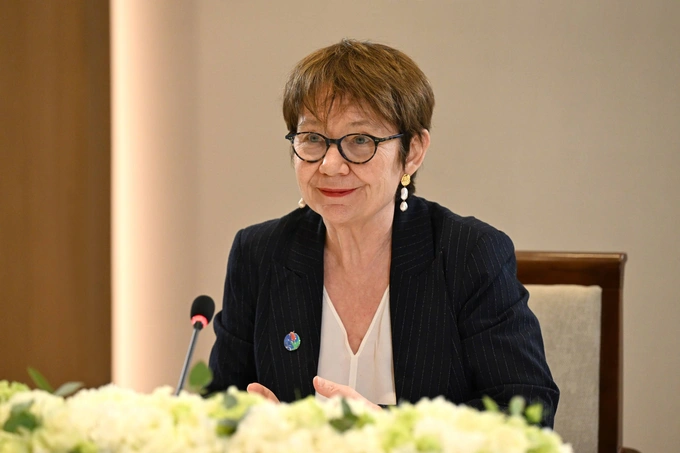
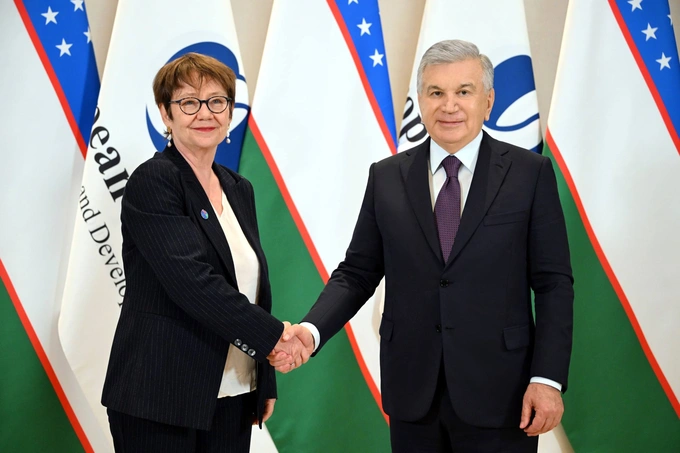
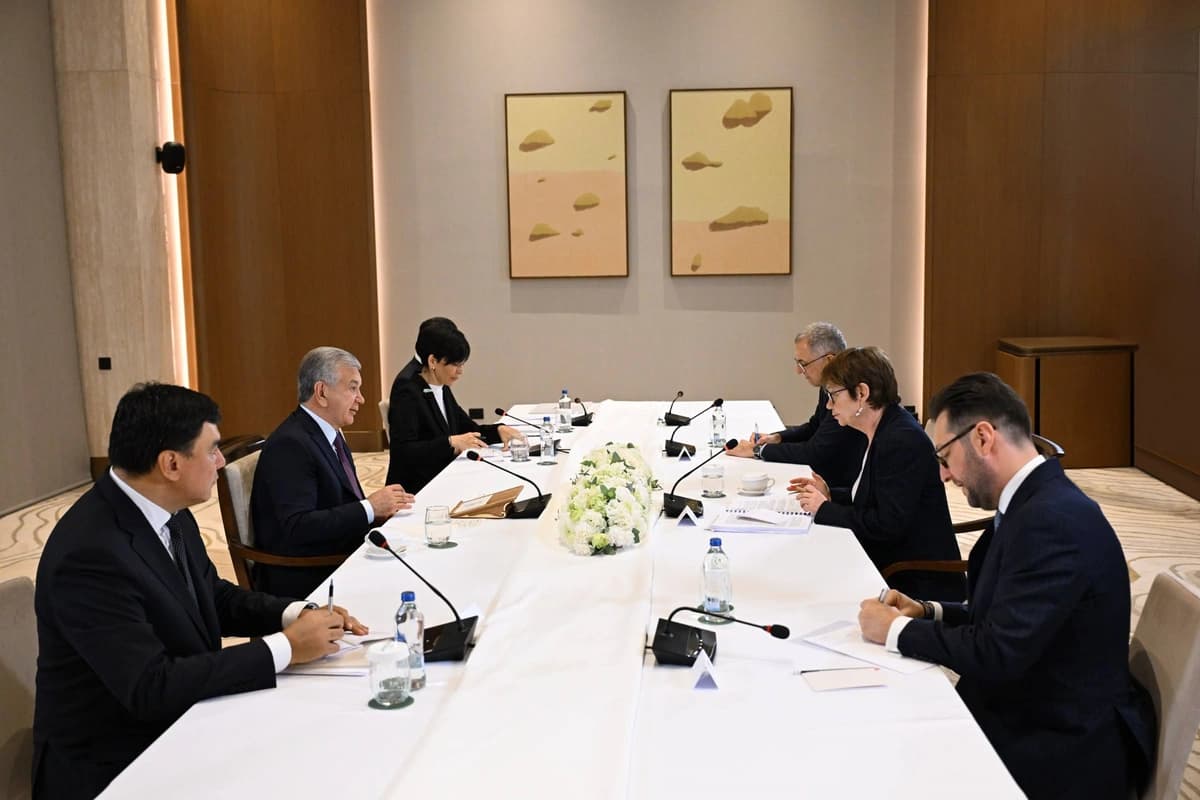
On November 10, President of Uzbekistan Shavkat Mirziyoyev and President of the European Bank for Reconstruction and Development Odile Renaud-Basso held a meeting on the sidelines of the COP31 climate summit in Antalya. The main topic was new investment projects for 2027. Uzbekistan has remained the EBRD's largest financial partner in the region for six years: the project portfolio exceeds $7 billion, and the volume of operations in 2025 exceeded $1 billion for the first time. According to the presidential press service, about 60% of the bank's investments in Uzbekistan go to 'green' economy projects.
Substation in the Namangan region
One of the topics discussed was an energy project in the Namangan region. According to EBRD documents, it concerns the construction of a new 500/220/110/10 kV electrical substation in the Kosonsoy district. The bank is considering providing a sovereign loan of up to $57.69 million; the project is being implemented by JSC 'Uzbekistan Milliy Electr Tarmoqlari.' The substation is expected to improve the reliability of the region's power supply, reduce electricity transmission losses, and allow new generating capacity, including renewable sources, to be connected to the grid. As of mid-November, the project was awaiting final EBRD approval: the review date is listed as December 2, 2026, so no signed loan agreement has yet been announced.
Privatization of Asakabank
The meeting also discussed the privatization of state-owned banks, in particular Asakabank. A presidential decree of April 20, 2026, approved additional measures to prepare the bank for privatization: the Ministry of Economy and Finance, the EBRD, and the bank itself are to cooperate in improving operational efficiency, enhancing asset quality, and preparing for the sale of a stake. The document records an agreement for the EBRD to purchase 15% of the bank's shares. The government was tasked with valuing the assets and agreeing on the terms of the bank's participation in its capital; by September 1, 2026, the ministry, together with Asakabank, was to submit proposals on the sale price of the state's 15% stake and the key terms of the investment agreement. The decree also provides for an additional injection into the bank's charter capital equivalent to $95 million from the budget in 2026, as well as measures for dealing with problem assets. However, the materials on the outcomes of the Antalya meeting did not report the completion of the EBRD's purchase of a stake in Asakabank.
ANORA agri-platform and the financial center
Another area of cooperation is the investment platform ANORA (Agrifood Investment Opportunities for Resilient Agriculture), launched in June 2026 at the Tashkent International Investment Forum by the Ministry of Agriculture, the EBRD, and international partners. Its goal is to attract up to $1.5 billion in investment in agriculture by 2030 by bringing together government agencies, international financial institutions, climate funds, and private investors. Key areas include water-saving technologies, irrigation modernization, storage and processing of agricultural products, digitalization of the sector, and increasing resilience to climate change. At the same time, the platform's stated investment potential does not mean that all funds have already been raised or reserved for specific projects.
Financial center and hospital projects
Among the cooperation priorities for 2027, the launch of the Tashkent International Financial Center was named. In addition, according to the program, Mirziyoyev proposed that the EBRD consider participating in financing infrastructure projects in New Tashkent and a multidisciplinary hospital in the Fergana region on the basis of public-private partnership. According to the EBRD project database, the bank is considering providing an intermediate loan of up to $38 million for the construction, equipping, and subsequent maintenance of an 800-bed multidisciplinary hospital. The project is being implemented under a 23-year public-private partnership agreement with the Ministry of Health; the hospital is expected to provide high-tech care, including cardiac surgery, neurosurgery, and organ transplantation. As of November 16, the possible financing was also awaiting final approval. Separately, preparations were discussed for the next meeting of the Council of Foreign Investors under the president, scheduled for 2027.
Context of cooperation
The EBRD has been operating in Uzbekistan since 1992, and after resuming its activities in 2017, it significantly expanded investments in energy, infrastructure, the financial sector, and private entrepreneurship. The bank's current country strategy for 2024–2029 sets out three priorities: developing a low-carbon economy and efficient use of resources, supporting the private sector and improving the business environment, and developing transport and energy infrastructure. A separate emphasis is placed on reforming state-owned enterprises and banks, facilitating privatization, and expanding public-private partnership mechanisms — precisely the topics that formed the basis of the discussions in Antalya.