The key facts
- Uzbekistan took 43rd place in CCPI 2027, rising 10 positions in a year
- The country's best result over the entire period of participation in the ranking since 2024
- Experts noted the growth of solar and wind energy, but criticized dependence on gas and weak grid development
A notable jump in the climate ranking
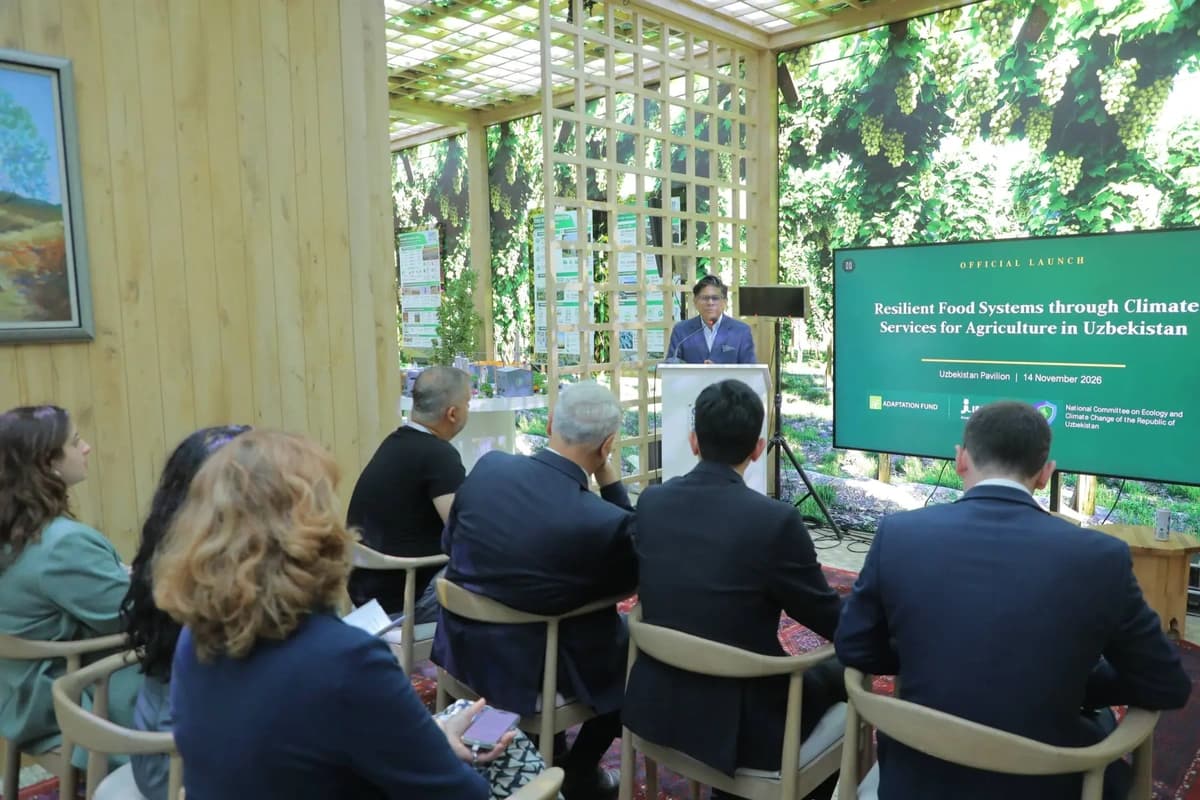
Uzbekistan took 43rd place in the international Climate Change Performance Index (CCPI 2027), improving its position by 10 points compared with the previous year. According to the National Committee for Ecology and Climate Change, this is the country's best result over the entire period of its participation in the ranking.
Dynamics since 2024
Uzbekistan was first included in the CCPI in 2024 in 48th place. In 2025 the country was in 54th position, and in 2026 in 53rd. Thus, over the past year the country rose by 10 positions, and compared with its first year of participation it improved its standing by five points. The leaders of CCPI 2027 were Denmark (4th place), Lithuania (5th), Luxembourg (6th), the United Kingdom (7th) and Morocco (8th); the top three spots traditionally remained unoccupied, since no country received a sufficiently high score. At the bottom of the list are Iran (68th), the USA (67th), Russia (66th), Saudi Arabia (65th) and the UAE (64th).
What the experts noted
The ranking covers countries accounting for more than 90% of global greenhouse gas emissions and evaluates four areas: emissions, the development of renewable energy, energy consumption and national climate policy. CCPI experts positively assessed the situation with 'green' energy in Uzbekistan: thanks to private investment and the support of international financial institutions, the construction of large solar and wind power plants has accelerated. At the same time, specialists pointed out that the development of power grids and energy storage systems is lagging behind the pace of commissioning new capacity.
Criticism and recommendations
Among the main problems, the authors of the study highlighted the country's continuing dependence on natural gas: gas production and infrastructure continue to develop, and there is no long-term plan to reduce the use of fossil fuels and subsidies for them. They also noted the high energy intensity of the economy and insufficient implementation of certain climate strategies. Experts called the raising of commitments a positive step: Uzbekistan intends by 2035 to reduce greenhouse gas emissions per unit of GDP by 50% relative to the 2010 level. Specialists called for developing concrete sectoral plans to achieve this goal, completing the preparation of a long-term low-carbon development strategy to 2055, and increasing investment in energy infrastructure.