The key facts
- El-Sisi announced an economic program for 2027–2030, to be presented in December
- Targets: industry at 20% of GDP by 2030, private investment at 67% of total investment
- Egypt expects Cypriot gas for LNG exports to Europe by 2028 and 45% of electricity from renewable sources
Egypt's president addressed investors at the Cairo forum
Egyptian President Abdel Fattah El-Sisi on Tuesday called for increased inflows of foreign investment, presenting business reforms at a World Economic Forum meeting in Cairo, Euronews reports. On Tuesday, discussions were held with the participation of representatives of about 80 organizations, including major companies and international financial institutions; this is part of a two-day country strategy meeting on Egypt, according to the presidential office.
The 2027–2030 program and results achieved
El-Sisi said that in December Egypt will present an economic program for 2027–2030 aimed at raising productivity and expanding the role of the private sector. Among the results already achieved, he cited a reduction in the average time for customs clearance of goods to two days and the move to a flexible exchange rate, which, he said, has allowed foreign investors to repatriate profits — a factor capable of encouraging companies to invest in Egypt, where their projects create jobs, business for local suppliers, and tax revenues. The president also gave figures: economic growth of 5.1% in the 2025–26 fiscal year and net foreign direct investment of $18 billion (€16.4 billion).
Targets for industry and the private sector
Under its industrial strategy, Egypt aims to raise industry's share to 20% of economic output by 2030, and the share of private investment to 67% of total investment, according to a cabinet statement issued on Monday. Minister of Investment and Foreign Trade Mohamed Farid Saleh, in an article for the World Economic Forum, outlined a foreign direct investment strategy developed jointly with the World Bank: initial priorities are IT services, solar and wind energy, food processing, apparel, and transport, while further reforms will cover data centers and green hydrogen. According to him, simplified licensing and online government services will speed up project launches; under the existing 'golden license' scheme, eligible projects can receive a single cabinet approval for construction and operation.
Energy, the Suez Canal, and the context of debt pressure
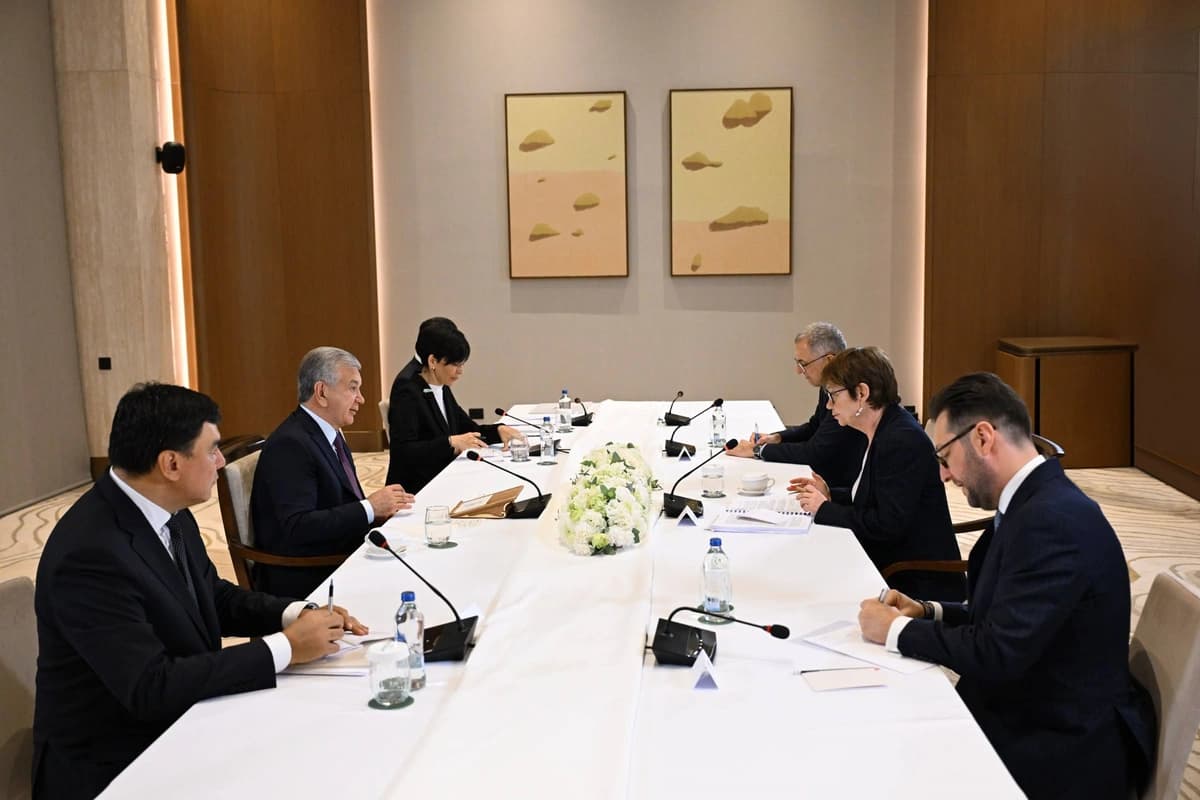
El-Sisi reiterated plans to supply Cypriot gas to Egypt's liquefaction plants at Idku and Damietta for export to Europe by 2028, as well as the goal of obtaining 45% of electricity from renewable sources by 2028, with expanded electricity interconnections with neighbors and Europe. Shipping through the Suez Canal is improving, he said; he again estimated Egypt's losses in canal revenues in recent years at about $20 billion (€18.2 billion). Separately, he discussed with EBRD President Odile Renaud-Basso the possibility of the bank participating in creating new investment zones, but no financing agreements were mentioned in the presidential office's statement.
Context: IMF pressure
The investment campaign is unfolding against the backdrop of the need to reduce debt and open the economy to the private sector. In an August report, the International Monetary Fund warned that high debt and borrowing needs make the country vulnerable to economic shocks, and that the sale of state assets, in the fund's assessment, is proceeding more slowly than expected. Thus, the announced 2027–2030 program and the targets for private investment align with the areas in which the IMF pointed to risks.