The key facts
- The strike on the night of November 17 was the second in a row: on November 16, traffic on the bridge was halted for almost 17 hours
- Zelensky called the operation the seventh, final stage of preparation lasting several weeks, involving 11 weapons systems
- Russia's Transport Ministry confirmed the halt of road and rail traffic but not the collapse; rail traffic was later partially restored
What happened
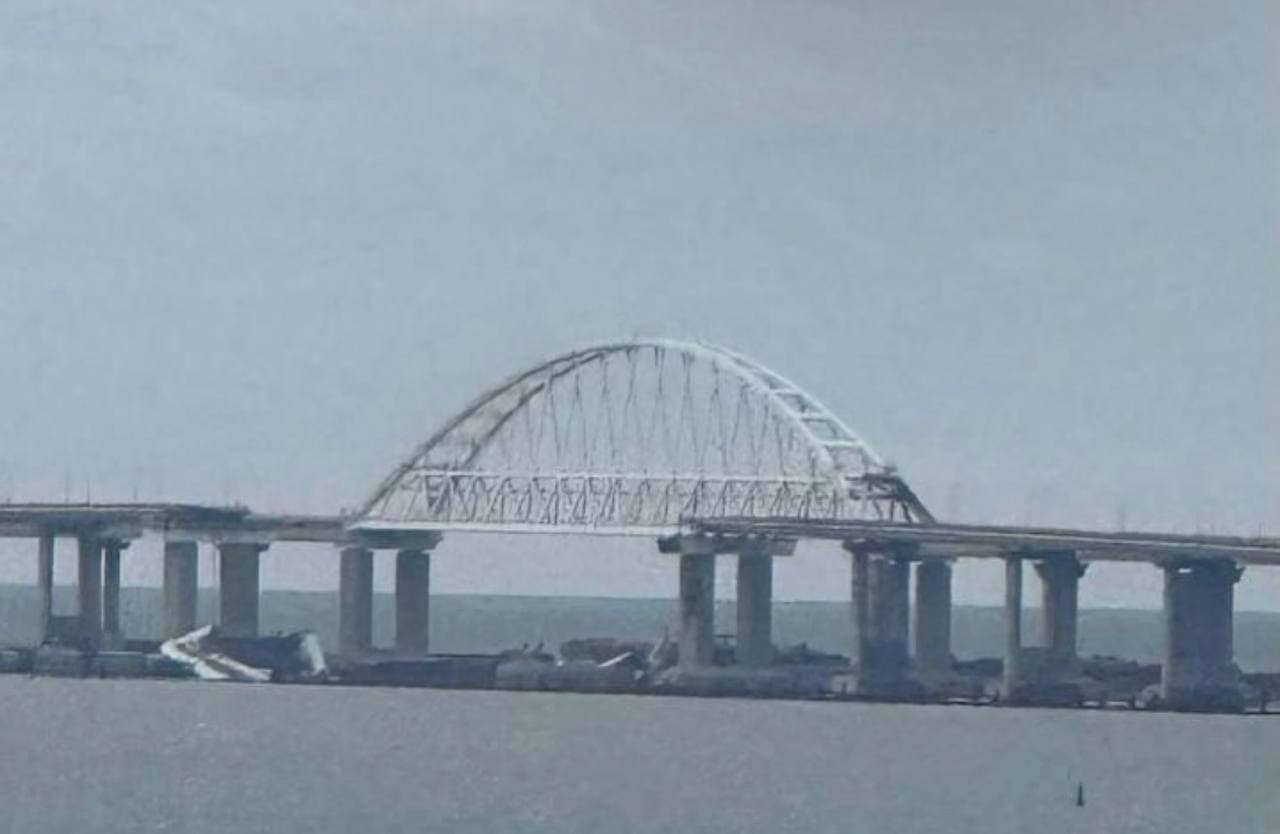
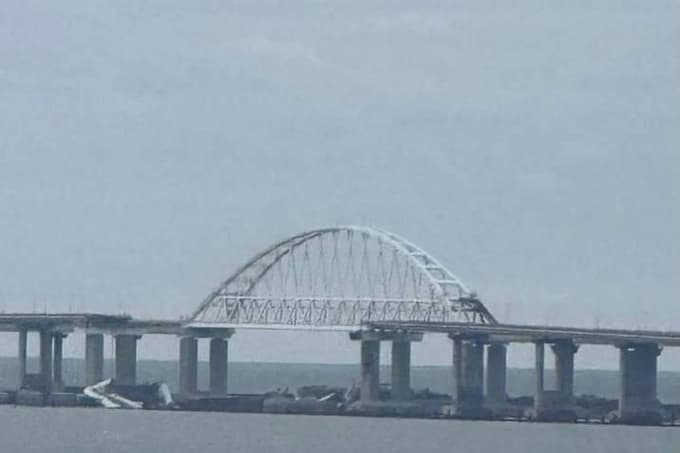
On the night of November 17, 2026, Ukrainian forces struck the roadway and railway sections of the Crimean Bridge — this was the second attack in a row: the night before, on the night of November 16, drones hit the bridge, traffic was halted for almost 17 hours, and the arch above the roadway sustained visible damage, but the structure held. Ukrainian President Volodymyr Zelensky called the strike the final, seventh stage of an operation that the SBU developed and coordinated with the General Staff of the Armed Forces of Ukraine over several weeks. According to him, on the way to the target, Ukrainian forces gradually destroyed air defense systems, radars, electronic warfare equipment and other facilities protecting the crossing.
How the operation was carried out
Zelensky listed 11 weapons systems used in the operation: Dovbush, Vendetta, Da Vinci, Sichen, Mich-2000, Ruta, Palianytsia, An-197, FP-1, FP-5 Flamingo and R-360 Neptune. In the final stage, Palianytsia drones struck the roadway, while Neptune missiles, Ruta drones and the FP-5 struck the railway section. Robert Brovdi (Madyar), commander of the Unmanned Systems Forces of the Armed Forces of Ukraine, called the operation a joint one: deep-strike units of the Navy, Missile Forces and artillery, the 7th center of the 414th brigade Madyar's Birds, the 1st center of the State Security Service and the SBU took part. Zelensky did not specify how many drones and missiles were launched and how many reached their targets. RUSI expert Justin Bronk suggested that the Flamingo missile may have been modified for remote control, and that its heavy warhead is suitable for striking reinforced-concrete spans and piers.
Condition of the bridge: conflicting assessments
Footage circulated on Telegram channels shows that of the two arches only one remains: the roadway arch about 227 m long and a section of the roadway approximately 200 m long collapsed into the sea. The SBU stated that one of the arches and a section of the road were destroyed. Russia's Transport Ministry confirmed the halt of road and rail traffic after the second day of attacks, but did not acknowledge the collapse; later the ministry reported the restoration of rail traffic on one track. In the evening, the ministry announced that at a meeting of the government commission, measures had been set out for assessing the damage and starting construction work, as well as issues of delivering cargo to Crimea via alternative routes. David MacKenzie, an engineer at COWI, estimated that restoring full road traffic would take more than a year, noting that this time the most critical part of the structure had been hit. Russia's Investigative Committee called the attack a terrorist act and opened a case under Article 205 of the Criminal Code; Putin's press secretary Dmitry Peskov said the bridge 'will be restored and will be even better than before'.
Why the bridge matters
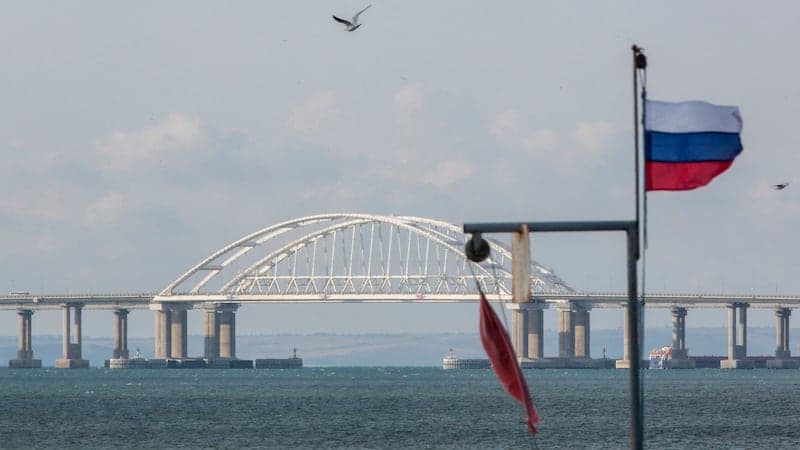
The 19-kilometer bridge across the Kerch Strait connects Krasnodar Krai with occupied Crimea; its construction cost about $4 billion, traffic opened in 2018, and passenger trains in 2019. The bridge serves as a key supply route for Russian forces in southern Ukraine and as a symbolic project of Putin's after the 2014 annexation of Crimea. This is the third major strike on the crossing: in October 2022, a truck explosion brought down two spans, and in the summer of 2023 the bridge was attacked by sea drones, but both times the structure was restored. According to BBC Verify, there is now an increased risk of a serious transport and logistics crisis for Crimea: Ukraine systematically attacks the land corridor through the Zaporizhzhia and Kherson regions in the Chonhar area, the ferry crossing has limited capacity, and sea transport is vulnerable to Ukrainian drones. According to the BBC, debris from the arch could block the shipping channel, complicating the passage of large vessels and the operation of ports on the Sea of Azov, including Mariupol and Berdiansk. Zelensky called the strike a response to Russia's attacks on Ukrainian infrastructure, including bridges in Kyiv, Zaporizhzhia, Dnipro and Odesa region.