The key facts
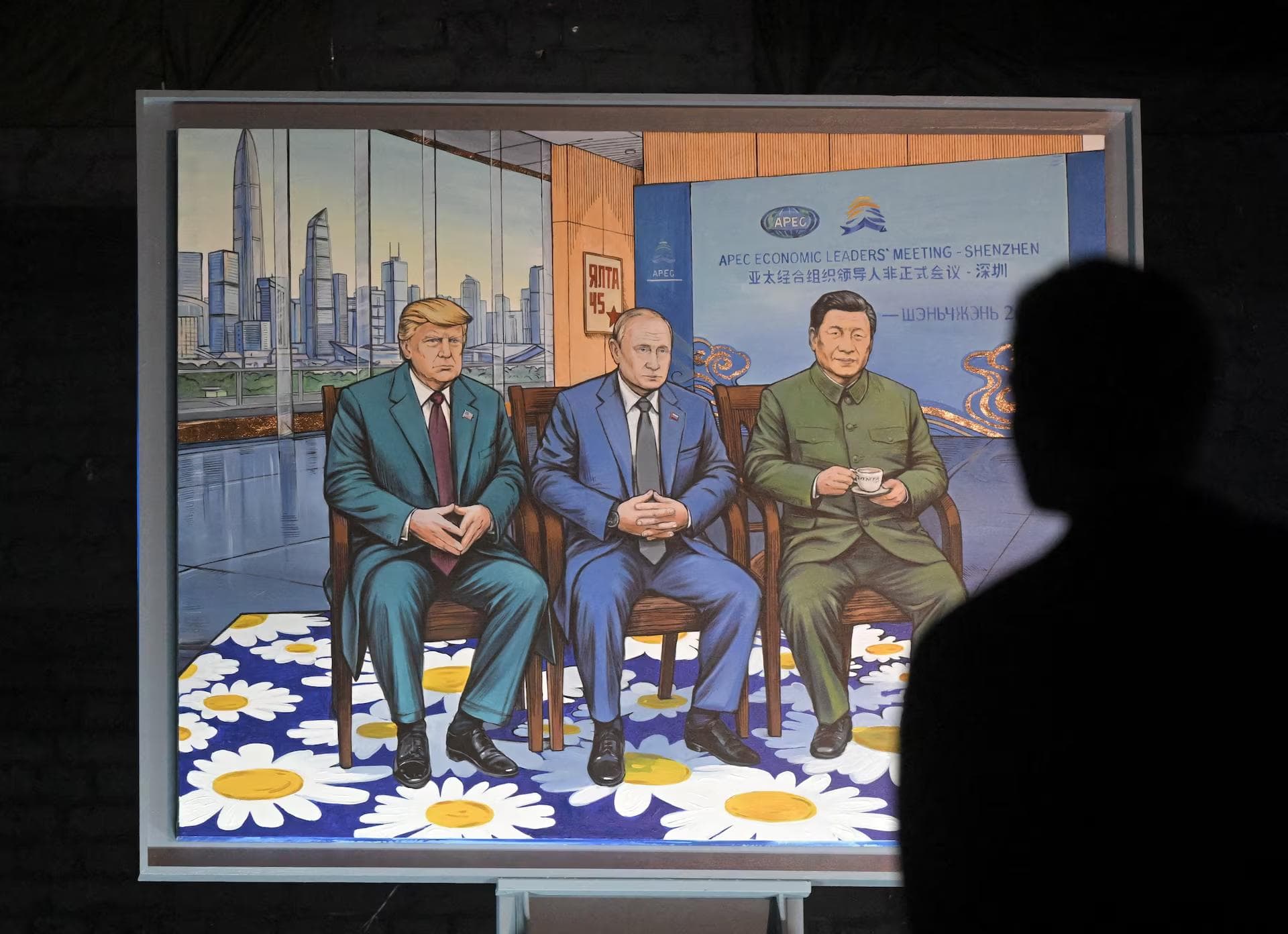
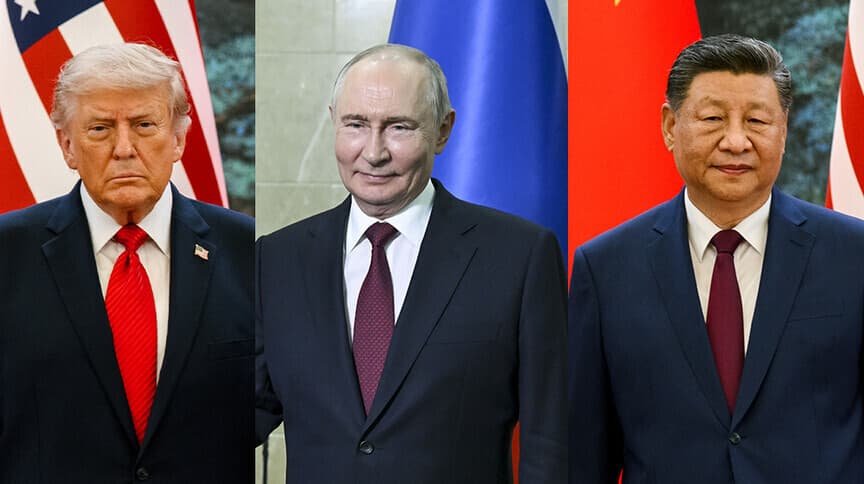
- The trilateral meeting of Xi Jinping, Donald Trump and Vladimir Putin is scheduled for Thursday on the sidelines of the APEC summit in Shenzhen (November 18–19)
- Experts do not expect breakthroughs: the likely outcome is an extension of the US-China trade truce
- Russia hopes for recognition, the US for talks on arms control, and China for the status of host of the meeting
A historic trio on the sidelines of APEC
The leaders of China, the US and Russia will hold a trilateral meeting for the first time on the sidelines of the Asia-Pacific Economic Cooperation (APEC) summit, which will take place on November 18–19 in Shenzhen. In addition, Donald Trump will hold separate talks with Xi Jinping, and on Tuesday he said he was ready to meet Vladimir Putin at the summit 'if the opportunity arises.' Deutsche Welle reports.
The US and China: keeping the truce
Several experts interviewed by DW do not expect breakthroughs on either trade or technology: a more realistic shared goal is to preserve the current trade truce and prevent further deterioration of bilateral relations. Patricia Kim of the Brookings Institution believes that neither leader seeks to substantially expand the agenda, and over the next two years she expects 'neither uncontrolled escalation nor a fundamental improvement, but a continuation of transactional détente.'
What exactly could be agreed
Hinrich Foundation analyst Jia Hui Tee expects that Trump and Xi may make progress on mutually lowering tariffs on goods worth $30 billion from each side: the list of products has been announced but no timeline has been set, and setting a schedule would be an 'easy win' for both sides. Washington wants to speed up China's purchases of American agricultural products and increase exports of rare earth metals from the PRC. In Tee's view, Beijing will be cautious about fulfilling its commitments, since after the midterm elections Trump is weakened domestically, where Democrats resist his tariffs. Neither side, she notes, will easily give up its trump cards — rare earth exports and control over technology exports. Since a meeting of the two leaders is expected at the G20 summit in Miami in December, contentious issues can be postponed and the truce extended.
Three leaders — three agendas
In the words of Alicja Bachulska of the European Council on Foreign Relations, 'Russia wants recognition, the US wants arms control, and China wants status without obligations'; she expects each leader merely to restate their positions rather than offer real solutions. Yun Sun of the Stimson Center notes that Moscow wants to create the impression that Washington is willing to negotiate with Russia, which would undermine the confidence of Europe and Ukraine; Trump wants trilateral talks on nuclear issues, while for Beijing the very image of a country hosting an unprecedented meeting matters. Zhang Lun of CY Cergy Paris University adds that Trump is weakened both at home — after heavy Republican losses in the midterm elections he risks becoming a 'lame duck' — and on the international stage: the rift with allies, difficulties in the war with Iran and the weakening of the US-led order have reduced his levers of influence, increasing his interest in diplomatic victories and in cooperation with Xi.
Ukraine and Iran: why no breakthroughs are expected
On Ukraine, Moscow hopes the talks will strengthen its diplomatic position and help achieve a settlement on favorable terms. Michael Kimmage of the Kennan Institute previously told DW that for Beijing the political survival of Putin matters more than the end of the war, so China, in his view, will not pressure the Russian president. Zhang Lun considers the current situation 'the most consistent with Beijing's interests': China wants neither the collapse of Russia nor a defeat of Ukraine, which would reduce Moscow's dependence on Beijing, and for now it will prefer to wait and then act as a 'neutral mediator.' On Iran, as V. A. Figeroa of the University of Groningen notes, there are few signs of real US-China cooperation: the countries agree in rejecting tariffs in the Strait of Hormuz and on nuclear non-proliferation, but Beijing continues to support Tehran financially through purchases of Iranian oil and has insufficient leverage over either Iran or the US.