The key facts
- Jensen Huang stepped down as CEO after admitting to a relationship with a client's top executive, who is described as a suspected Chinese spy
- The company is being investigated over the smuggling of restricted chips to China, including shipments to Megaspeed
- A petition for Huang's return gathered 180,000 signatures, but according to CNBC there are no talks about his reinstatement
Earnings report amid a crisis
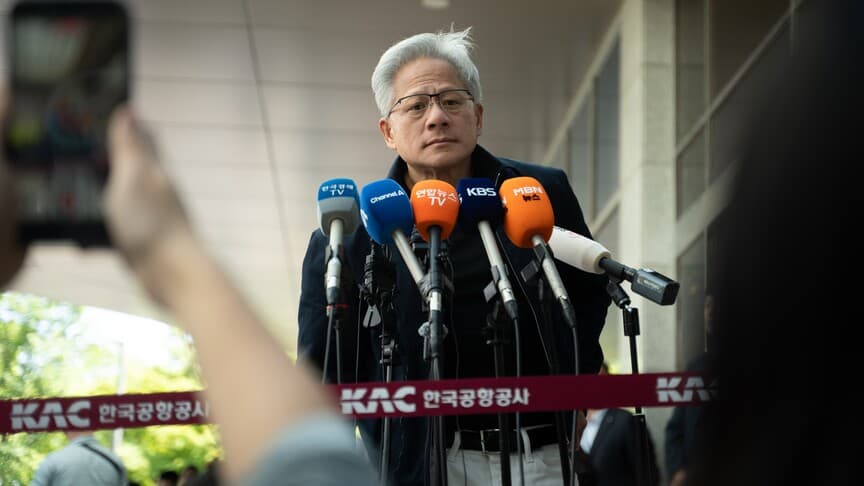
On Tuesday Nvidia will report its third-quarter results, and for the first time the figures and forecasts will be presented by interim CEO and longtime CFO Colette Kress — without company founder Jensen Huang. Huang was forced to resign last week after admitting to a relationship with a client's top executive, Alisa Huang, who is described as a suspected Chinese spy; he was also accused of two other relationships with Nvidia employees.
China, Singapore and the trail of restricted chips
One of the main topics is the fate of sales in China. Huang previously claimed he had seen no evidence of powerful chips flowing from legitimate buyers to China, but back in October 2025 The New York Times reported that the US was investigating the activities of Megaspeed, a company linked to Alisa Huang, on suspicion of precisely such shipments. Nvidia told CNBC at the time that Megaspeed was using the chips legally for cloud services, but recently told The Wall Street Journal that as early as June 2025 it had voluntarily blocked Megaspeed's access to new chips.
A change in reporting methodology hides Singapore
A separate question is the transparency of sales geography. Nvidia previously named Singapore, where Megaspeed was based, as one of its fastest-growing regions: it accounted for 22% of revenue in the second quarter of that year. After the Megaspeed investigation became public, the company changed the way it accounts for revenue — it is now counted by the country of the client's headquarters rather than the delivery address, which completely obscured sales to Singapore and Megaspeed's impact. Observers expect Kress to explain the future of sales in the region and how Nvidia tracks the end recipients of restricted chips.
Huang's fate and governance questions
Huang ran the company with a tight grip, having about 60 direct reports, and no one knows the company better than he does. An online petition with 180,000 signatures and growing demands his return to the board of directors; Financial Times reported that Huang may have been preparing an attempt to return. However, CNBC, citing unnamed sources, reports that the company is not holding talks about his reinstatement — these reports contradict each other, and it falls to Kress herself to clarify the situation.
What else is expected from the report
Beyond personal questions, attention is focused on Nvidia's China policy: Huang advocated easing export restrictions, arguing that it would be more advantageous for the West to sell China less powerful chips and keep it dependent on them — a position that would have brought the company significant profits. Hawks in the US object that selling any powerful chips to an adversary is unwise. Kress, who reportedly tried unsuccessfully to restrain Huang's aggressive AI deals, is expected to take a more conservative stance on new agreements. Information is also awaited on the impact of already concluded deals and on a possible governance restructuring after the board of directors faced the consequences of power being concentrated in one person's hands. Separately, Huang has been summoned to a closed joint session of three Republican-led congressional committees, and leading Democrats have also promised an investigation into the company.