The key facts
- NCIA urged adopting technologies before a crisis, not during it
- Allies committed to spending 5% of GDP on defence by 2035; $50 billion in procurement approved at the Ankara summit
- A transatlantic military cloud and €2.7 billion in business opportunities over two years are planned
A call for readiness and 'NATO 3.0'
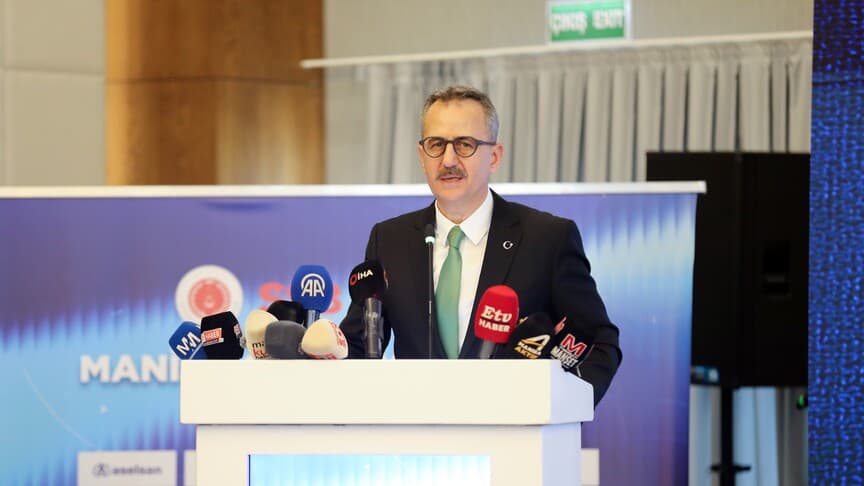
NATO must be ready for conflict at any moment, and the adoption of new technologies cannot be postponed until a crisis begins — otherwise the Allies will act too late. This was stated on Tuesday by the General Manager of the NATO Communications and Information Agency (NCIA), Dylan Brown, at the opening of the NATO EDGE 2026 conference, which runs from Tuesday to Thursday in Izmir, Turkey, Anadolu reports.
Financial commitments and procurement
Brown recalled that the alliance's member states have committed to spending 5% of GDP on defence and security by 2035. According to him, at the July summit in Ankara, leaders also approved new procurement projects worth $50 billion. He described the ongoing shift as 'NATO 3.0' — a transformation centred on technology, with responsibility for its implementation shared by all 32 Allied nations. Responding to criticism about the alliance's slowness and complexity of processes, he said NATO is becoming more agile.
Military cloud and business opportunities
Among the agreed decisions, Brown named the creation of a transatlantic warfighting cloud and the adoption of advanced AI models. These technologies must work both in NATO headquarters and on aircraft, ships and submarines, with cybersecurity built in from the very beginning. He also announced plans to create €2.7 billion ($3.1 billion) in business opportunities over the next two years in the fields of AI, cybersecurity, cloud technologies, command-and-control systems and space activities, calling on companies from all 32 nations to deliver interoperable and secure technologies on time and within budget.
Ukraine: attacks on infrastructure
Ukraine's Minister of Digital Transformation, Oksana Ferchuk, reported that Russian attacks in September targeted data centres, mobile operators and the country's network interconnection points. She stressed the need for multiple communication channels — civilian and military mobile networks, as well as satellite links — and warned that attackers are increasingly using AI to strike critical infrastructure. According to her, Ukraine has itself integrated AI into military equipment for autonomous operations and the analysis of large volumes of data, and she called for accelerating the adoption of technologies, improving procurement and strengthening the protection of private digital services.
Turkey's position
Deputy Chief of the Turkish General Staff, General Levent Ergun, highlighted the importance of NATO's digital transformation for coordination and decision-making among the Allies, noting that armed conflicts, terrorism, regional instability and cyber threats demand greater readiness. He also pointed to the opportunities offered by the NATO Innovation Scaling Package adopted at the Ankara summit, in particular for the alliance's cooperation with defence companies.