The key facts
- The 29th ASEAN–Japan summit was held in Manila under the chairmanship of the Philippines
- Sanae Takaichi announced Japan's 'more active role' and named three areas of cooperation
- In a joint statement, the sides expressed concern over 'economic coercion'
Manila summit: security and economy
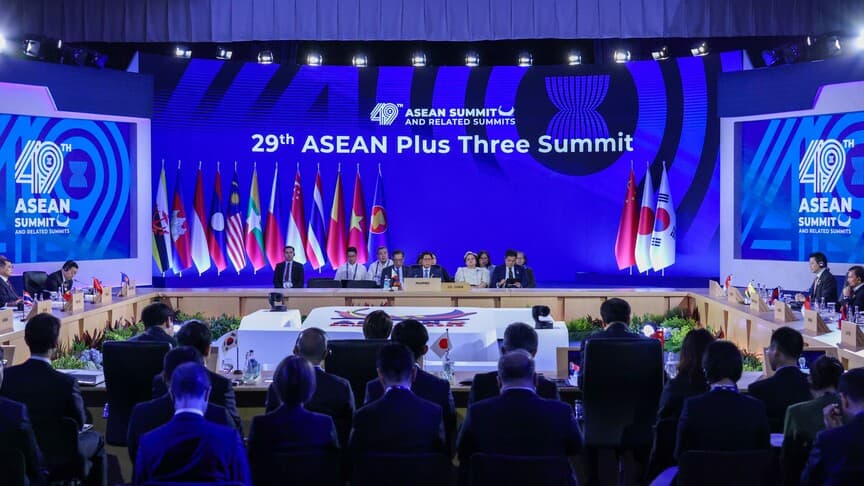
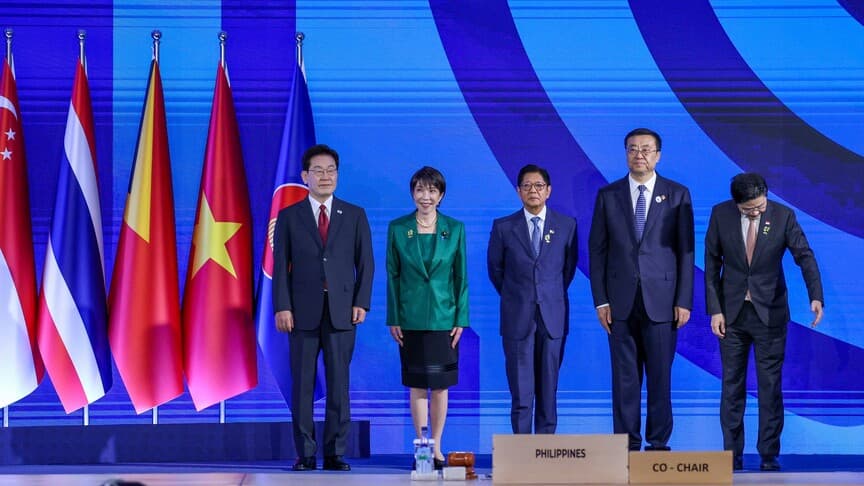
The Association of Southeast Asian Nations and Japan held their 29th summit in Manila on Tuesday, devoted to regional security, economic cooperation and new challenges. ASEAN chair, Philippine President Ferdinand Marcos Jr., expressed the bloc's appreciation for Japan's support of ASEAN's central role and the ASEAN Outlook on the Indo-Pacific, as well as cooperation in combating transnational crime, online fraud and cyber threats.
Economic ties and Takaichi's three areas
Marcos noted the deepening of economic ties through the RCEP and the ASEAN–Japan Comprehensive Economic Partnership Agreement, including discussions on a possible update of the latter. He also welcomed Japan's contribution to regional energy and food security. Japanese Prime Minister Sanae Takaichi pledged that Tokyo would play a 'more active role' in upholding the international order based on 'freedom, openness, diversity, inclusiveness and the rule of law', amid growing global instability. She announced plans to strengthen supply chains, especially of critical minerals, in response to 'arbitrary export restrictions' and vulnerabilities arising from the rapid development of artificial intelligence. Takaichi named three areas of cooperation: maritime security and combating organized fraud; cooperation in AI and digital connectivity; resilience to natural disasters, youth exchanges and joint innovation in science and technology.
Joint statement and Mekong–Japan summit
According to Kyodo News, in the joint statement following the summit, Japan and ASEAN expressed concern over 'economic coercion'. The same day, Takaichi co-chaired the 13th Mekong–Japan summit in Manila, devoted to regional development and connectivity. The format brings Japan together with five Southeast Asian countries: Thailand, Cambodia, Laos, Myanmar and Vietnam. The Japanese prime minister pledged to support the 'resilience' of the participating countries for the sake of regional peace and sustainable development, stating that Japan would help each country 'jointly strengthen the freedom to make decisions independently'.