The key facts
- The FAA imposed a nationwide ground stop on Friday at 20:54 GMT and lifted it at 23:15; about 3,500 aircraft in the air landed safely
- About 1.5 million passengers were due to depart from US airports on Friday evening
- About 1.5 million passengers were due to depart from U.S. airports on Friday evening
- It is being investigated whether the fault lay with human error or a faulty 2001 router during the replacement of copper lines with fiber optics by the contractor L3Harris
- Investigators are examining whether the fault lay with personnel error or a faulty 2001-era router during the replacement of copper lines with fiber optic cable by the contractor L3Harris
The largest aviation outage in US history
American airlines are expected to return to full schedules on Monday — three days after a communications failure at air traffic control centers forced the Federal Aviation Administration (FAA) to halt departures nationwide for more than four hours. Anadolu reports this in a breakdown of the situation across five questions.
What happened
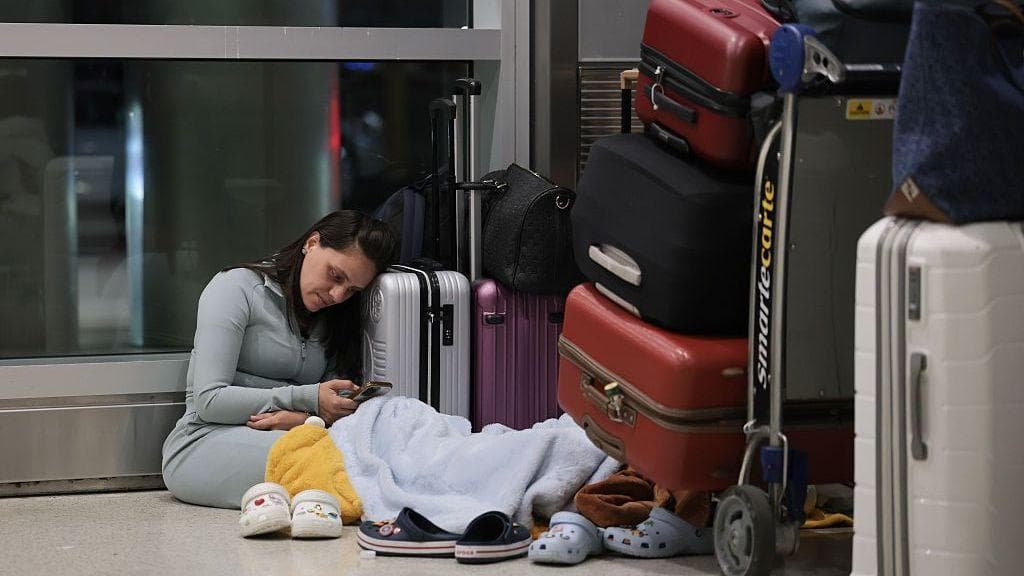
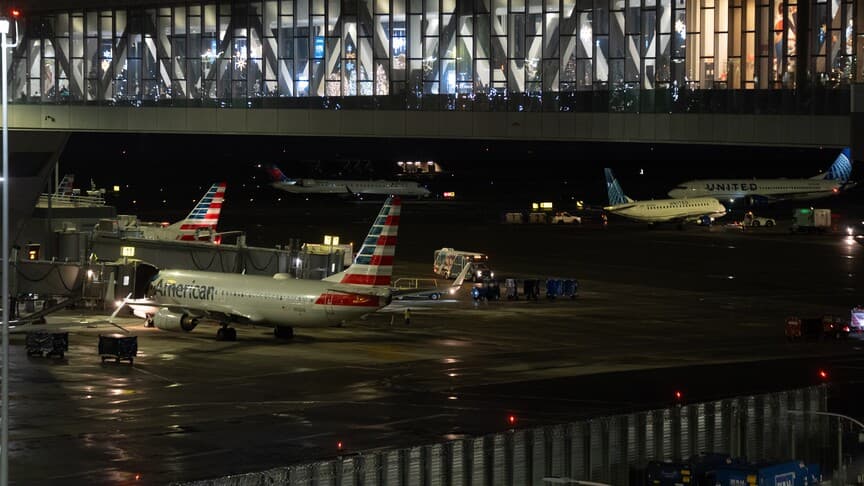
Problems began Friday afternoon, when controllers started experiencing intermittent radar outages and loss of communication with aircraft. At 3:54 p.m. Eastern time (20:54 GMT), the FAA imposed a nationwide ground stop as a safety measure. At that moment, about 3,500 aircraft were in the air — all of them, according to the agency, landed safely. Medical, military and police flights continued operating. The stop was lifted at 8:15 p.m., after the source of the problem had been found and isolated and the network had stabilized. According to Cirium, about 1.5 million passengers were due to depart from US airports on Friday evening; thousands of flights were canceled, travelers spent the night in airports — less than two weeks before Thanksgiving, one of the busiest travel periods.
Cause of the failure and theories
Transportation Secretary Sean Duffy initially blamed outdated equipment: in his words, switches and routers were 'overloaded with data.' He then clarified that the FAA contractor L3Harris had been performing scheduled maintenance at at least one remote site, replacing copper wire with fiber optics, and that the routers there had been manufactured in 2001. FAA acting chief technology officer Rebecca Guy said engineers identified two sites sending about a thousand connection requests every four to five seconds; after they were disconnected, the network stabilized. It is being investigated whether this was human error or an equipment malfunction — Duffy framed the question as follows: 'User error or an L3Harris installation error, or did they install a faulty router?' L3Harris said it supports the investigation and has completed more than 70% of the scheduled copper-to-fiber transition.
Cyberattack and AI ruled out — for now, not entirely
Officials said there were no signs of a cyberattack, but the check is not complete. Homeland Security Secretary Marcwayne Mullin said no threat to the country was visible; according to Bloomberg, cited by Anadolu, the FBI does not consider a cyberattack or a crime to be the cause and is looking into a software update. AI also raised questions: on November 10, the FAA announced the expansion of the SMART system, which predicts traffic conflicts, to all 22 control centers. Mullin initially did not rule out a link between the new tool and the failure, but FAA head Bryan Bedford later stated that 'there is no evidence of any connection to AI,' and SMART developer Air Space Intelligence said its technology was not the cause of the shutdown. The controllers' union had previously said it was not involved in developing and testing SMART, and in October more than two dozen members of the House of Representatives asked the FAA to suspend its use.
The third case in history
According to the publication, a nationwide halt of departures is an extremely rare event: Friday's was only the third in US history. The first followed the September 11, 2001 terrorist attacks, the second occurred on January 11, 2023, due to a failure of the NOTAM system, when more than 10,000 flights were delayed; the cause then was the accidental deletion of important files by contractors. In both cases, the work of external contractors was at the center of the investigation. Small regional failures have become more frequent: in 2025, controllers lost contact with aircraft flying into Newark airport, and in September of this year the loss of the main communications line near Philadelphia (the backup cable had been cut by construction workers) led to delays or cancellations of more than 7,000 flights, including transatlantic ones to Europe.
What comes next
On Sunday, according to Cirium, just over 1,300 of more than 26,000 scheduled flights were canceled — about 5.2%, compared with an average cancellation rate of 3.4% before Friday. Duffy told ABC News: “Today we will see a return to normal, but things will probably be fully normal tomorrow.” Bedford promised that all passengers would either be rebooked on other flights or receive a full refund; at the same time, airlines’ promises of hotels and meals usually cover only disruptions within their own responsibility, which an FAA ground stop does not fall under. The FAA is conducting a root-cause analysis: it remains to be determined whether the router was “installed or configured incorrectly, or was simply defective.” Duffy added that equipment switching at remote sites is carried out during the day, while at major airports it is done late at night, and the schedule of such work will be revised. President Donald Trump, who initially did not comment on the outage, on Sunday blamed the Biden administration and called on Congress to allocate additional funds for modernization; according to the outlet, Duffy will send lawmakers a new funding request on Monday. According to a 2024 report by the U.S. Government Accountability Office, 51 of the FAA’s 138 air traffic control systems were considered unsustainable due to outdated technology and a shortage of spare parts.