The key facts
- The first-ever trilateral meeting of Xi Jinping, Donald Trump and Vladimir Putin will take place in Shenzhen on the sidelines of the APEC summit
- Beijing speaks of 'peace and stability', Trump of denuclearization and Iran; Ukraine will likely not be discussed
- German Chancellor Friedrich Merz urged Trump not to allow 'surprises' regarding Ukraine
First Trilateral Meeting of the Leaders of the US, Russia and China
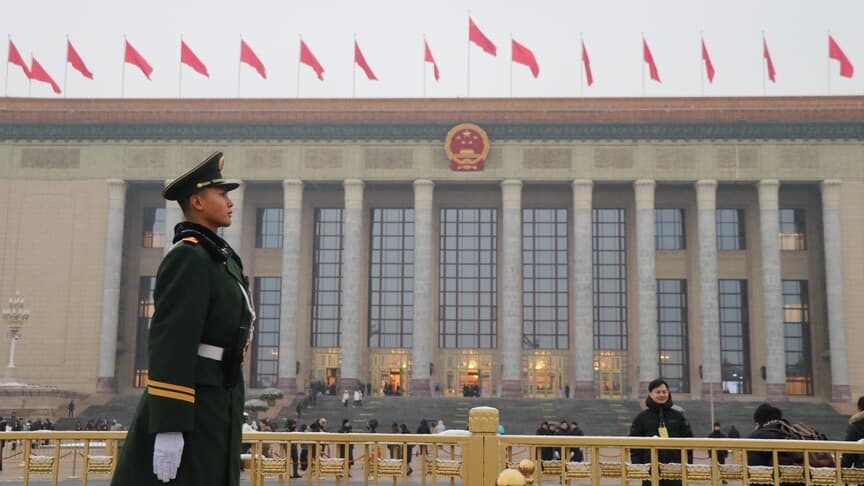
Beijing has confirmed that on Thursday, in the southern Chinese city of Shenzhen, on the sidelines of the APEC summit, the first-ever trilateral meeting of the presidents of the US, Russia and China — Donald Trump, Vladimir Putin and Xi Jinping — will take place. Officially, China has said little: according to Chinese Foreign Ministry spokesperson Mao Ning, the discussion will focus on an 'in-depth discussion of preserving global peace and promoting stability in relations'. She called the upcoming meeting an event of 'landmark significance'.
Ukraine and Iran: What Will Be on the Agenda
Trump himself described the upcoming conversation as 'interesting' and said the leaders would discuss 'many topics, including denuclearization', as well as efforts to end the war in Iran. At the same time, in his brief remarks he did not mention Russia's war in Ukraine. According to AFP, American officials do not expect Trump to raise the Ukrainian issue. The Wall Street Journal earlier reported, citing its own material, that Putin would like the talks to contribute to an agreement on Ukraine on terms favorable to Moscow. Beijing's position adds to the contradictory picture: German President Frank-Walter Steinmeier, after a visit to China, told ARD that Xi looked irritated when asked whether Ukraine would be on the agenda, and 'made it clear that this is a European conflict, at the table for which Europeans should also sit'. German Chancellor Friedrich Merz, for his part, urged Trump not to allow 'surprises' regarding Ukraine during the meeting with Putin: 'Please, no surprises. Keep playing as part of the team of Europe and the team of Ukraine'.
Denuclearization: The Positions of the Parties Differ
Washington wants to include China in future agreements on nuclear arms control, but Beijing insists that the US and Russia must first reduce their own arsenals. China earlier rejected Trump's proposal for broader disarmament talks after the expiration of the Russian-American nuclear treaty in February. Nevertheless, according to the US State Department, during a telephone conversation this week the heads of diplomacy, Wang Yi and Marco Rubio, 'agreed on the importance of substantive conversations at the leaders' level to advance goals such as peace and denuclearization'. UN Secretary-General António Guterres stated that if the three leaders 'commit to real denuclearization, it will be a great achievement for the world'.
The War in Iran as a Second Backdrop to the Meeting
The war in Iran, which began on February 28 with strikes by the US and Israel, is in a phase of some de-escalation, although key problems remain unresolved. The US and Israel are refraining from major attacks against the backdrop of elections held in recent weeks, while Tehran continues to seek control over the Strait of Hormuz — a key transit hub for global oil and gas trade — and to attack vessels it considers unauthorized users of the waterway. Mediation talks between the US and Iran with the participation of Pakistan in April did not lead to a lasting settlement. China, being one of Iran's key economic partners, has repeatedly tried to act as a mediator, calls preventing escalation its 'number one priority', and in recent weeks has hosted leaders and diplomats from a number of Middle Eastern countries, seeking to bring the parties back to the negotiating table.