The key facts
- Nearly a million people aged 16–24 in the UK are Neet: not working and not studying; Milburn wants to reduce this figure from 13% to ~5% over ten years
- The proposal is to double the NI threshold for 21–24-year-olds from £5,000 to £10,000 and gradually lower the rate
- In exchange for the Universal Credit and Pip top-ups for people under 25, a Youth Allowance and an Additional Cost Allowance would be introduced
What the Milburn Review Proposes
In the UK, nearly a million people aged 16–24 are neither working nor studying — their share reaches 13%. The government review, prepared by former Labour health secretary Alan Milburn, calls the situation a 'moral' crisis and warns of the risk of a 'lost generation'. The full document is due to be published on Tuesday; its aim is to bring the 'neet' share down to roughly 5% over ten years and get 440,000 young people into jobs or back into education.
Tax Measures and the Business Position
The key economic recommendation is a gradual reduction in National Insurance contributions that employers pay for young staff. Currently, non-apprentices aged 21–24 are subject to a 15% rate on earnings above £5,000 a year (since April 2025, when chancellor Rachel Reeves raised the rate from 13.8% and lowered the threshold from £9,100). Milburn proposes doubling the threshold to £10,000 and, in the longer term, cutting the rate itself, starting with retail and hospitality — sectors that provide almost 40% of jobs for this group. An immediate abolition of contributions for 21–24-year-olds would cost, according to the think tank Resolution Foundation, £5.1 billion, so the review's author believes a one-off universal measure is not the best use of budget funds. Milburn also noted that the 'neet' problem did not begin with the recent rise in contributions under Keir Starmer's government.
Benefits Reform and a Support Service
In exchange for the tax incentives, the review proposes radically restructuring benefits: people under 25 will no longer be able to receive the 'health' top-up to Universal Credit and Pip (the main disability benefit in England and Wales). Instead, a Youth Allowance at the basic Universal Credit rate and an Additional Cost Allowance replacing Pip will be introduced, and for those who will never be able to work, a Severe and Complex Needs Insurance. The core of the reform should be a 'Youth Opportunity Service' in England: an assigned adviser would be required to help a young person find an apprenticeship, a college place, supported employment or a job within four months, and refusing the offered support could risk losing benefits. The review also sets a goal of 90% of five-year-olds being school-ready (currently 68% in England), and proposes doubling the number of young apprentices.
Reaction and the Government's First Steps
Some measures have already been announced: work and pensions secretary Pat McFadden said that the guaranteed jobs programme for 18–24-year-old Universal Credit claimants is being expanded — eligibility will come after 12 months on benefits instead of 18, and, in his words, by March 2029 it will help more than 90,000 young people into work. The opposition criticised the review from different angles: Conservative Helen Whately called some of the proposals 'too timid' and said they would not cut benefits spending; Liberal Democrat Daisy Cooper believes the NI cut will only partly offset Labour's 'jobs tax'; Suella Braverman of Reform UK called the ten-year timeframe 'sending another generation to the scrapheap', while the Greens called threats to cut benefits for vulnerable people alarming. The Institute for Fiscal Studies noted, however, that cutting benefits would immediately reduce young people's incomes, and employment growth may not compensate for this right away.
What This Means in Practice
Behind the statistics are real people. Collette Osborne, owner of two salons in Nottingham, told the BBC she is 'suffocating from the costs of hiring': she used to take on eight apprentices a year, now she cannot take on a single one, and training one apprentice costs around £60,000 before they can work with clients; her staff has more than halved to 21 people, and parents of desperate young people have even offered to pay their wages themselves. On the other side are 19-year-old Josh, who has been looking for work for three years through the charity Spear, and 21-year-old Kat from Devon, whose health problems, in her words, do not allow her to work safely and who risks receiving noticeably less under the new benefits system. The review also records a structural imbalance: in 2024/25, for every pound spent on youth employment support, £25 was spent on youth benefits; by 2036, the proposal is to bring the ratio to £2 for every £1.
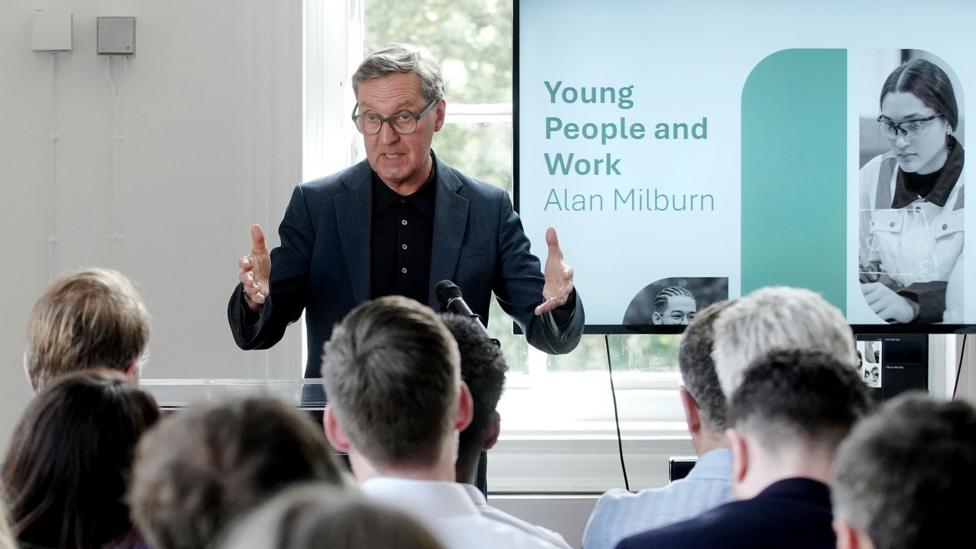 Image source, Press Association
Alan Milburn's report will also make recommendations on cutting the benefits bill