The key facts
- Jensen Huang, 63, left the CEO post at Nvidia after revelations about extramarital affairs, including an acquaintance with a businesswoman whom the US suspects of spying for China
- About 600,000 Nvidia H200 chips are sitting in Hong Kong awaiting import approval from Beijing, even though the White House has already given the green light
- China denies any attempt to 'recruit' Huang and calls the espionage accusations slander; the issue was discussed ahead of the APEC summit in Shenzhen
The Resignation and the Espionage Subtext
Jensen Huang, the 63-year-old founder and longtime head of the American AI chip maker Nvidia, stepped down as CEO last week following revelations about extramarital affairs. One of them was linked to a businesswoman whom the US suspects of spying for Beijing. The scandal sent shockwaves through the global AI and semiconductor industry and triggered sharp political debates on both sides of the Pacific.
The Reaction of Beijing and Washington
China rejected the accusations, calling them unverified and a campaign to smear Beijing. Chinese Foreign Ministry spokesperson Mao Ning said on November 13 that China 'consistently opposes the abuse of export restrictions that undermine the stability of global industrial and supply chains.' The state newspaper Global Times asked in an editorial: 'Jensen Huang cheated on his wife. What does that have to do with China?' — and accused American media of turning the story into a 'Hollywood thriller' without 'irrefutable proof of the central accusations.' On the social network Weibo, users also doubted that a love affair could be the real reason for the resignation. According to available information, Washington, concerned about national security, plans new restrictions to close loopholes that allow Chinese companies to acquire advanced American semiconductors.
What Lies Behind the Dispute: H200 Chips and Beijing's Choice
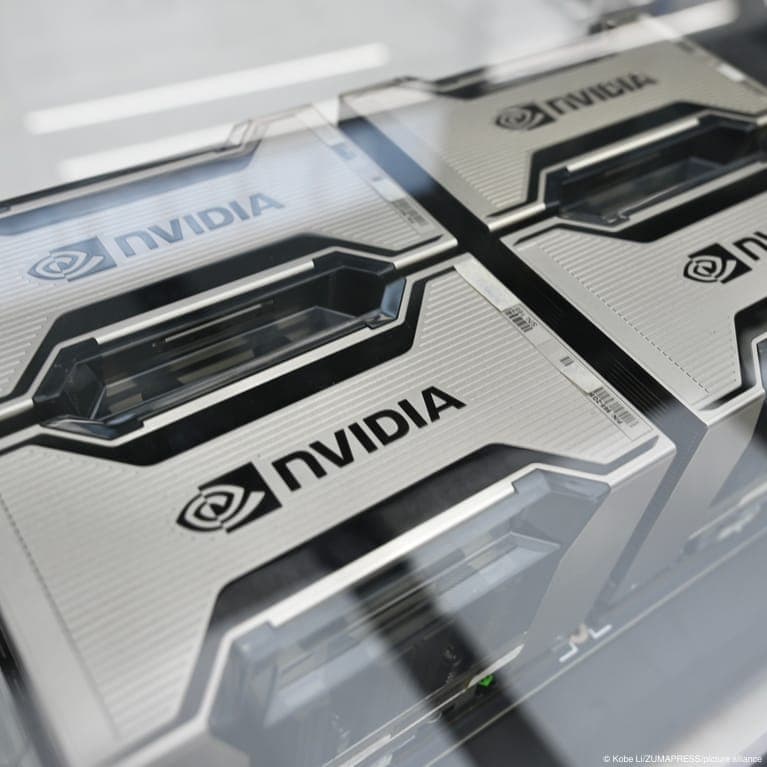
Behind the war of words lies an economic calculation. In December, the Trump administration allowed Nvidia to supply H200 chips to China on the condition that the US receive 25% of sales. The H200 is not among the company's most powerful lines, but it is significantly more efficient than Chinese analogues; the chip costs $27,000, and Nvidia estimates demand in China at 2 million units — roughly $5.4 billion for this product alone. Meanwhile, about 600,000 H200 chips are already sitting in Hong Kong awaiting Chinese import approval: the White House gave the 'green light,' but Beijing has not yet approved the imports. Carson Elmgren, research director at the Institute for AI Policy and Strategy in Washington, considers this telling: 'This shows that China does not consider short-term advantages decisive and is confident in its ability to replace American chips in the medium term.'
The Course Toward Self-Reliance and Its Limits
Chinese Vice Premier Ding Xuexiang, who heads the Communist Party's commission on science and technology, must decide whether to continue relying on American chips or bet on the domestic industry. Tiantian Wang of Harbin Institute of Technology writes in a recent study of Chinese semiconductor strategy that switching to domestic chips 'effectively reduces the risks of cyberattacks by foreign actors' and that strengthening self-reliance in defense and critical infrastructure has become 'a key element of the national security strategy.' According to her data, the radars of the Chengdu J-20 fifth-generation fighter and the Dongfeng-41 intercontinental ballistic missile are equipped exclusively with Chinese chips, and the country is forming a 'closed ecosystem' of data, algorithms, computing power, and chips. However, the strategy has a weak spot: China lacks the equipment to produce the most advanced chips. The Dutch company ASML, under pressure from Washington, has stopped supplying its newest lithography machines to China. The Washington-based analytical center Center for Technology & Statecraft believes that if China imported additional ASML systems, as in 2024–2025, its annual production could 'negate a significant portion of American leadership,' and in some scenarios even surpass it. According to Deloitte, Beijing plans further large-scale investments with an emphasis on long-term financing of companies and a shift in focus from supporting individual firms to synergy across the entire supply chain.