The key facts
- Ahmed Moor, 42, born in Gaza, is preparing for the Pennsylvania Democratic primary against Senator John Fetterman in 2028
- Moor proposes copying the model of the Comprehensive Anti-Apartheid Act of 1986: sanctions against Israeli banking flows, companies and officials
- Fetterman called Moor 'pro-HAMAS'; Moor's campaign rejected the accusation, citing support for an arms embargo and targeted sanctions
The candidate and his main target
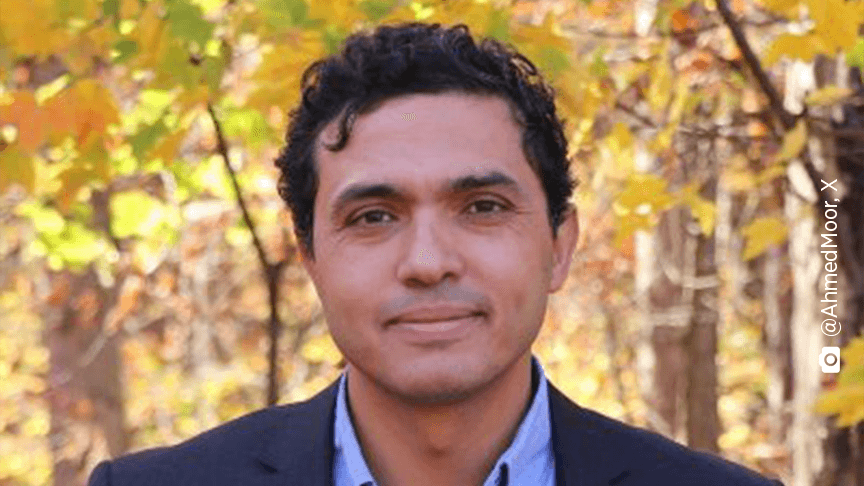
Ahmed Moor, a 42-year-old Palestinian-American born in Gaza who previously worked in finance, journalism and international development, is preparing to challenge Pennsylvania Senator John Fetterman's seat in the 2028 Democratic primary. Fetterman, elected in 2022 with the support of progressives, is criticized by fellow party members for his strong support of Israel; whether he has announced a re-election bid is not yet known. On Saturday, Fetterman called Moor 'pro-HAMAS' and said: 'I will always support Israel.' Moor's campaign rejected the accusation, noting that the candidate condemns violence against civilians and advocates an arms embargo and targeted sanctions.
Sanctions on the South African model
Moor proposes to follow the Comprehensive Anti-Apartheid Act of 1986, under which the US restricted trade and investment with South Africa to pressure the white minority government. 'Impose sanctions against banking flows, against individuals, against corporations, the government, policymakers — just copy it as is,' he said, adding: 'It won't be easy, but it is simple.' He defined the specific goal as 'full equal rights for Palestinians and Israeli Jews in a democracy'; in a separate interview he advocated a single democratic state, moving away from the two-state model supported by Washington.
What limits his plan
Implementing such a scheme runs into institutional constraints: an individual senator cannot impose sanctions alone — new legislation or action under existing sanctions authorities would be required. The South Africa law itself was largely repealed in 1993 and fully a year later, as the country transitioned to democracy. At the same time, Moor can count on allies in Congress: in the November 3 midterm elections, eleven candidates who advocated for Palestinian rights and opposed US military support for Israel won seats, although their positions on sanctions differ.
Domestic agenda and criticism of party leadership
Moor's campaign is also built around a 'dignity agenda': universal healthcare, free childcare and affordable housing, which he calls a human right. He did not disclose financing details. He also demands a constitutional amendment overturning the Supreme Court's 2010 Citizens United decision, which lifted limits on independent political spending by corporations and unions: 'Money is not speech, and corporations are not people.' The scale of spending is illustrated by the midterms: congressional candidates spent about $3.2 billion by the end of October according to the FEC, while political advertising approached $3.8 billion by mid-October according to AdImpact.
The fight for Senate leadership
Moor links the war with Iran and support for Israel to the influence of 'special interests' on foreign policy and demands investigations into the Epstein files, Gaza and alleged abuses at home. In his words, the Democrats' victory in the midterms gives the party a mandate to fight corruption, but leaders Chuck Schumer and Hakeem Jeffries are 'unable to meet the moment.' He backed Maryland Senator Chris Van Hollen, who announced a challenge to Schumer for majority leader; the leadership election is scheduled for December 1. An analysis by the Institute for New Economic Thinking showed that contributions of $100,000 or more accounted for at least 78% of receipts in fundraising networks linked to Schumer and Jeffries; these figures alone do not prove improper influence.
First statewide experience and a social media glitch
Moor has never held public office and is running for statewide office for the first time. His candidacy coincides with growing Muslim representation in American politics — the election of Abdul El-Sayed as the first Muslim US senator and the rise of New York Mayor Zohran Mamdani. The campaign has already faced an obstacle: on November 11, the X platform suspended the @moorforpa account a few days after the candidacy was announced, without specifying which rule was violated; Moor said he does not know the reason and does not want to speculate. On Saturday the account was restored — three days after the block.