The key facts
- Khalil al-Hayya called for an emergency international campaign to provide housing for Gaza residents
- UN: floods affected more than 200,000 people; shelters housing over 40,000 families damaged
- WHO warned that 950,000 displaced Palestinians live in flood-risk zones
Appeal to Arab and Muslim countries
Hamas leader Khalil al-Hayya on Saturday called for an emergency international campaign to provide housing for Palestinians in the Gaza Strip, where heavy rains flooded camps for displaced people and damaged thousands of shelters. According to the Anadolu agency, citing the Palestinian movement, in letters to Arab and Muslim countries, al-Hayya called on governments to ensure the entry of tents, heating materials, fuel, and equipment needed to repair sewage and stormwater drainage networks.
Demands on Israel and the UN
Al-Hayya blamed the worsening humanitarian situation on Israeli restrictions on the delivery of aid and reconstruction materials, compounded by the destruction of homes and basic infrastructure. According to him, the situation in Gaza can no longer be viewed merely as a temporary aid crisis or an inevitable consequence of war.
Call to implement the ceasefire agreement
He demanded international pressure on Israel for the full implementation of the ceasefire agreement, including the complete withdrawal of troops from Gaza and compliance with the humanitarian protocol signed in Sharm el-Sheikh. Al-Hayya also called for ensuring unimpeded access for UN agencies and humanitarian organizations, admitting the Palestinian national committee responsible for governing the territory, allocating funds for safe shelters and infrastructure restoration, and for the UN Security Council to convene an emergency open session. According to Hamas, over the previous two days he had been in contact with representatives of mediator countries, seeking urgent assistance and the implementation of the agreement.
Scale of the flooding according to the UN
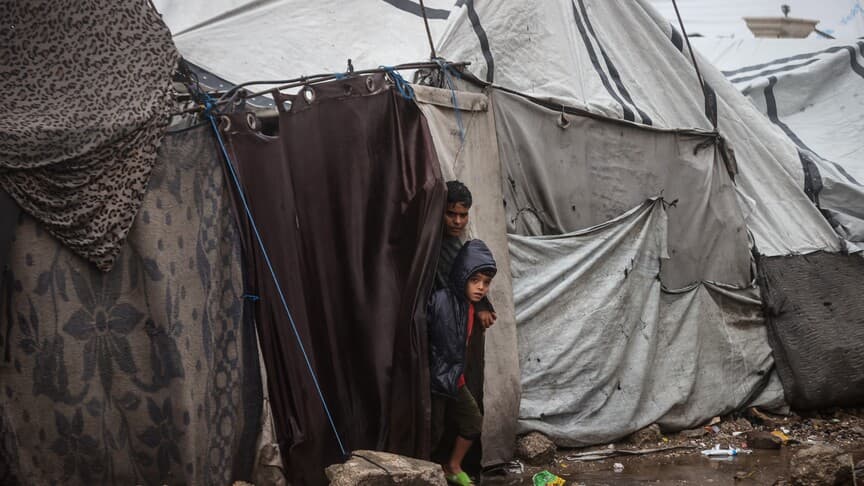
Heavy rains flooded tents and temporary shelters across Gaza, leaving displaced families in the cold with a shortage of protective materials. According to the UN Office for the Coordination of Humanitarian Affairs, as reported by Anadolu, the floods affected more than 200,000 Palestinians and damaged shelters housing over 40,000 families. The World Health Organization warned that 950,000 displaced Palestinians live in areas prone to flooding, including more than 400,000 in high-risk locations.