The key facts
- The FAA imposed a nationwide ground stop on November 13 due to a communications failure across all air traffic control centers; the ban was lifted after four hours
- According to FlightAware, about 7,000 flights were delayed or canceled; Cirium estimates the number of stranded passengers at 1.5 million
- Authorities said there were no signs of a cyberattack or security threat; this is the third nationwide halt of flights in US history
What happened
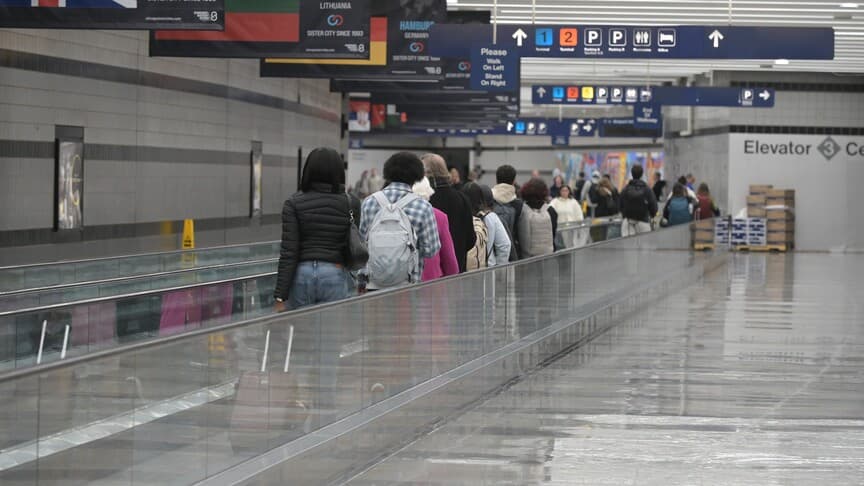
On Friday, November 13, 2026, the US Federal Aviation Administration (FAA) imposed a nationwide ground stop on departures of all flights from the country's airports. In the agency's notice, the measure was explained by 'extraordinary circumstances' and safety considerations; it was separately stipulated that the question of international flights would be decided individually. According to Reuters, the ban was imposed at 3:54 p.m. Eastern time and applied to new departures: aircraft already in the air were allowed to land at their designated airports.
Cause of the failure
Transportation Secretary Sean Duffy said the problem affected all air traffic control centers in the country — referring to 22 regional centers that control aircraft between airports. Later, at a press conference, he explained: 'Our switches and routers were essentially overloaded with data and failed. More precisely, I shouldn't say they failed — they began producing data inconsistencies, and because of that we shut down the system.' The FAA later called the incident 'a temporary telecommunications systems failure.' Duffy characterized the incident as an 'emergency' and noted that 'it will take time to untangle what happened this afternoon.'
Scale of the consequences
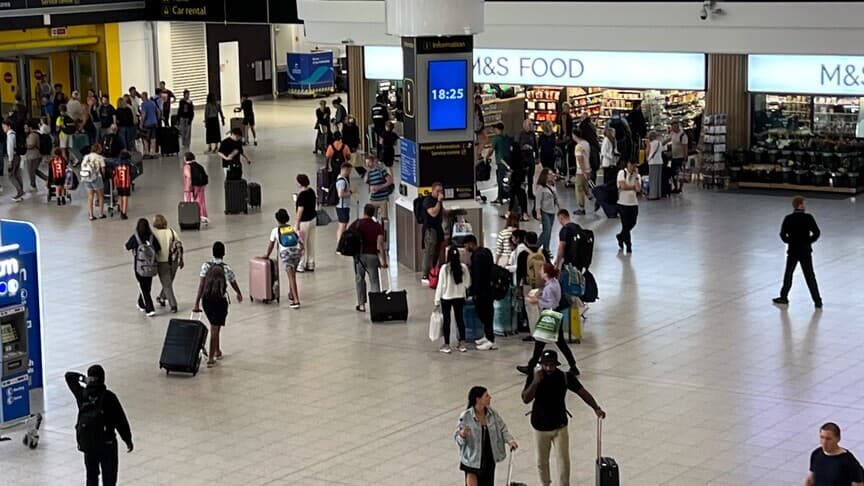
According to the flight tracking service FlightAware, cited by Reuters and CNN, about 7,000 flights were delayed or canceled. The analytics firm Cirium estimated the number of passengers stranded at airports due to cancellations at approximately 1.5 million. The ban was lifted at 8:15 p.m. Eastern time, but the schedule did not recover immediately: airlines had to return aircraft and crews to their positions, and delays could propagate through the system for a long time. It is unknown how long it will take for air traffic to return to normal.
Government response
Homeland Security Secretary Marcwayne Mullin said at a White House briefing that the public was not in danger: 'No flight was at risk. The FAA handled it. We did this out of precaution.' According to him, there are grounds to link the flight halt to a threat against the US, and the situation is 'absolutely unlike' the events of September 11, 2001. Mullin also said he sees no reason to link the incident to the global failure of the Microsoft Outlook mail service the day before, calling them 'separate issues,' but noted that nothing is ruled out, including a potential connection with artificial intelligence. Law enforcement sources told CNN that preliminary data indicate no cyberattack. President Donald Trump was informed of the situation.
Third case in history and the funding question
This is the third nationwide halt of flights in US history: the first was imposed after the September 11, 2001 terrorist attacks, the second on January 11, 2023 due to a failure of the NOTAM system, when more than 9,500 flights were delayed. The incident once again exposed the dilapidation of American aviation infrastructure: Congress allocated $12.5 billion for modernization last year, and on Friday the FAA and the White House requested another $30.1 billion from lawmakers; Duffy said he wants $50 billion. He expressed the expectation that the system 'will be working during the peak Thanksgiving travel period.'