The key facts
- A penalty of 0.01% per day is proposed for late completion of a building; the deadline may be extended only twice and by no more than three months
- A penalty of 0.01% for each day of delay in delivering a building is proposed; the deadline may be extended only twice and by no more than three months
- Equity holders' money is to be directed to escrow accounts, with the developer receiving it only after the building is completed
- The new rules will apply to projects approved for construction after the law enters into force
- The new rules will apply to projects permitted for construction after the law comes into force
The bill has been sent to the Senate
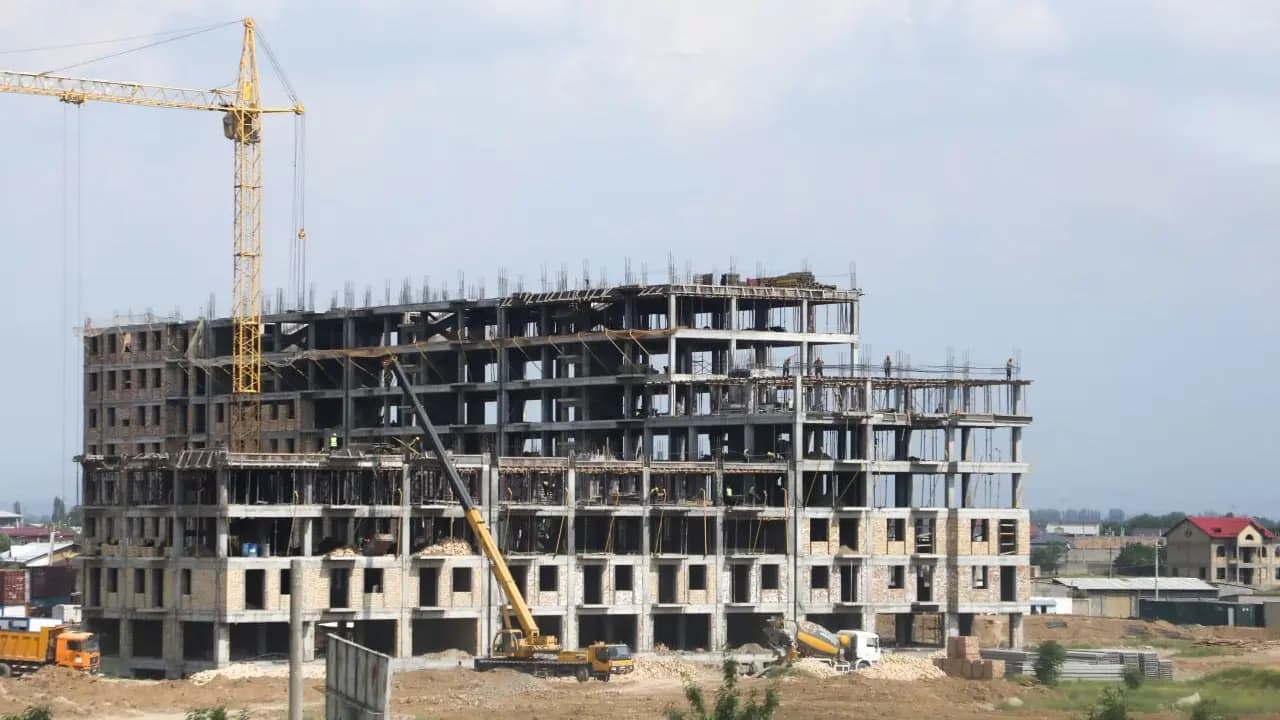
Uzbekistan is preparing new rules for shared-equity construction. As reported by the press service of the National Committee for Urbanization and Sustainable Development of the Housing Market, the bill On Shared-Equity Construction of Apartment Buildings and Other Real Estate Objectsdeveloped by the committee has been passed by the Legislative Chamber in its third reading and sent to the Senate. This was reported by Daryo.uz. The document has not yet entered into force: all the described provisions remain proposals for now, and the final decision rests with the upper house of parliament.
Liability for delays and guarantees
The key innovation concerns completion deadlines. If a developer fails to hand over a building by the deadline specified in the contract, they will have to pay a penalty of 0.01% for each day of delay. The construction deadline may be extended only with the consent of the equity holder — each time for a maximum of three months and no more than twice. It is also proposed to establish a warranty period of at least 10 years for new buildings and at least two years for engineering equipment. If the actual area of an apartment differs from that specified in the contract, its price will be recalculated, and the burden of proving that construction defects were caused by the equity holder's fault lies with the developer.
Escrow accounts and financing
The financing procedure is changing significantly. No more than 30% of the project cost will be covered by the funds of the developer and the builder, and at least 70% by bank project financing, with bank funds to be disbursed in stages depending on the volume of completed work. When registering a project, a specialized developer must have own funds of at least 10% of the project cost. Citizens' money will be transferred not to the developer but to an escrow account opened in the name of the equity holder at an authorized bank: the funds will be used to repay the bank loan and paid to the developer only after the building is completed and the handover act is signed. Opening and servicing such an account will be free of charge, and the funds cannot be arrested, written off, or seized even in the event of the developer's or equity holder's insolvency; escrow accounts are planned to be included in the bank deposit protection system.
Requirements for developers and troubled projects
Only specialized developers meeting the established requirements will be able to raise funds from citizens: they will operate within a single set of project documentation and a single permit, without the right to engage in other activities, provide loans and guarantees, or participate in other organizations. The head of the developer and its ultimate beneficial owner will bear joint and several liability with the company for damage caused to citizens. Advertising a project before the publication of the project declaration will be prohibited, and companies will have to regularly update photographs of construction progress and financial statements in the Unified Information System.
Troubled projects and liability
The bill defines the criteria for recognizing a project as troubled: suspension of work for more than six months, violation of completion deadlines, the start of the developer's insolvency proceedings, or failure to fulfill warranty obligations. If the completion deadline is violated, waiting an additional six months will not be required. For troubled projects, concluding new contracts and accepting money from citizens will be prohibited, and a project cannot be removed from the registry merely by paying compensation — the defects must be eliminated. Persons who unlawfully raised funds from citizens will have to pay interest at twice the Central Bank's base rate. It is also proposed to add Article 188² to the Criminal Code on liability for raising equity holders' funds by means not provided for by law, and Article 99¹ to the Administrative Liability Code for failure to disclose information and unlawful changes to project documentation.
Who the new rules will apply to
According to the committee, the new rules will apply only to projects whose construction is permitted after the law comes into force. Thus, houses already under construction will retain the current terms, while practical changes for shareholders and developers will become possible only after the law is adopted by the Senate and enters into force.