The key facts
- The President of Uzbekistan took 40th place in the 2027 edition of The Muslim 500 — the highest ranking in Central Asia
- For the first time, first place was shared by five people due to the Mecca Pact of August 7, 2026
- Representatives of Kyrgyzstan and Turkmenistan did not make the list
Mirziyoyev — 40th place in The Muslim 500
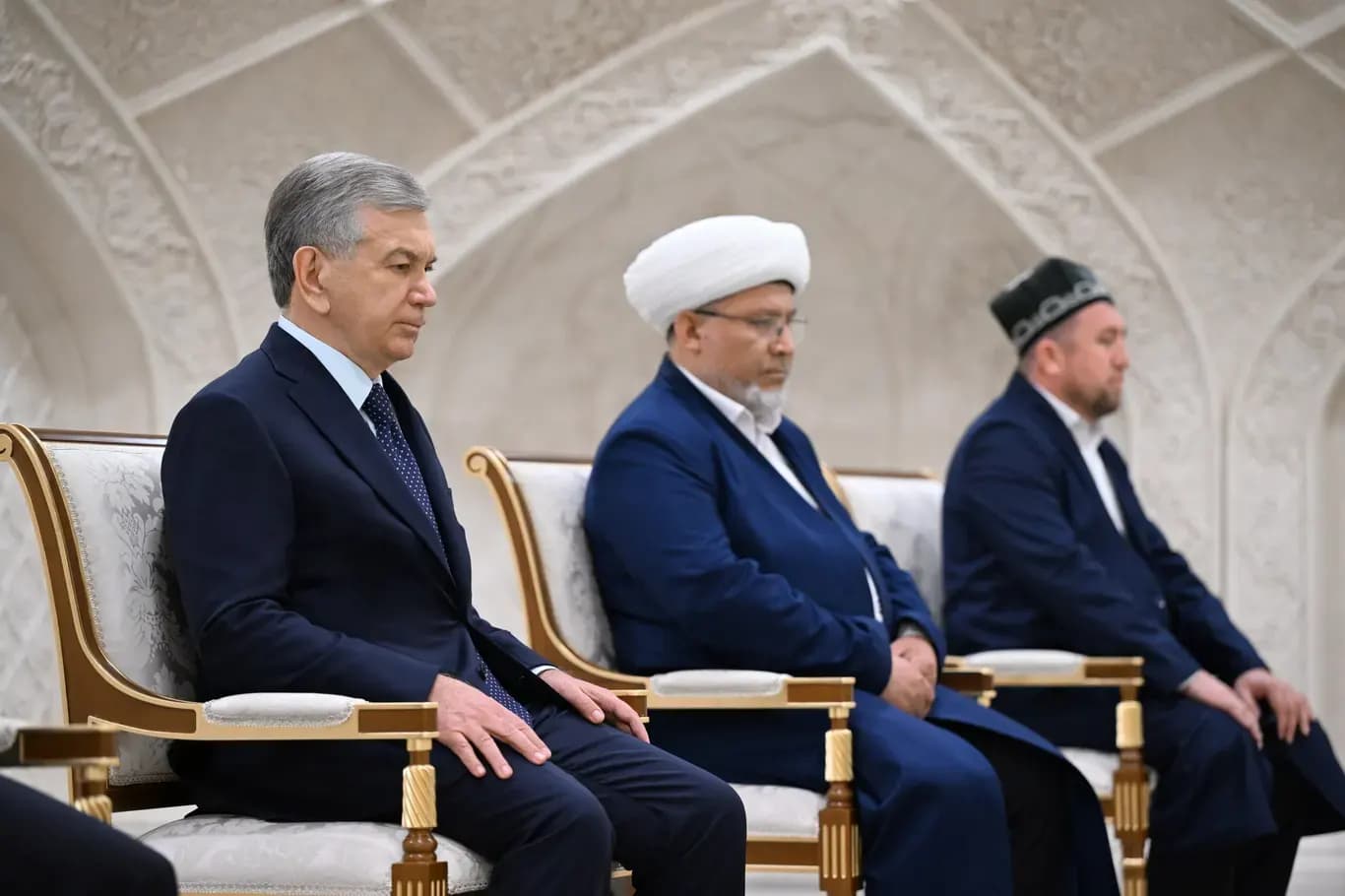
The Royal Islamic Strategic Studies Centre (RISSC) has published its annual ranking of the world's 500 most influential Muslims for 2027. Uzbekistan's President Shavkat Mirziyoyev took 40th place in it — the highest result among representatives of Central Asian countries.
What the compilers of the ranking highlighted
The authors of the ranking highlighted the reforms carried out under the concept of the 'New Uzbekistan': liberalization of the economy and the currency market, opening the country to foreign investment, expanding international trade, and modernizing agriculture. In the profile published by the compilers, the 'eradication of systemic forced labor in the cotton industry' was singled out separately, along with improvements in education, healthcare, and public services. It was noted that an open foreign policy has raised Uzbekistan's standing as a diplomatic and economic partner and improved relations with its neighbors in the region.
Islamic heritage
The president's efforts to preserve and popularize Islamic heritage were mentioned with particular emphasis: the construction and renovation of mosques, expanded opportunities for hajj and umrah pilgrimages, and the restoration of holy sites and mausoleums. The report names the memorial complexes of Imam al-Bukhari and Imam Maturidi, the research centers named after Imam Bukhari, Termizi, and Maturidi, the restoration of historic madrasas, and the construction of the Center of Islamic Civilization in Tashkent.
Who else made the list
From the region, the ranking includes Kazakhstan's President Kassym-Jomart Tokayev (the 'Politics' category), singer Dimash Kudaibergen ('Arts and Culture'), and Tajikistan's mufti Saidmukarram Abdulkodirzoda ('Religious Administration'). Representatives of Kyrgyzstan and Turkmenistan did not make the list. From Afghanistan, Taliban leader Haibatullah Akhundzada took 43rd place; also included were Abdul Ghani Baradar, human rights activists Malala Joya and Sima Samar, writer Khaled Hosseini, and singer Aryana Sayeed.
For the first time, five people share first place
A novelty of the 2027 ranking is that first place was shared by five people at once: King Salman bin Abdulaziz of Saudi Arabia, Crown Prince Mohammed bin Salman, Pakistan's Prime Minister Shehbaz Sharif, Pakistan's Chief of Defence Forces Asim Munir, and Turkey's President Recep Tayyip Erdogan. The compilers linked this decision to the 'Mecca Pact' on joint defense, signed on August 7, 2026 in Riyadh by the leaders of Saudi Arabia, Turkey, and Pakistan. The top 50 also included New York Mayor Zohran Mamdani, Iran's supreme leader Mojtaba Khamenei, the presidents of Syria and Palestine, and the leaders of Egypt and the UAE.
About the ranking
The Muslim 500 has been published since 2009. The authors consider a person's ability to influence the Muslim community as the main criterion. According to the Jordanian Royal Islamic Strategic Studies Centre, it is the best-known and most frequently cited annual reference publication on figures of the Islamic world; however, its status is expert-publicistic rather than strictly academic or official. Participants in the top fifty are listed with specific positions, while the rest are grouped by category without rankings; the list includes theologians, politicians, entrepreneurs, journalists, scholars, and figures of culture and sport — from Mohamed Salah and Khabib Nurmagomedov to Zinedine Zidane.