The key facts
- Oil spills from damaged tankers have been recorded off the UAE coast near Ras Al Khaimah and Sharjah
- According to the IUCN, at least 35 species of fish, rays, and sharks are threatened with extinction, and 15 more are close to that status
- Scientists warn that oil settling in bottom sediments will make cleanup long and costly
What Happened
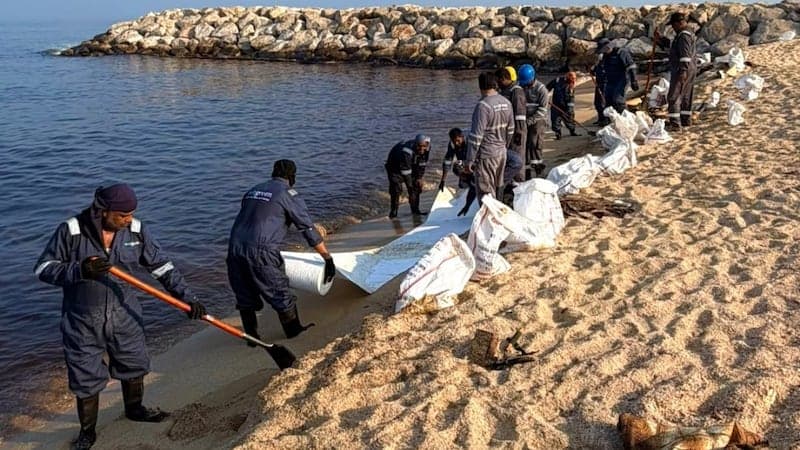
Large-scale oil spills from damaged tankers have been recorded off the coast of the United Arab Emirates, in the areas of Ras Al Khaimah and Sharjah. The consequences of the accident, which crews are now battling on the UAE's beaches, have been captured in footage and satellite images, including data from the European Union's Copernicus Sentinel-2 system and material from the Reuters and AP news agencies. The spill is linked to the war in Iran.
Why the Gulf Is Especially Vulnerable
The alarm has been raised by a group of biologists from the University of Oxford, King Abdullah University of Science and Technology in Saudi Arabia, and the Mubadala Arabian Centre for Climate and Environmental Sciences at New York University in Abu Dhabi. They point out that the Persian Gulf is a shallow, enclosed sea with limited water exchange through the Strait of Hormuz, so pollution is not carried out into the open ocean. The situation is worsened by extreme natural conditions: in summer the water warms to above 35 °C, and high salinity and low oxygen levels make it difficult for local organisms to cope with the additional stress of pollution.
The Threat to Marine Life
The region is distinguished by a set of unique biotopes: coral reefs, seagrass meadows, mangrove forests, salt marshes, and muddy shallows. According to the International Union for Conservation of Nature, as a result of the spill at least 35 species of fish, rays, and sharks are threatened with extinction, and 15 more are close to that status. Oil clogs the aerial roots of mangrove thickets — such consequences can last for decades. Fuel also causes severe damage to coral reefs and to the breeding sites of seabirds and turtles.
What Experts Say
According to experts, even if hostilities cease, the region faces a long, complex, and costly cleanup operation: oil, driven by currents and winds, settles into bottom sediments, making cleanup an extremely difficult process. Environmentalists are insisting on emergency measures to protect protected areas and prevent oil from reaching the coast.