The key facts
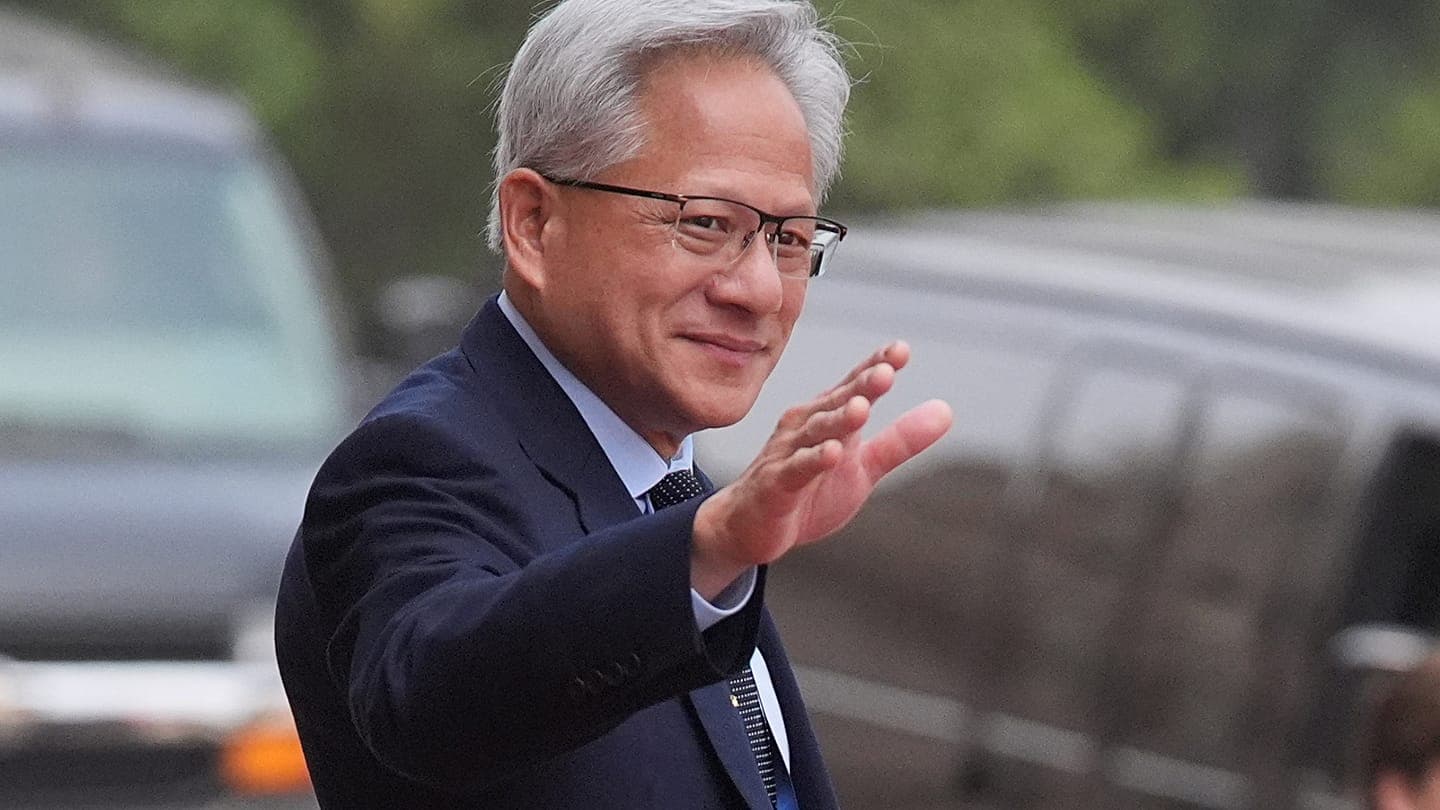
- Jensen Huang, 63, left the post of Nvidia CEO; the company is temporarily led by CFO Colette Kress
- Since the record close on October 6 ($239.24), the company has lost about $1.8 trillion in market value
- After the news of the resignation, shares fell 4.3% to $166.19 — near a 52-week low; analyst price targets range from $200 to $225 without Huang versus $300 with him (Yorkville Ives estimate before the resignation)
Huang's resignation and the collapse in market capitalization
Nvidia announced Jensen Huang's resignation on Thursday, and since that moment Wall Street analysts have been assessing what the departure of the company's founder means for the chipmaker and for the AI industry he helped build. Huang, 63, was one of the most prominent advocates of AI: he fueled the boom with cutting-edge chips and financial deals across the supply chain, and Nvidia itself invested in customers and suppliers, helping cloud providers and AI labs build infrastructure running on its chips.
Who is now running the company
CFO Colette Kress — Nvidia's chief financial officer since 2013 — is serving as interim CEO while the board searches for a permanent successor. For investors, the main question is whether she can maintain the pace of deals that drove the AI boom under Huang. Dan Coatsworth, head of markets at AJ Bell, noted that time will tell whether investors accept this approach, adding that 'no CEO is irreplaceable' and Nvidia's current business will keep operating, but the long-term vision may be in question. Bloomberg Intelligence analyst Kunjan Sobhani believes the resignation is unlikely to change profit forecasts for fiscal 2027 and 2028, but pointed to long-term risks around succession, deals and attention to China while investors reassess the 'Jensen premium.' According to him, Huang's role extended from product strategy to relationships with governments and AI labs.
The scale of losses and the context of the scandal
The losses in market capitalization began before the resignation was announced: after weekend reports of Huang's infidelity, the company's shares lost $900 billion in market value — from the previous Friday's close to the intraday low on Thursday. In total, since the record close on October 6, when shares ended the day at $239.24, Nvidia has lost about $1.8 trillion (€1.6 trillion). After the news of the resignation, shares fell 4.3% to $166.19, near a 52-week low. According to Koyfin data cited by The Information, at that price Nvidia trades at 13.7 times expected earnings versus 38.9 for rival AMD.
Analyst estimates: how much the company was worth without Huang
Even before the resignation was announced, analysts at Yorkville Ives led by Dan Ives valued Nvidia at $225 per share without Huang as CEO — 25% below their $300 valuation with him, Investing.com reports. Several brokers gave similar figures: Bernstein and Baird cut their price targets to $200, and Citi from $285 to $225. At the same time, Baird reaffirmed its target after the resignation, and Goldman Sachs maintained its 'buy' rating and $220 target, citing the company's order book and product plans. Some analysts warn: although the shares look deeply discounted given still-high demand for Nvidia's products, the most cautious strategy is to wait until the company's prospects become clearer.
What's next: the report on November 17
Nvidia will report on Tuesday, November 17, after the US market close. In the quarter ended July 26, revenue more than doubled to $96.2 billion (€86.8 billion), with more than 90% of sales coming from data centers. For the reporting quarter, the company itself forecasts revenue of about $108 billion (€97.5 billion), while analysts surveyed by Visible Alpha expect $109.3 billion (€98.6 billion). Investors will watch next quarter's sales and margin guidance, signs that cloud companies are keeping their spending plans, that Nvidia will deliver its new Vera Rubin systems on time, and that financial deals with AI customers will continue under Kress. A further question is whether a permanent successor can keep customers and suppliers within the product and spending plans that drove the company's growth under Huang.