The key facts
- Delcy Rodríguez announced the creation of 'Plan Venezuela Vive' at COP31 in Antalya
- Venezuela, according to her, accounts for only 0.4% of global greenhouse gas emissions and is a net carbon sink
- Rodríguez defended the country's sovereign right to 'responsibly strengthen' its oil industry
National program to unite forest, water and ocean protection
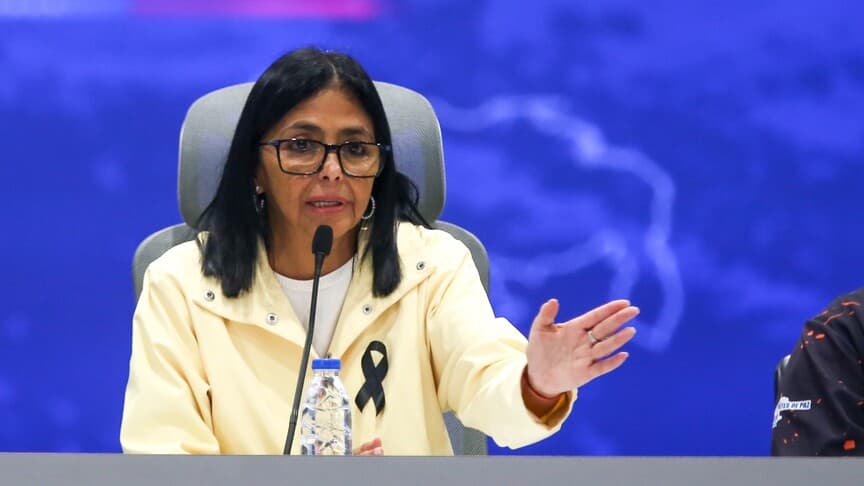
Acting President of Venezuela Delcy Rodríguez announced the creation of the 'Plan Venezuela Vive' program while speaking at the COP31 climate summit in Antalya, Turkey. According to her, the plan will become a national framework for coordinating efforts to protect forests, water resources and oceans. She named the formula 'one country, one nature, one future' as the motto of the initiative and stated that uniting national environmental programs is critically important, because 'either we act together, or life fades away'.
Caracas's arguments: glaciers, emissions and carbon absorption
Rodríguez warned that humanity is at a 'decisive civilizational crossroads' and cited data about her own country: Venezuela is losing its glaciers and has recently experienced the most severe weather event in more than 70 years. She called it a 'cruel paradox' that the country accounts for only 0.4% of global greenhouse gas emissions while remaining a net carbon sink — for every ton of emissions, the country's nature absorbs 1.8 tons of carbon.
Conservation figures and the oil dispute
Among the stated achievements are legal protection of more than 64% of the country's territory, reforestation of nearly 70 thousand hectares since 2008, provision of 80% of electricity through hydropower, and four consecutive years of declining gas flaring intensity per barrel. Speaking about ocean degradation, Rodríguez noted that the seas absorb 90% of the planet's excess heat and suffer from plastic pollution.
'The transition does not shut down economies, it transforms them'
The keynote of the speech was the defense of Caracas's energy interests: Rodríguez stated that a just energy transition 'does not shut down economies, it transforms them', and defended the country's sovereign right to 'responsibly strengthen' its oil and energy industry as 'an important engine of national development'. She concluded her speech with a reference to the Turkish poet Nâzım Hikmet about the fundamental human need for a patch of land and a patch of sky, urging the delegates not to let either of them fade away.