The key facts
- Ed Miliband called the climate crisis a matter of national security at COP31 in Antalya
- According to him, half of Britain's recessions since the 1970s were caused by oil and fuel crises
- Miliband emphasized that electrification based on clean energy has for the first time become a real alternative to fossil fuels
Miliband links energy with security
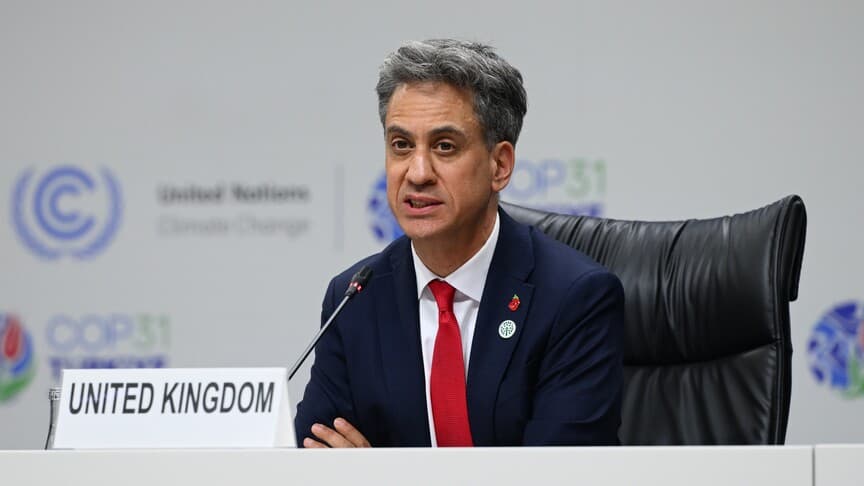
UK Foreign Secretary Ed Miliband said on Wednesday that dependence on fossil fuels undermines national security and called for accelerating the transition to clean energy. He made the remarks at the Clean Energy Transition & Electrification Summit, held as part of the COP31 climate summit taking place in Antalya, Turkey, Anadolu reports.
The minister's arguments
According to Miliband, for the United Kingdom, half of the recessions since the 1970s were caused by crises related to fossil fuels. He added that even the largest fuel producer, the United States, is not immune to such shocks, citing Vice President JD Vance's remark that the war with Iran genuinely affected voter sentiment.
Call to speed up the transition
“As long as you depend on fossil fuels, there can be no security, because you are at the mercy of a fuel rollercoaster that you do not control due to geopolitical conflicts,” Miliband said, noting that the world experienced this firsthand during the war with Iran and Russia's war with Ukraine. In his assessment, electrification based on clean energy has now become a real alternative to fossil fuels, which was not the case in the past, and this has been made possible by the transformation of clean energy prices over the past two decades. He thanked the Turkish presidency for placing this idea at the center of the COP31 agenda.
Address to foreign ministers
“As foreign secretary, this (the climate crisis) is a matter of national security,” Miliband stressed. He called on all foreign ministers and prime ministers to treat it the same way, since food security, infrastructure security and population displacement have, in his words, serious security consequences for states. “We must bring the era of clean-energy-based electrification to maturity,” he concluded.