The key facts
- Washington proposes expanding Pax Silica from AI supply chains to a general economic security framework
- Some EU countries demand objective criteria for 'sensitive technologies,' fearing US discretion
- The Commission has proposed an explanatory note: 'superintelligence' means artificial intelligence for the EU
Washington wants more than a chip alliance
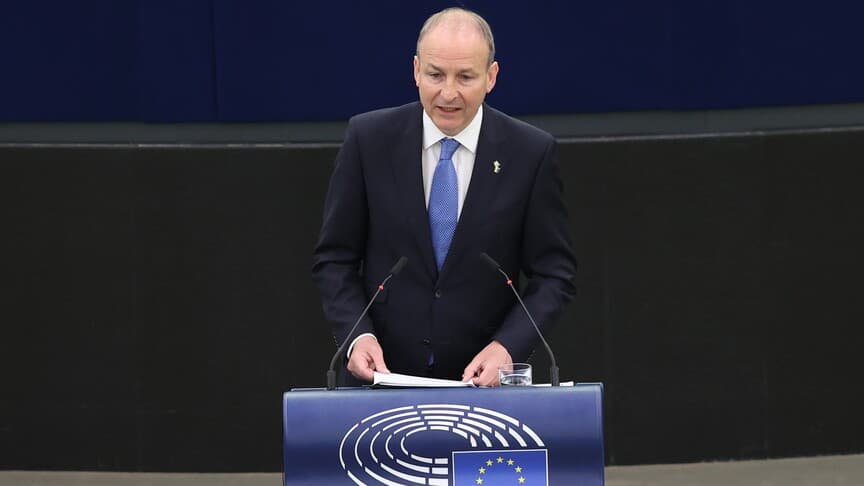
The United States has faced EU resistance over plans to expand Pax Silica, an initiative they lead, into a broader economic security framework intended to protect American technological leadership. Euronews reports this, citing the latest draft of the American declaration, which EU ambassadors discussed on Wednesday.
What the draft declaration contains
Pax Silica is a US-led coalition created to protect supply chains in AI, semiconductors and critical minerals. Washington wants its participants to approve the declaration at a ceremony in San Francisco on Sunday. The draft states that 'economic security is the foundation of national security' and that no country can be secure without protecting its critical systems and technologies. The document calls for a 'common understanding' of protecting sensitive technologies and critical infrastructure through diversifying supply chains and coordinating responses to economic coercion, and states that 'durable economic security among trusted partners rests not on assurances of friendship alone, but on vigilant protection of the foundations on which our economies depend.'
Why Brussels has doubts
The EU joined the initiative in June, despite reservations from France, after several member states had signed up individually, Euronews notes. Washington's new proposals have revived disagreements within the bloc. Part of the concern stems from past experience: in 2025, the Biden administration introduced export restrictions under the AI Diffusion Framework, which would have limited access to the most advanced AI chips for a number of EU countries. The Trump administration rescinded these measures shortly before they were due to take effect, but they would have created serious problems for the single market built on the free movement of goods, and were seen as a signal that Washington did not consider some EU countries sufficiently aligned with its approach to China, whose technological rise the US is restraining by denying Chinese companies access to advanced chips from American developers such as Nvidia.
Two sticking points
The first contentious point is the broad definition of sensitive technologies and critical infrastructure: some EU countries are demanding objective criteria, fearing that the current wording would give Washington considerable latitude to impose restrictions and pressure allies into following its lead. The second is terminology: Trump promotes the concept of 'superintelligence,' whereas the European Commission has proposed an explanatory note clarifying that the EU understands this term to mean artificial intelligence. For Brussels, this is a matter of legal certainty, since AI is already defined in key EU legislation, primarily the AI Act, which Washington has long opposed and in response to which it proposes creating a working group within Pax Silica on 'innovation-friendly' regulatory approaches.
A mandate to negotiate exists; a mandate to sign may not
On Wednesday, the governments of EU countries gave the Commission a mandate to represent the bloc and negotiate the content of the declaration with the US. However, as Euronews notes, the Commission may not have a mandate to sign it by the ceremony in San Francisco — meaning that by the scheduled date, the EU's position will remain a negotiating one rather than finally agreed. At the same time, the declaration ends with the formula that protecting sensitive technologies and critical infrastructure is a 'common cause,' and that each signatory's security is strengthened by the vigilance of all.