The key facts
- Kurum proposed a system that takes into account the right of developing countries to development and facilitates access to finance and technology
- Three priorities of COP31: investments, access to finance, resilience; the 'Climate Implementation Bridge' was proposed
- Turkey has delivered 455,000 housing units to those affected by the 2023 earthquakes and built 500,000 climate-resilient homes in two years
Speech at the summit in Antalya
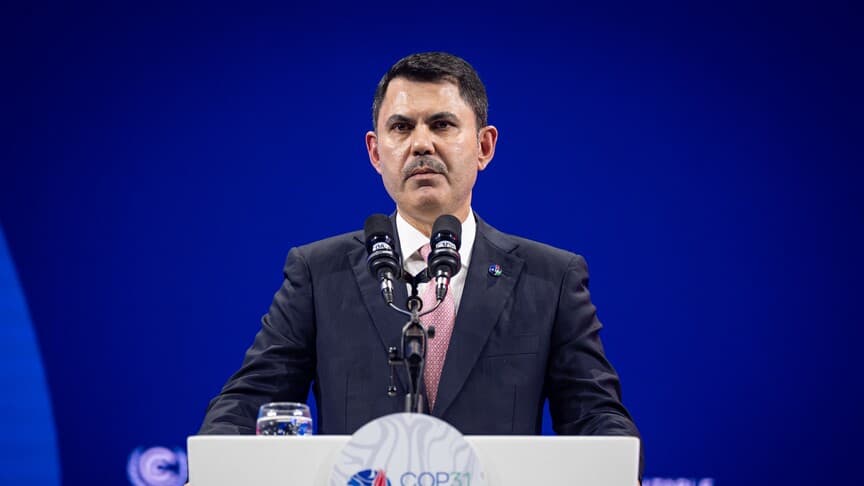
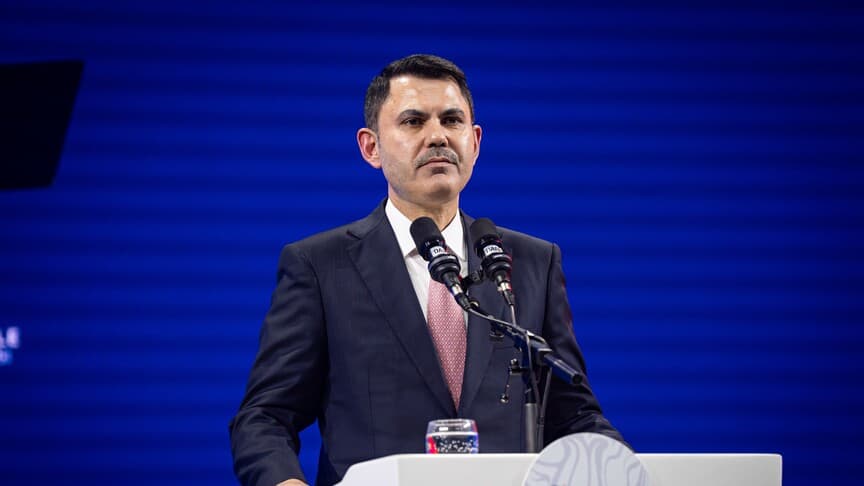
COP31 President, Turkey's Minister of Environment, Urbanization and Climate Change Murat Kurum spoke at the opening of the high-level segment of the COP31 leaders' summit in Antalya, Anadolu reports. He called for a more just global climate system that would respect the right of developing countries to development, make it easier for vulnerable states to access finance and technology, and ensure that all countries benefit from the green transition. According to him, Turkey under the leadership of President Recep Tayyip Erdogan is ready to facilitate such a consensus thanks to its historical and geographical experience as a 'bridge between East and West, North and South'.
Three priorities of the presidency
Kurum explained that since assuming the presidency, Turkey, together with Australia, which is leading the negotiations, has been advancing three priorities. The first is turning national climate goals into investment programs with commitments reflected in national budgets; here he mentioned the global electrification initiative '35 by 35', aimed at raising the share of electricity in final energy consumption to 35% by 2035. The second is moving from financial promises to real access to climate finance: he noted that projects wait years for funding, and excessive debt burdens weaken the collective capacity to solve problems. To this end, the presidency has developed the 'Climate Implementation Bridge', which is meant to link national plans with projects, projects with financing, and financing with technology and expertise. The third priority is resilience: preparing cities, water resources, agriculture and critical infrastructure for future risks.
Turkey's experience and arguments for justice
As an example of long-term planning, Kurum cited the reconstruction of southeastern Turkey after the devastating earthquakes of February 2023: according to him, the country has delivered 455,000 housing units to those affected and built 500,000 homes resilient to climate risks in two years, and is ready to share this experience. He also named the net-zero emissions target by 2053 within the vision of the 'Turkish Century', the Zero Waste movement launched under the leadership of First Lady Emine Erdogan, the circular economy and methane emission reduction as concrete tasks of climate policy. Kurum emphasized that climate action and national interests do not contradict each other: energy efficiency strengthens energy security, investment in water resources strengthens food security, and clean technologies create opportunities for industry and employment. He recalled that the average global temperature in 2024 exceeded the pre-industrial level by 1.5°C on an annual basis for the first time, calling this goal a 'shared compass', and concluded his speech with a call to make Antalya a symbol of the transition from promises to implementation.