The key facts
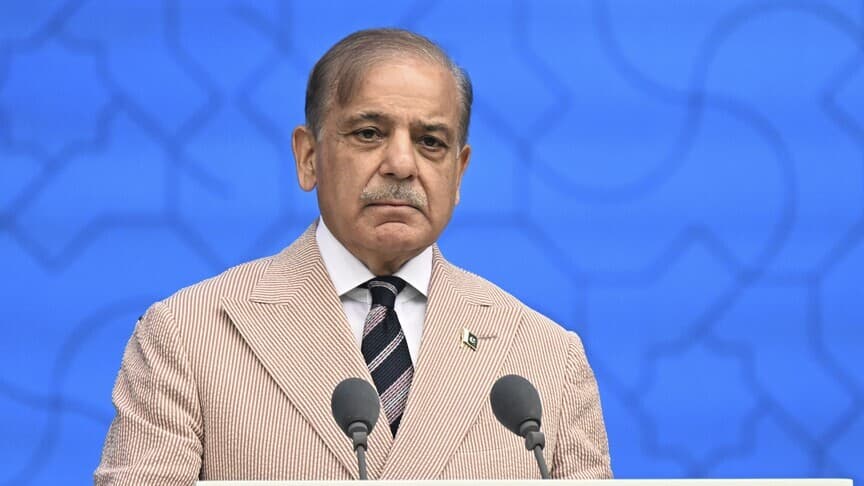
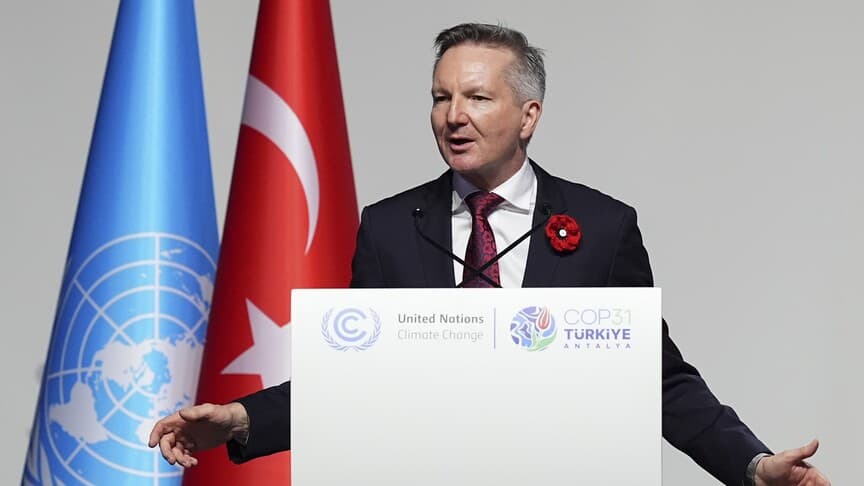
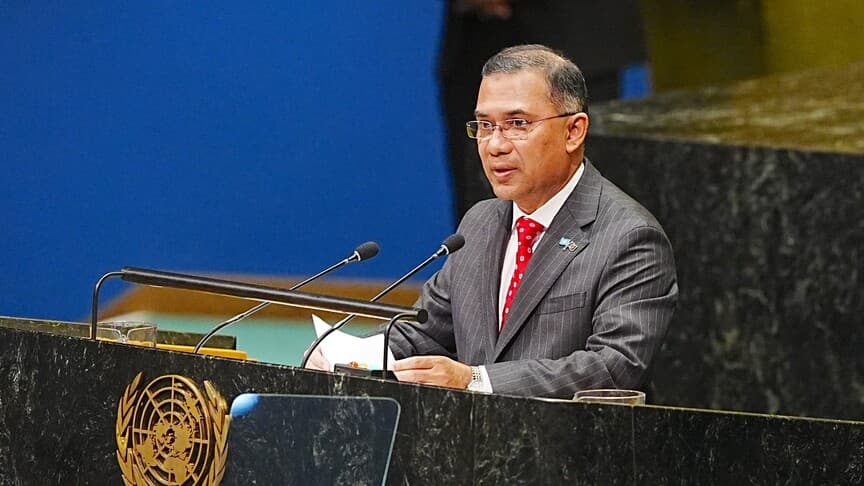
- Bangladesh's Prime Minister Tarique Rahman spoke at COP31 in Antalya, calling for equitable access to climate technologies and a 'just' energy transition.
- He proposed directing at least 50% of international climate finance to adaptation and pursuing debt relief for vulnerable countries, including through 'debt-for-climate' schemes.
- Bangladesh aims to generate 20% of its electricity from renewable sources by 2030, including plans to develop 4,000 MW of solar power.
Speech at the summit in Antalya
Bangladesh's Prime Minister Tarique Rahman spoke at the COP31 climate summit taking place in Antalya, calling for countries to be given equitable access to climate-friendly technologies and for a 'just' energy transition. He proposed supporting developing countries in their movement toward developed-economy status and accelerating the transition to renewable energy through affordable financing, skills development, and a just transformation of the energy sector.
Financing: grants instead of loans
Climate finance took center stage in the speech. Rahman called for directing at least 50% of international climate finance to adaptation and for easing the debt burden of vulnerable countries, including through 'debt-for-climate' mechanisms. 'Climate-vulnerable countries need grants, not new loans that increase their debt,' he said, adding that such countries need reliable financial support, modern technologies, and stronger adaptation measures.
The burden on Bangladesh's economy
The Prime Minister stressed that losses and damage related to climate change place a heavy strain on Bangladesh's economy, even though the country accounts for less than 0.5% of global greenhouse gas emissions. This mismatch between contribution to the problem and its consequences was a key argument in his address to summit participants.
National climate goals
Rahman also outlined the country's domestic plans: Bangladesh aims to cover 20% of its electricity needs from renewable sources by 2030, including the development of 4,000 megawatts of solar power. He also mentioned initiatives to turn waste into energy, as well as the development of 'green' industries.