The key facts
- Russia's Foreign Ministry banned entry for two French deputies and two journalists in response to the expulsion of Ksenia Fedorova from France
- Fedorova has been under an expulsion order and an asset freeze in France since late July, and under EU sanctions since September
- Deputy Sacha Houlié called the ban 'recognition' of his work against foreign interference
Moscow's symmetrical response
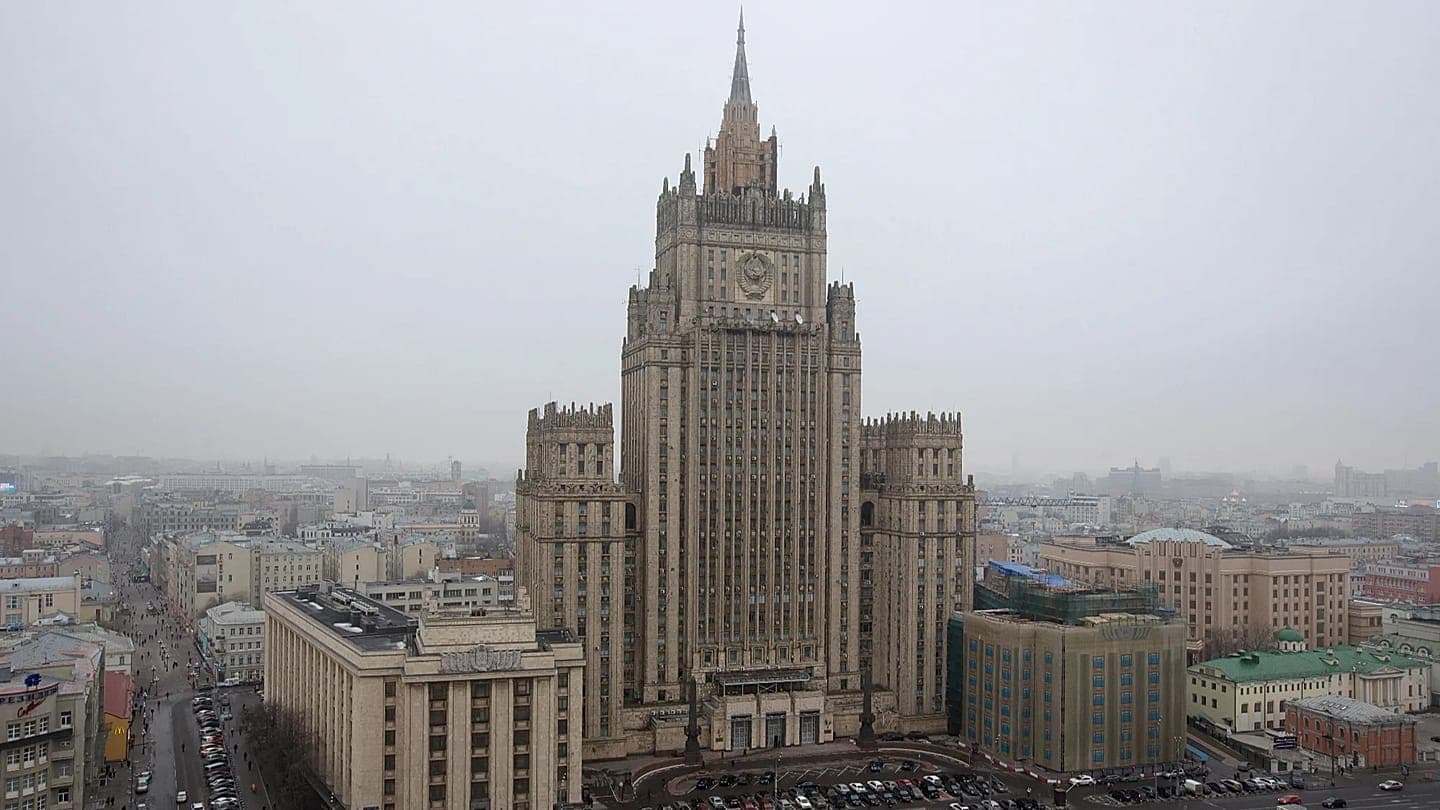
Russia's Foreign Ministry announced a ban on entry into the country for four French nationals: deputies Sacha Houlié and Arthur Delaporte, as well as journalists Ariane Chemin and Paul Gogo. The decision was announced on Wednesday by the ministry's official spokesperson, Maria Zakharova, at a briefing, Euronews reports. In Moscow, the ban was explained by their 'participation in the harassment of Fedorova and calls for her expulsion' — the measure is a response to France's decision to expel the pro-Kremlin commentator Ksenia Fedorova, the former head of RT France.
Who is banned and why
Delaporte is a Socialist deputy: last June, in parliament, he asked Interior Minister Laurent Nuñez about the extension of Fedorova's 10-year residence permit, calling the prefecture's decision 'unjustified and non-functional', and calling her a 'Kremlin propagandist' and 'an agent destabilizing our country'. Houlié, a deputy from the Place publique party, chaired the National Assembly's legislation committee from 2022 to 2024 and sits on the parliamentary intelligence delegation; in November 2023 he produced a report on France's vulnerability to foreign interference, which describes Moscow's methods in detail. Ariane Chemin is a senior reporter at Le Monde and a writer who in May published a book on the consequences of Russia's invasion of Ukraine. Paul Gogo worked in Russia for nine years — from 2017 until February 2026; before that he had lived in Ukraine since 2014.
Reaction and the context around Fedorova
On the social network X, Houlié called the ban 'recognition of my work against foreign interference in France' and added that the sanction 'calls on me to continue this just cause of defending France's fundamental interests'. He supports Raphaël Glucksmann, a candidate in France's presidential election, who previously said he himself had been targeted by Russian online 'destabilization' operations. Fedorova herself has been under an expulsion order and an asset freeze in France since late July, and under EU sanctions since September. According to a document published in the Official Journal of the EU on 24 September (as summarized by Euronews), she is accused of spreading 'messages echoing those promoted by the Russian authorities': she portrayed Western support for Ukraine as a factor prolonging the war, questioned established facts about the deportation of Ukrainian children, and presented the policy of Europe and NATO as a threat to European security. It is also noted that after RT's broadcasting was suspended, she regularly appeared on CNews, Europe 1 and in the JDD, continuing to convey these messages to a wide audience. Currently, according to Euronews, Fedorova has become one of the media figures of the group of conservative billionaire Vincent Bolloré.