The key facts
- The European Commission presented the Digital Fairness Act and an update to the consumer protection regulation
- Fines of up to 6% of annual global turnover in major cross-border cases
- Commission estimate: consumer savings of €88.4 billion in 2025–2035
What the European Commission proposed
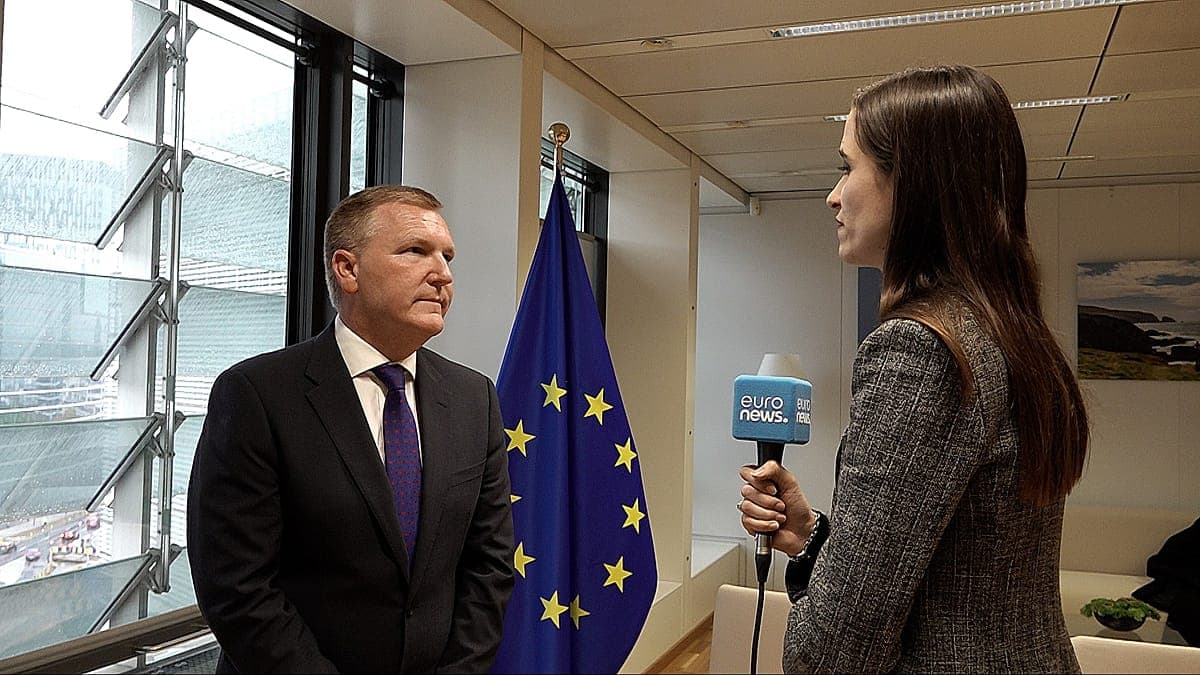
The European Commission has presented the Digital Fairness Act (DFA) bill, aimed at manipulative online practices: subscriptions that are hard to cancel, hidden prices and interfaces that hold the user's attention. Consumer protection commissioner Michael McGrath called the package, together with an update to the consumer protection regulation, 'the most significant reform of EU rules in this area in more than 20 years', while technology commissioner Henna Virkkunen said the goal is to fight practices that distort consumer choice.
Key measures
The bill bans 'dark patterns' — for example, false messages that an item is almost sold out. Users will be able to turn off 'sticky' features such as infinite feeds and video autoplay. Prices, including dynamic ticket pricing and in-game currency rates, must be displayed transparently. Subscriptions will become easier to cancel: before the end of a free trial period, the company must remind the user and obtain explicit consent to charge, and auto-renewal will require a deliberate choice. Rules for influencers are introduced for the first time: mandatory labelling of advertising content and a ban on exploiting children's trust. Personalised advertising and prices targeting minors or exploiting people's vulnerabilities will be banned.
Child protection and games
A separate section concerns children's spending in video games: the proposal is to restrict loot boxes that mimic gambling and mechanics that push players to pay for progress — FIFA Ultimate Team packs are cited as an example. For adult players, loot boxes and 'streak' mechanics will remain allowed. The DFA is meant to work together with the recently proposed EU Kids Act, which shifts responsibility for protecting children online to companies, and to complement the Digital Services Act, Digital Markets Act and AI Act.
Enforcement and fines
In parallel, an update to the Consumer Protection Cooperation Regulation has been proposed: the European Commission will gain the power to independently investigate major cross-border cases and issue fines — up to 6% of a company's annual global turnover. Notable context: the DMA already provides for fines of up to 10%, the DSA up to 6%. Non-budget companies will need to appoint a legal representative in the EU to cooperate with authorities. According to the Commission's estimate, the rules will save consumers €88.4 billion in 2025–2035; the annual benefit, taking lost time into account, is €13.7 billion versus €678 million in annual costs for business.
Reaction: from cautious approval to criticism
Industry groups were alarmed: Video Games Europe and the European Games Developer Federation called the proposal 'unworkable, unjustified and disproportionate', noting that the ban on selling children functions that help them win is worded so broadly that it 'could cover almost any in-game purchase'. Experts differ in their assessments: Utrecht professor Catalina Goanta believes a full ban on 'dark patterns' risks overregulation and that many problems can be solved by better enforcement of existing rules, while BEUC head Agustín Reyna, on the contrary, sees a single law as a simplification compared with 27 national regimes. Clifford Chance lawyer Monika Zdzieborska highlighted three contentious points in future negotiations: coherence with the DSA, AI Act, GDPR and Kids Act, default settings for 'sticky' features, and the proportionality of regulating different types of platforms. EDRi representative Ithaso Domínguez de Olazábal noted that the rules on addictive design rely too heavily on the user finding the off switch themselves rather than obliging companies to prevent harmful practices. The text must now be approved by the European Parliament and the Council; experts expect changes during the negotiations.