The key facts
- Turkey is hosting COP31, Australia holds the negotiating chair
- Albanese: warming trajectory has fallen from ~4°C to ~2.6°C, the target is 1.5°C
- The Pacific Resilience Facility has been created — the first regional climate mechanism led by Pacific countries
Leaders' summit in Antalya
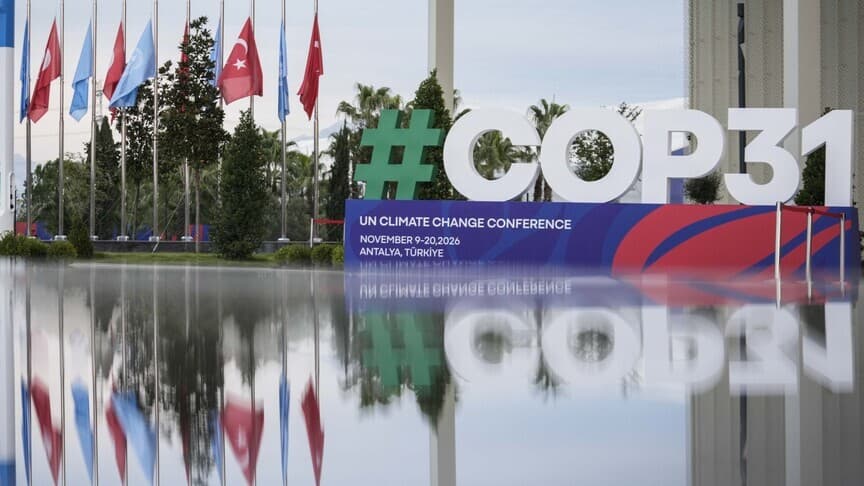
The leaders' summit of the 31st UN Climate Conference (COP31) is taking place in Antalya, Turkey. Turkey is the host country of the conference, while Australia holds the post of negotiating chair — this division of roles sets the framework for the entire forum. Australian Prime Minister Anthony Albanese said in his address that COP31 'must be a place where our cooperation delivers practical results': he was referring to unlocking investment in clean energy technologies, accelerating electrification, action for the oceans, and climate finance for those who need it most.
Assessment of progress under the Paris Agreement
Albanese cited figures illustrating how the warming trajectory has changed since the Paris Agreement: whereas the world was previously heading toward warming of about four degrees, today's estimates point to a trajectory of around 2.6 degrees. The Agreement's target is 1.5 degrees, and, according to the Prime Minister, the world will likely exceed it, yet 'every fraction of a degree of warming we prevent will matter.' He acknowledged that the Agreement's goal is 'under pressure,' but stressed that the Paris Agreement 'bent the emissions curve,' accelerated the rollout of renewable energy, and redirected global financial flows toward cleaner energy. He called the current period the 'critical decade,' adding that Australia is 'doing its part' and that its progress is 'strong, with significant achievements.'
Support for Pacific states
Albanese paid particular attention to the climate challenges facing Pacific countries. He recalled that a year earlier Australia, together with other Pacific states, had established the Pacific Resilience Facility — the first regional climate financing mechanism led by Pacific countries. The Prime Minister called it 'a promise to our Pacific family that they will not face the climate crisis alone' and urged ensuring that the most vulnerable countries receive the necessary capital and that no state is left 'behind.'
Guterres's call for a 'climate justice compact'
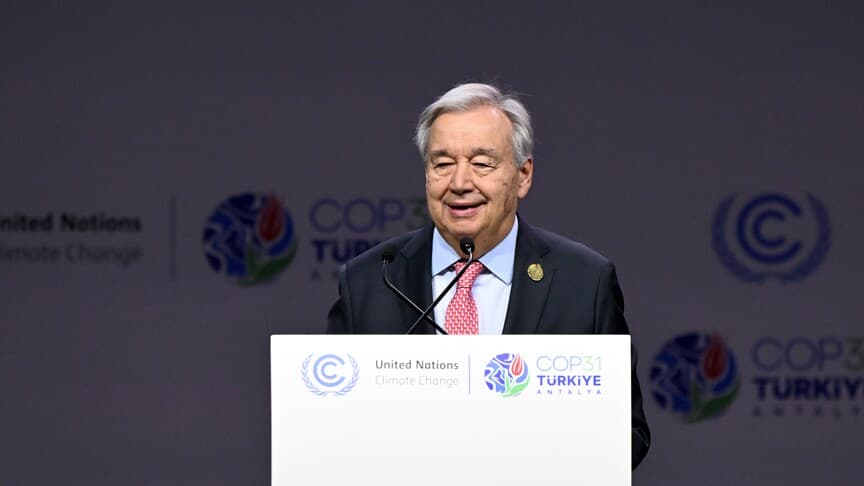
UN Secretary-General António Guterres, who spoke before Albanese, called for a new 'Climate Justice Compact' based on shared responsibility. Albanese, citing the Secretary-General's words, linked the climate agenda not only to a sustainable environment but also to 'a more prosperous economy,' concluding his address with a call to turn ambition into implementation and commitments into action.