The key facts
- Guterres proposed a 'Climate Justice Compact' with four pillars: a fair transition away from fossil fuels, protection of vulnerable groups, financing, and cooperation instead of geopolitical fragmentation
- For the 1.5°C goal: tripling renewable energy capacity by 2035 and cutting coal generation by at least 75%
- Developed countries should provide at least $300 billion per year by 2035; Guterres proposed taxing the windfall profits of the largest oil companies
Call for a New Climate Pact
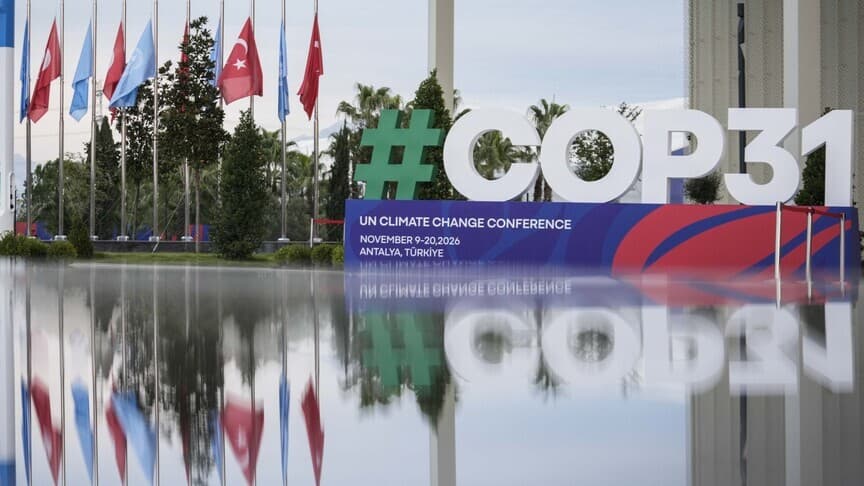
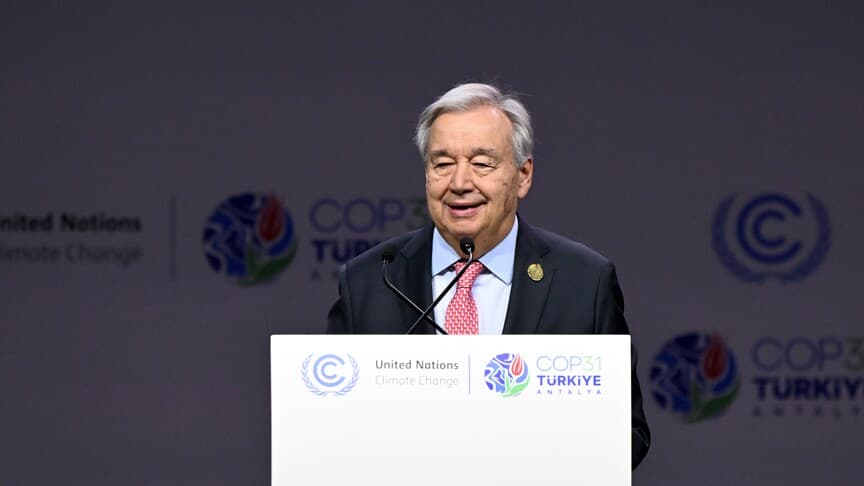
UN Secretary-General António Guterres, speaking at the leaders' summit of the UN climate conference COP31, held in Antalya, Turkey, proposed concluding a new 'Climate Justice Compact' based on shared responsibility, shared security, and shared benefits. He stressed that all countries must fulfil their commitments in accordance with the principle of common but differentiated responsibilities, and called for accelerating the transition away from fossil fuels and mobilising large-scale climate finance.
Four Pillars and Concrete Figures
The framework proposed by Guterres rests on four elements: accelerating a 'just transition' away from fossil fuels, protecting vulnerable population groups, ensuring sufficient financing, and choosing cooperation over geopolitical fragmentation. To keep warming within 1.5°C, he said, global renewable energy capacity must be tripled by 2035 compared with the 2025 level, and unmodernised coal generation must be cut by at least 75%. Guterres called on developed countries to raise climate finance to at least $300 billion per year by 2035 and proposed taxing the windfall profits of major oil companies — according to his data, the nine largest of them earned $95 billion in the last quarter alone — to support vulnerable countries.
Warning of 'Mutual Guaranteed Destruction'
Guterres warned that climate disasters are 'hitting lives, livelihoods and economies' around the world, and that the current trajectory is 'a path to mutual guaranteed destruction'. 'Either plan this just transition, or pay for it with chaos and lost livelihoods,' he said. The proposed compact remains the secretary-general's initiative: no available information reports on the reaction of summit participants or the prospects for its adoption.