The key facts
- Of 817 tools from seven sites in southern Britain, seven handaxes were identified measuring at least 22 cm, up to 30 cm and up to 3 kg, compared with the usual 8–15 cm
- Replicas of the giant handaxes proved less practical: 22% more time to cut ropes, and making one took about 45 minutes versus 20–30 for an ordinary tool
- The authors suggest a symbolic function — a display of skill and status — without ruling out practical use as well
Giant handaxes as a mark of skill
More than 300,000 years ago, inhabitants of what is now southern Britain made unusually large flint handaxes that probably served less for practical work than to display skill and standing within the group. Researchers at University College London came to this conclusion; the results were published in the Journal of Archaeological Science: Reports, as reported by Gazeta.Ru and Life.ru.
What was found and how the giants differed
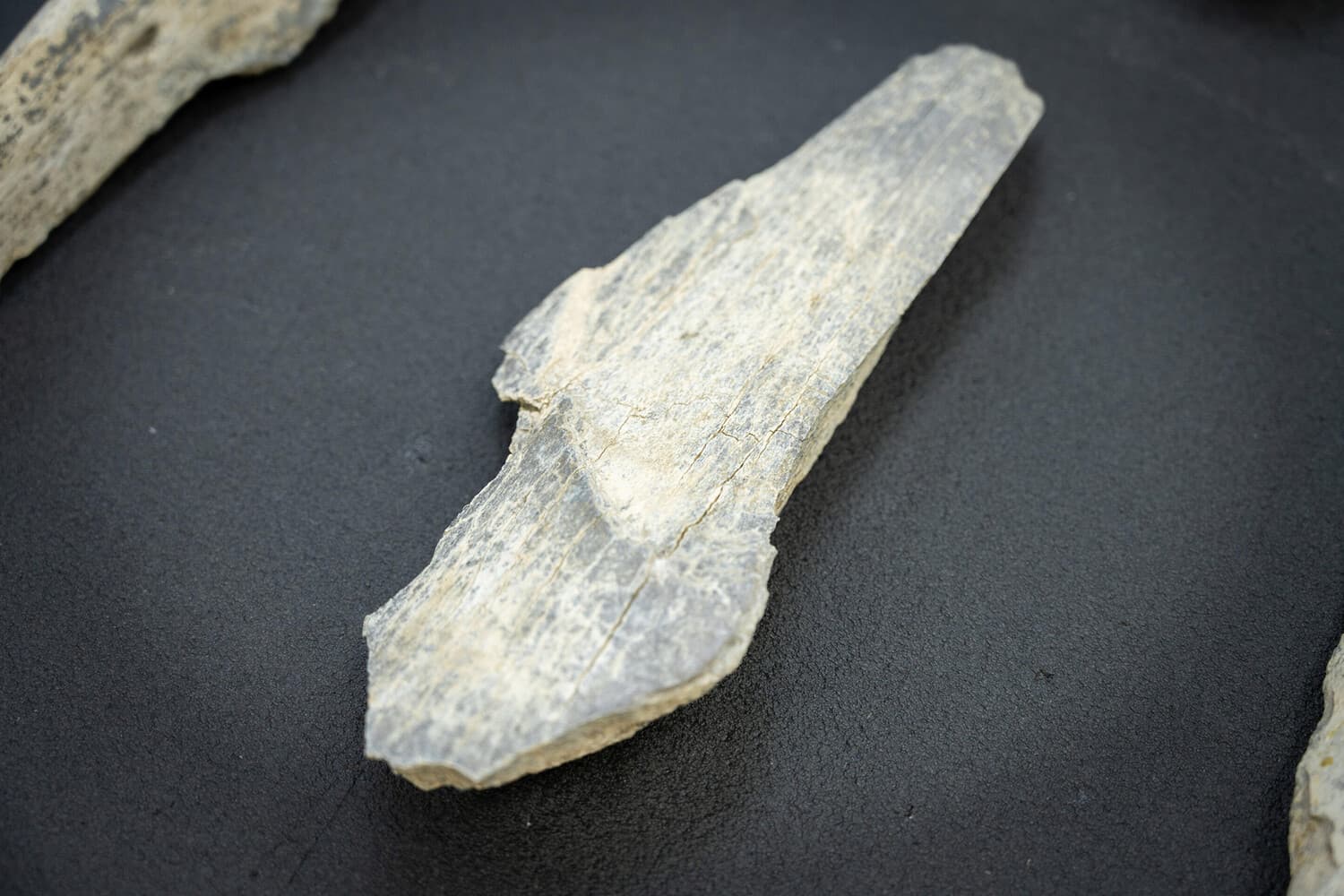
The scientists studied 817 stone tools from seven archaeological sites in southern Britain. Among them were seven handaxes at least 22 cm long; some reached 30 cm and weighed up to 3 kg, whereas ordinary handaxes of the time measured 8–15 cm. Such large specimens are classified as ficrons — flint handaxes with a rounded base and an elongated point. Using three-dimensional models, the archaeologists determinedthat the giant handaxes were more symmetrical, and their edges more even, than the smaller tools from the same sites, indicating the high skill of their makers.
Experiment: practicality turned out to be worse
To test the practical usefulness of such tools, the researchers made replicas. In the experiment described by Life.ru, 20 students took part, cutting ropes with replicas of two sizes of handaxes. With the large tools, the task took on average 22% more time, the heavy stones were hard to control, and participants often had to hold the handaxe with both hands. Making a large replica took about 45 minutes — almost twice as long as making an ordinary tool, which took 20 to 30 minutes. The extra effort, therefore, offered no noticeable practical advantages.
The authors' hypothesis and caveats
The study's lead author, Malaika Standley Barrow, suggested that the unusual size and careful workmanship may have drawn attention to the maker's craft, set them apart from their fellow group members, served as a way to demonstrate dominance, or strengthen social bonds — including through the joint making of tools. The researchers do not rule out practical uses, such as delivering a finishing blow to an animal wounded in a hunt, but the main value of the giant handaxes may have been precisely their symbolic meaning.