The key facts
- OpenAI has launched Business Hub with business profiles in beta
- Companies will receive limited analytics: profile views, mentions, website clicks
- Earlier, in March 2026, OpenAI shut down its e-commerce project in ChatGPT
New tools for companies in ChatGPT
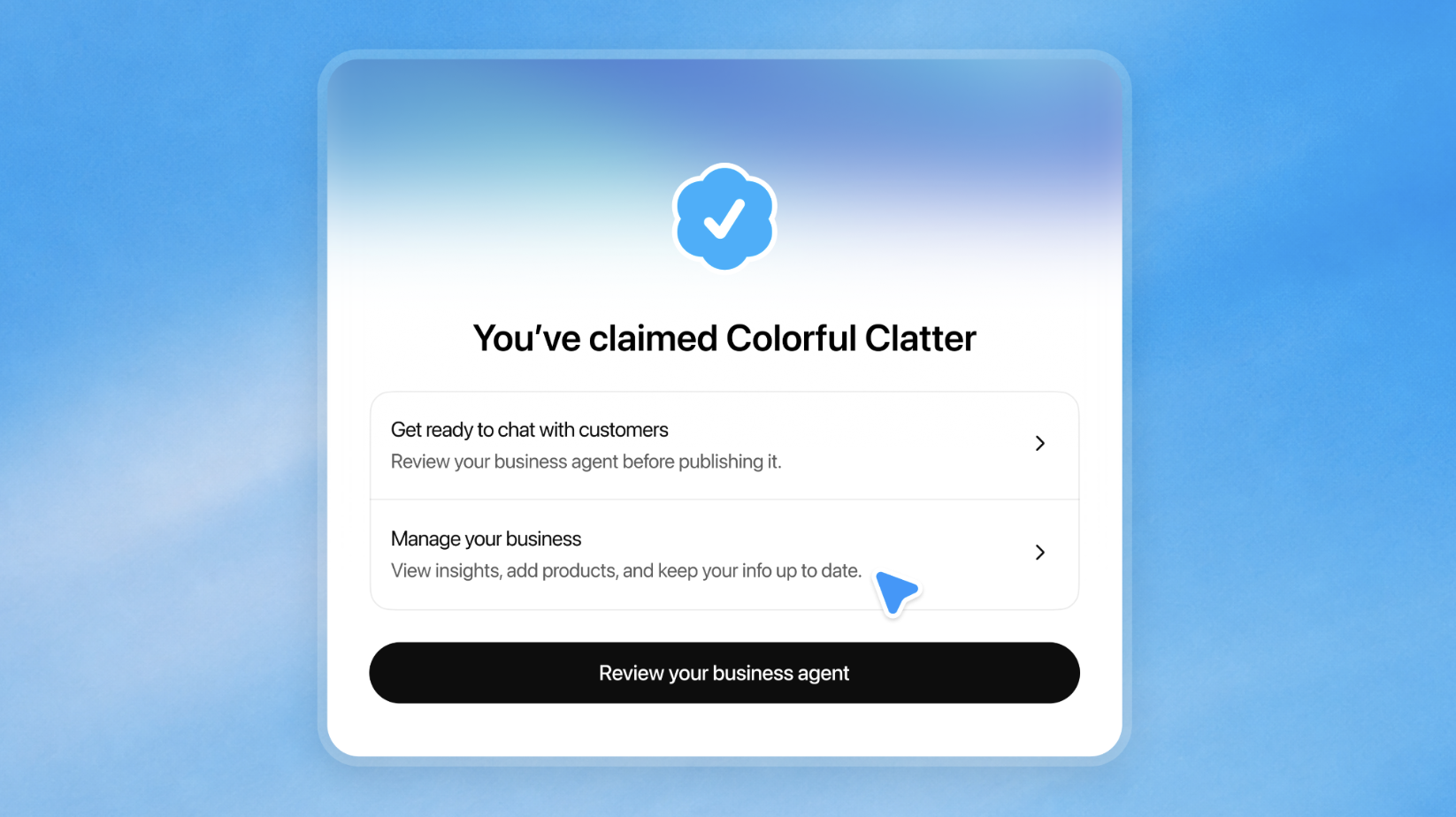
OpenAI has launched Business Hub — a section where companies will be able to create business profiles, verify and update information about their products and services. The feature is currently available in beta. According to TechCrunch, the profiles resemble what Google and other search engines already offer to companies. Companies with the appropriate access will also be able to create a specialized business agent through which ChatGPT users will be able to ask questions about the company and its products. “Today’s announcement is an early step toward a deeper business presence in ChatGPT,” the company said on Tuesday, November 10, 2026.
Analytics and verification
Business Hub will also provide companies with limited analytics — according to TechCrunch, this resembles the Google Analytics approach. Companies will see how ChatGPT users interact with their products: profile views, business mentions, website clicks, and other metrics. Profiles will need to undergo formal verification, but OpenAI has not disclosed details of the process. Vice President of Monetization Benji Shomair told journalists on Monday that the company uses “several verification methods for different types of businesses in different markets.”
A strategy shift after the e-commerce failure
This is not OpenAI’s first attempt to integrate businesses into ChatGPT. Earlier, the company tried to turn the chatbot into an e-commerce platform where users could purchase goods directly, with a commission system and even a “cart” feature. The project was seen as a potentially major source of revenue and a way to make ChatGPT a direct competitor to Amazon, but it did not take off, and in March 2026 OpenAI shut it down. The new initiative with profiles and analytics, according to TechCrunch, makes ChatGPT look more like Google — a place where users traditionally go to learn about companies they want to buy from. As for whether this approach will yield better results than the previous e-commerce project, the publication writes that this remains an open question.