The key facts
- The talks in Abu Dhabi mark a resumption of the trilateral format after a months-long break; the previous rounds in January and February led to nothing.
- Ukraine prioritizes security guarantees, a ceasefire on energy infrastructure, the unblocking of the Black Sea and prisoner exchanges; the US speaks of a post-war security architecture.
- European representatives have been invited to separate formats, but, according to experts, are unlikely to gain a say in negotiating a deal.
A format resumes after a long pause
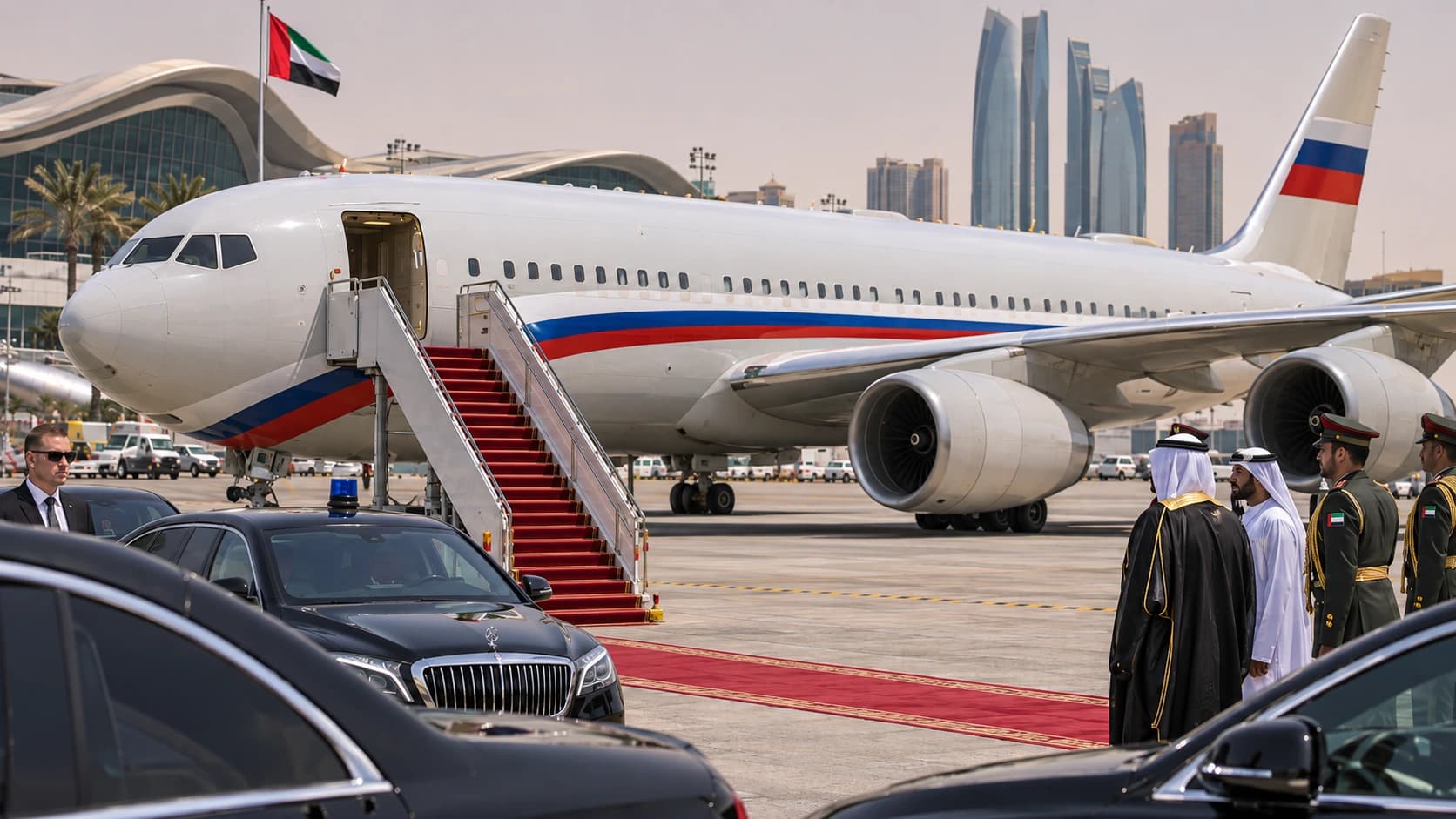
New trilateral talks between Russia, Ukraine and the United States will take place in Abu Dhabi on Tuesday and Wednesday. This is a resumption of the format after a months-long pause: the previous series of rounds mediated by the US in January and February, as Deutsche Welle, notes, led to nothing. The Ukrainian side is already inclined to see the very fact of the resumption of trilateral meetings as a result — David Arakhamia, a member of the Ukrainian delegation and member of parliament, said in a comment to DW that he does not expect a breakthrough after such a long break in the negotiation process.
Different priorities of the parties
US Special Envoy Steve Witkoff, announcing the talks, said the discussion would focus on 'post-war security arrangements, de-escalation, humanitarian efforts and next steps toward peace.' Ukrainian President Volodymyr Zelensky named his key topics: security guarantees, a ceasefire on energy infrastructure, the unblocking of the Black Sea, expanded prisoner exchanges, and preparations for a meeting of the leaders of Ukraine, the US and Russia.
Who is taking part, and where Europe stands
Witkoff is accompanied by Jared Kushner, a special envoy and the son-in-law of US President Donald Trump. Russia is represented by Vladimir Medinsky, an aide to Vladimir Putin, who heads a delegation that includes senior military and intelligence officials. The Ukrainian delegation is led by Rustem Umerov, head of Ukraine's Foreign Intelligence Service, joined by Arakhamia, diplomats and military officials. Separate formats with European representatives are planned in parallel: Friedrich Merz's foreign policy adviser Günter Sautter, head of the Elysée Palace's diplomatic service Emmanuel Bonne, British Prime Minister's national security adviser Jonathan Powell, diplomatic adviser to Italian Prime Minister Giorgia Meloni Fabrizio Saggio, as well as the head of cabinet for European Commission President Ursula von der Leyen, Björn Seibert, and the head of cabinet for NATO Secretary General Mark Rutte, Jeffrey van Leeuwen. Europe's formal participation in discussing a possible deal, however, is in question: Anna Shelest, director of security research at the Ukrainian Prism network, suggested in a comment to DW that the Europeans would play 'at best an observational role,' since Russia has so far been reluctant to let them to the table in order to preserve the image of the talks as 'a matter of two superpowers' and to pressure Washington.
The Olešky ceasefire as a possible template
Experts interviewed by DW see limited but real points of contact. Shelest called the inclusion of senior intelligence officers in the Russian delegation 'a fairly positive aspect' — at this level, additional agreements are possible, for example on prisoner exchanges or humanitarian pauses in villages near Olešky in the occupied Kherson region, where at the end of October a temporary ceasefire was reached, with the participation of US First Lady Melania Trump, to deliver aid and evacuate civilians. Ivan Us, an economist-diplomat at Ukraine's National Institute for Strategic Studies, agrees that in Abu Dhabi an attempt may be made to use the Olešky scheme as a model for other limited humanitarian ceasefires. At the same time, he recalled that Russia continued strikes on Ukraine during the Olešky pause and used it to strengthen its positions around the city. Both experts warn against expecting concrete results: Shelest suspects that Moscow will use the talks to buy time, while Us notes that talks with people who do not make decisions may be merely for show. Against this backdrop, Trump, after a conversation with Russian envoy Kirill Dmitriev, spoke of a 'big beautiful deal' that 'could encompass all of Europe'; Kushner clarified that the new security architecture would be built around permanent security consultations, reliable crisis communication channels, greater military transparency, mutual measures to reduce the risk of escalation, and a long-term framework for European security. In Shelest's assessment, these points 'contain nothing that the Russians have not been talking about since 2009.'