The key facts
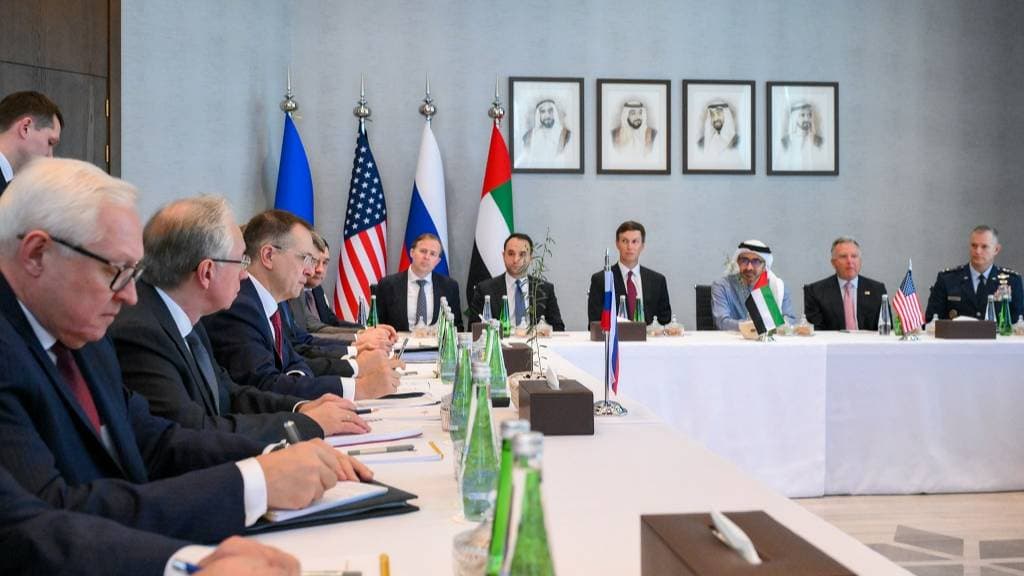
- Russian, Ukrainian and American negotiators are meeting in Abu Dhabi; European representatives will come but will not take part in the main trilateral meeting
- Rasmussen: Europe is 'begging for a seat at the table' and must bring assets, not requests
- Zelensky said he waited almost a month for approval of Patriot and NASAMS deliveries; Rasmussen called the delay 'detrimental' to Ukraine's defense
Abu Dhabi talks without Europe at the main table
Russian, Ukrainian and American negotiators are meeting on Tuesday and Wednesday in Abu Dhabi to discuss ending Russia's full-scale invasion of Ukraine. Jared Kushner, an adviser to US President Donald Trump, said last week that a 'new European security architecture' would be one of the focuses of the talks; Russian officials use similar wording, demanding a reduction of NATO's presence in Europe. Senior European representatives — from the EU, NATO, the UK, Germany, Italy and France — will also travel to the UAE, but for separate discussions: they will not take part in the main trilateral meeting. Their presence, as Euronewsnotes, reflects Europe's desire to have a voice in negotiations whose outcome could redraw the security of the continent.
Rasmussen: 'Europe is begging for a seat at the table'
Former NATO Secretary General (2009–2014) and Danish Prime Minister (2001–2009) Anders Fogh Rasmussen told Euronews that Europe is in a weak position: 'Europe is begging for a seat at the table. You need to make yourself indispensable by bringing assets to the table, and I hope Europe will now wake up.' In his words, Trump has 'chosen Moscow' and sided with Putin, and if Europeans do not wake up, they will 'sleepwalk into a permanent war on the European continent.' Asked whether he had ever seen NATO as divided as it is today — against the backdrop of the reduction of the American contingent, Trump's threats to leave the alliance and disputes over Greenland — Rasmussen replied: 'Never,' adding that in the past 'you could trust the American ally.'
Division within Europe: the Putin call and the position of Eastern Europe
Rasmussen illustrated the weakness of a unified European position with a recent episode: a 90-minute phone call with Vladimir Putin, initiated by Norwegian Prime Minister Jonas Gahr Støre and Finnish President Alexander Stubb, drew criticism from Danish Prime Minister Mette Frederiksen, who said she was 'very skeptical' of this 'independent initiative' because it 'was not coordinated with any of us.' Rasmussen called talks with Russia 'a good thing,' but stressed that such initiatives need to be coordinated, and that Europe 'cannot be a neutral mediator — we will side with the Ukrainians.' Polish Foreign Minister Radosław Sikorski, for his part, insists that Eastern European countries must have a voice in the negotiations: 'The last thing we want is for Western Europe to make deals with Russia over the heads of Eastern Europeans.' Asked whether the interests of the Baltic states, which joined NATO and the EU in 2004, should be taken into account, Rasmussen replied: 'We should have listened to the Eastern Europeans.'
Delays with Patriot and NASAMS
Beyond the talks, Rasmussen criticized Washington's delays in approving the delivery of American air defense missiles to Ukraine. Ukrainian President Volodymyr Zelensky said at the end of October that he had been waiting for almost a month for approval of Patriot and NASAMS deliveries. The delays raise concerns about Ukraine's ability to repel Russian ballistic missiles and other air strikes, which continue to hit Kyiv. Rasmussen called the delay 'detrimental' to Ukraine's defense and added: 'I am so disappointed that the Americans have not delivered what was promised. I will not speculate about the reasons, but it only underscores the need for Europe to stand on its own feet.' In his words, decisions in Europe must be made 'regardless of who lives in the White House.'