The key facts
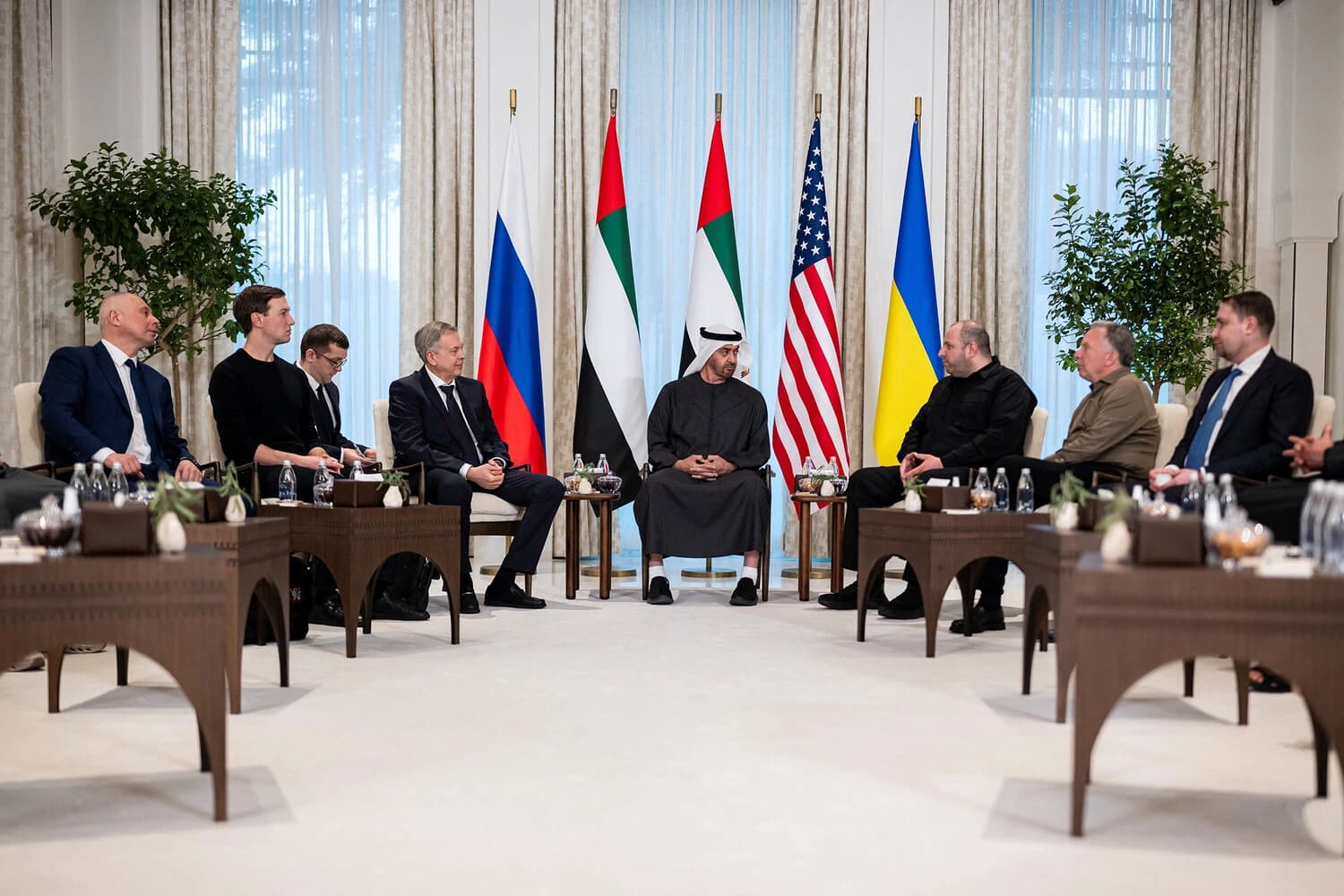
- Talks between Russia, the US and Ukraine in Abu Dhabi are scheduled for November 10–11
- The European Commission will send representatives but has not specified the format of their participation
- Peskov: the main round of talks will remain trilateral
A British analyst's assessment
British military analyst Alexander Mercouris has suggested that the European Union may attempt to disrupt the trilateral talks between Russia, the US and Ukraine in Abu Dhabi by sending its own representatives there. 'The Europeans may want to send their people to derail the talks in Abu Dhabi. But even more than the Ukrainians, they have no serious cards to play, according to Donald Trump. So they are unlikely to succeed,' he said on his YouTube channel. In Mercouris's view, European politicians and Volodymyr Zelensky overestimate their influence on the negotiation process, and key decisions will be made without the EU's direct participation. This is reported by Gazeta.Ru and Life.ru.
The positions of Brussels and Moscow
The day before, the European Commission confirmed its intention to send its representatives to the capital of the UAE, but the Commission's official spokesperson, Paula Pinho, did not specify which meetings and formats they would take part in. The Kremlin, for its part, outlined the framework: presidential press secretary Dmitry Peskov explained that the agreed format provides for the participation of Moscow and Kyiv with Washington as mediator, while European countries have separate channels of communication with the US and Ukraine. Thus, against the backdrop of assessments about possible EU attempts to influence the process, the de facto established situation is as follows: the main round of talks will remain trilateral, and European participation in it is not envisaged.
What is known about the talks themselves
The talks are scheduled for November 10–11; the parties intend to discuss security guarantees, reducing the risk of escalation, humanitarian issues and further steps towards settling the conflict. Earlier, the Financial Times reportedthat European diplomats plan to disrupt the discussion of a new security architecture for the continent at these talks: according to the newspaper, their presence is aimed at preventing a 'revision of Europe's security architecture' in a format led by the US. British statements have also previously noted a 'flexible' position of Russia and Ukraine on the territorial issue. There is still no official confirmation of which specific formats the European representatives will take part in.