The key facts
- Israel's government, according to Walla, approved an initial deployment of about 250 foreign troops in Gaza
- The US has transferred equipment to a former Israeli base near the border and guards it around the clock
- Indonesia, Morocco, Kazakhstan, Kosovo, Uganda and Albania have expressed readiness to take part
Initial deployment agreed
The US is conducting military preparations near the borders of the Gaza Strip ahead of the planned deployment of an international stabilization force, Israeli media reported on Monday. According to the Walla website, Prime Minister Benjamin Netanyahu's government has given the US approval for an initial deployment of about 250 foreign troops. This marks a notable shift in position: previously Israel had spoken only of admitting 'dozens' of foreign troops without specifying a number, and in August Netanyahu flatly denied having approved the entry of an international force into the enclave.
What is already happening at the border
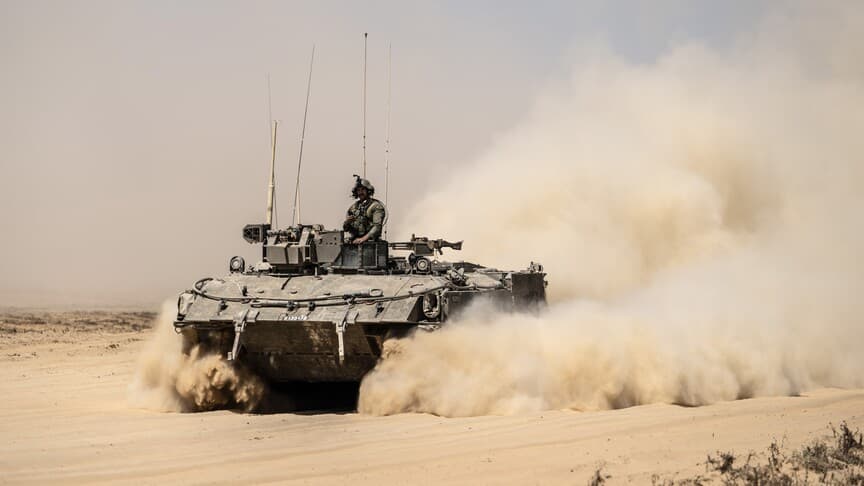
According to Walla, over the past two weeks American servicemen and officers from other countries have been spotted near the Gaza border, and an Israeli military base in the south has been converted into a US-guarded facility. The American military has transferred trucks, highly mobile armored personnel carriers, medical evacuation vehicles and armored vehicles with machine guns to the site. Guard towers, surveillance equipment and lighting have been installed around the perimeter, the fencing has been reinforced, and armed American soldiers provide security around the clock. Unnamed Israeli military officials said these movements are part of preparations for the deployment of the multinational International Stabilization Force deeper into the Strip.
Who is ready to take part and what Israel fears
According to Walla, Indonesia, Morocco, Kazakhstan, Kosovo, Uganda and Albania have told Washington they are ready to participate. Kazakhstan has offered medical and logistical assistance, and Kosovo has offered to take part in security and policing missions. The force is part of US President Donald Trump's plan for Gaza. Israel's military leadership, the outlet notes, is concerned about the policy the US may pursue toward Israel and about the pace of the force's deployment; these concerns intensified after the November 3 midterm elections, in which the Democratic Party wrested control of both chambers of Congress from the Republicans. One Israeli security official, speaking on condition of anonymity, told Walla: 'It is not out of the question that one morning the Gaza Division and Southern Command will find an international force larger than the Gaza Division itself,' adding that Israel must be prepared for various diplomatic and military scenarios.
Pilot city project in Rafah
Walla also reports progress on a UAE-backed project to build a city on part of Rafah in southern Gaza. Engineering work is underway with a capacity to accommodate tens of thousands of Palestinians, who will undergo strict security screening, including by Israel. Initially the number of those admitted will be limited — the initiative is viewed as a pilot project, and the city zone is to be secured at the initial stage by the international force. The project has no timeline: according to the outlet, the Israeli government opposes the reconstruction of Gaza as long as Hamas has not been disarmed and control of the enclave has not been transferred to a third party.
Context
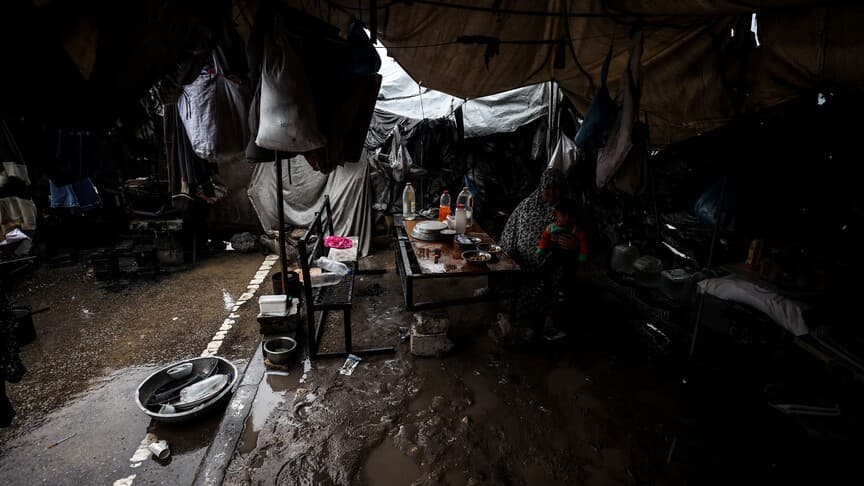
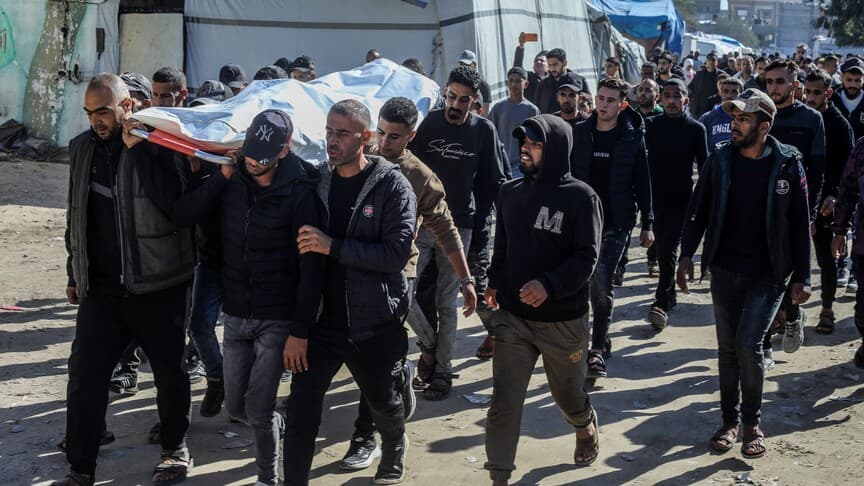
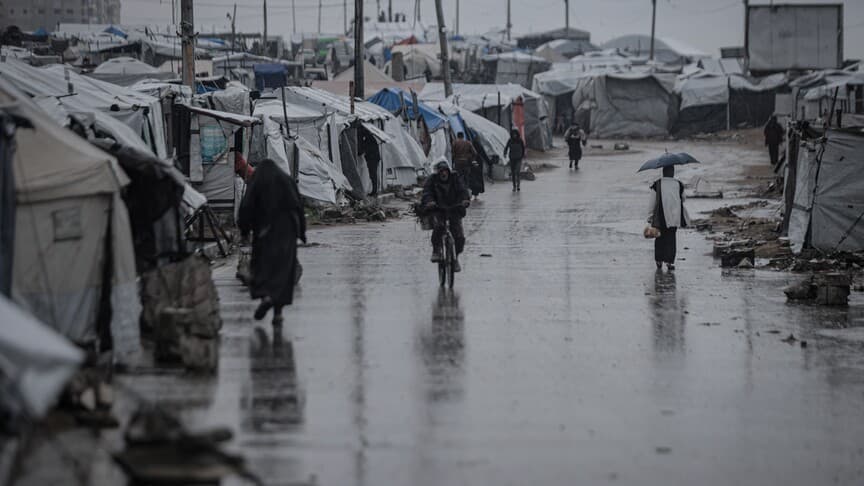
Plans to deploy such a force have been discussed for several months, but it has yet to enter Gaza — amid signs of Israeli obstacles to its deployment. According to Anadolu, more than 74,000 Palestinians have been killed and over 175,000 wounded in the Strip since October 2023, and about 90% of the enclave's infrastructure has been damaged or destroyed. Despite the ceasefire that took effect on October 10, 2025, Israeli attacks have, according to the agency, killed 1,602 Palestinians and wounded 5,794. Israel continues to restrict the agreed entry of food, medicine, shelter materials and prefabricated homes into the sector, where about 2.4 million Palestinians live, including roughly 2.15 million displaced people.