The key facts
- Three primary processing units of KINEF — a refinery with a capacity of about 18 million tonnes of oil per year (about 7% of Russia's refining) — were damaged.
- Rosneft restricted fuel sales at filling stations in six regions; Leningrad Oblast authorities recommended limits of 30 liters of gasoline and 50 liters of diesel.
- Overnight, Russia's Ministry of Defense claimed 430 drones downed in 14 regions; 317 Shahed drones were launched against Ukraine, of which 276 were shot down.
Strike on the Kirishi Oil Refinery
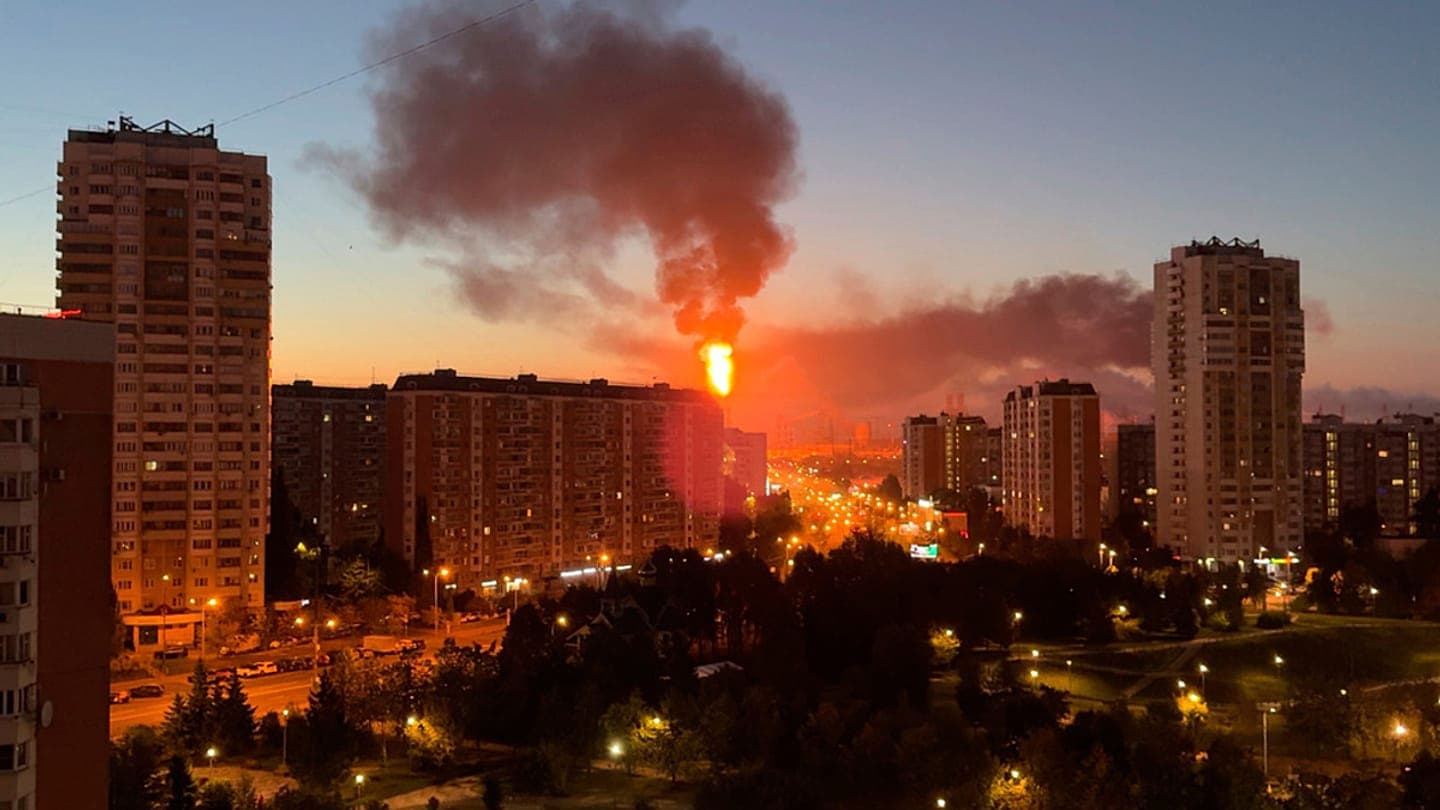
Ukrainian drones attacked the Kirishinefteorgsintez (KINEF) plant in Leningrad Oblast, euronews reports. According to Governor Alexander Drozdenko, a major fire broke out at the facility, and three primary oil processing units were damaged. Drozdenko also said that air defenses downed 113 drones, but debris from one of them fell on the roof of an apartment building in Vsevolozhsk — a woman on one of the upper floors was killed.
What KINEF is and why the strike matters
KINEF, part of the Surgutneftegaz group, is the largest oil refinery in northwestern Russia and the second most powerful in the country after the Omsk refinery. Its design capacity is 20–21 million tonnes of oil per year, and in recent years the plant has processed about 18 million tonnes annually — roughly 7% of Russia's total oil refining volume. The facility produces gasoline, diesel fuel, aviation kerosene, fuel oil, bitumen, liquefied gas and petrochemical products, including supplying aviation fuel to St. Petersburg's Pulkovo Airport. Since the start of the full-scale invasion, the plant has repeatedly been targeted by Ukrainian Armed Forces attacks, and in 2025 Surgutneftegaz came under EU, US and UK sanctions.
Fuel rationing expands
On Monday, Rosneft announced restrictions on gasoline and diesel sales at its filling stations. According to Russian media, the limits affected Karelia, Buryatia, Zabaykalsky Krai, and Novosibirsk, Arkhangelsk and Penza Oblasts: in cities — no more than 30 liters of gasoline per person, on highways — up to 50 liters; in Krasnoyarsk Krai separate limits apply (30 liters of AI-95, 50 liters of AI-92, 100 liters of diesel). Chronologically, after the strike on KINEF, the operational headquarters of Leningrad Oblast recommended that filling stations limit gasoline sales to 30 liters and diesel to 50 liters per person.
Mutual strikes and losses
Russia's Ministry of Defense claimed that overnight it destroyed 430 drones in 14 regions of the country and in annexed Crimea; euronews notes it cannot independently verify these figures. For its part, the Ukrainian Air Force reported that since the evening of November 8, Russian forces launched 317 Shahed strike drones against Ukraine, including 105 jet-powered ones, as well as Banderol/Dan-T, Gerbera and decoy drones; 276 aerial targets were shot down — this figure is recorded in the Ukrainian Air Force's report. Hits were recorded at 31 locations, with debris falling at nine more sites.
Civilian casualties
As a result of a morning strike by a jet-powered drone on a food warehouse in Odesa, three people were killed and one more was hospitalized in serious condition. In Dnipropetrovsk Oblast, two people were killed and seven injured; in Kharkiv Oblast, nine people were hurt, including children; in Zaporizhzhia city and region, six people were injured, among them a child. A strike on Kremenchuk in Poltava Oblast, according to euronews, destroyed a rehabilitation center for children with disabilities; seven people were hurt, including a 16-year-old boy. In Sumy, three energy workers were injured. In addition, it is reported that Russian forces struck rescuers clearing rubble after the November 2 airstrike on Kamyshevakha three times with drones; according to the latest data, 55 people were killed in that strike; up to 19 people may remain under the rubble, and police have identified 30 of the dead.