The key facts
- Sixteen-year-olds spend an average of 16,664 rubles a month versus 3,505 rubles for ten-year-olds
- From age 12, children's spending exceeds inflows from one parent: at 14 — by 31%, at 16 — by 11%
- The share of spending on food falls from 53.2% at age 10 to 37.6% at age 16, while spending on marketplaces rises to 22.3% among fourteen-year-olds
Children's spending rises sharply after age 13
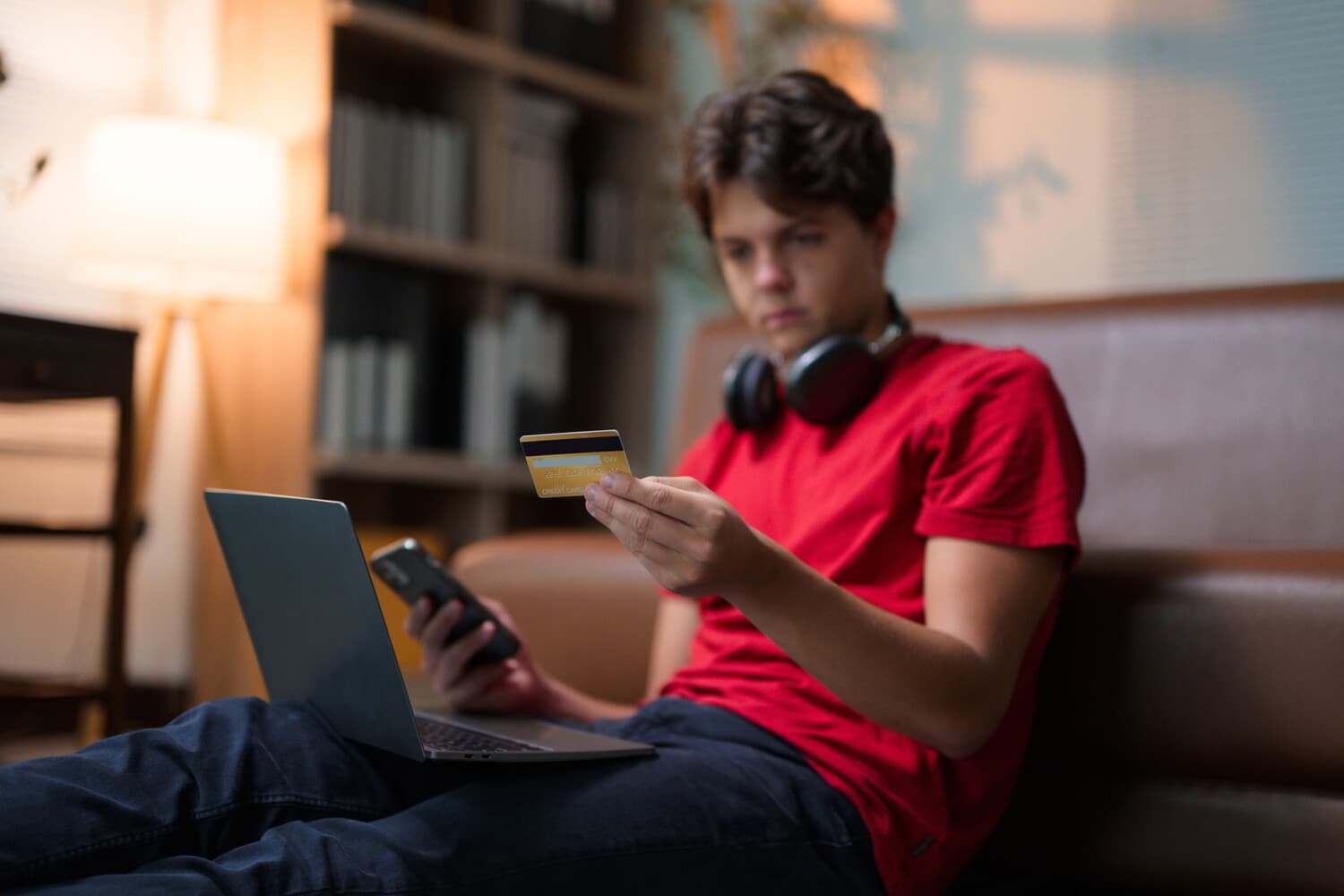
Average monthly spending by Russian teenagers reaches 16,664 rubles by age 16 — almost five times more than that of ten-year-olds, whose spending amounts to 3,505 rubles. This is shown by the results of a study by T-Business Secrets, received by Gazeta.Ru.
How spending and balances change with age
From age 10 to 13, average monthly spending remains relatively stable, and by age 14 it more than doubles — to 8,557 rubles. Transfers from parents also grow, but from age 12 spending begins to exceed the inflows from one parent: fourteen-year-olds spend 31% more than they receive, sixteen-year-olds 11% more. At the same time, the smallest end-of-month balances are held by thirteen-year-olds (1,254 rubles) and twelve-year-olds (1,268 rubles), while sixteen-year-olds have an average balance of 2,148 rubles, which, according to the study's authors, may indicate greater frugality on their part.
When and on what children spend money
Peak purchasing activity occurs in the evening: almost 10% of daily spending is recorded at 6:00 PM, while there is a morning spike of 3.5% at 6:00 AM; children spend the least at night — 0.2% at 4:00 AM. Over the week, spending is distributed fairly evenly: the maximum falls on Friday (15.2%), the minimum on Sunday (13.7%). A significant share of online purchases is made on marketplaces: the highest share is among fourteen-year-olds — 22.3% of all spending, among fifteen- and sixteen-year-olds it is 20.8% each, and the lowest is among ten-year-olds — 13%.
Spending structure shifts from food to shopping
With age, the share of spending on food declines: ten-year-olds spend 53.2% of their money on it, at 14 — 42.2%, at 16 — 37.6%. Spending on clothing does not exceed 4.3% of all spending and peaks at age 16, while entertainment accounts for 4 to 5.4%, with the maximum among ten-year-olds. In games, most spending (51.6%) goes to platforms selling keys for activating games and in-game items, 39.7% goes to Steam and 8.9% to Lesta. Thirteen-year-olds spend the least on games — 1,039 rubles, whereas the spending of ten-year-olds and sixteen-year-olds is nearly identical: 1,251 and 1,255 rubles respectively.
Context
Earlier, according to Gazeta.Ru, Russians describedhow much money they give their children for pocket spending. The new study adds to this picture with age dynamics: the main jump in spending occurs in the transition from age 13 to 14, when spending more than doubles, and it is from this age that children begin to spend more than they receive from one parent.