The key facts
- The 'Big Science to Schools' project was launched on November 9 with an agreement between the Ministry of Education and the Ministry of Science and Higher Education at the SKIF site in the Novosibirsk Region
- In the current academic year, the topic of large research facilities will be included in the 'Russia — My Horizons' course
- Next, the plan is to connect the Kurchatov Synchrotron Radiation Source, the PIK reactor, and the NICA complex
The ministries agreed on a joint project
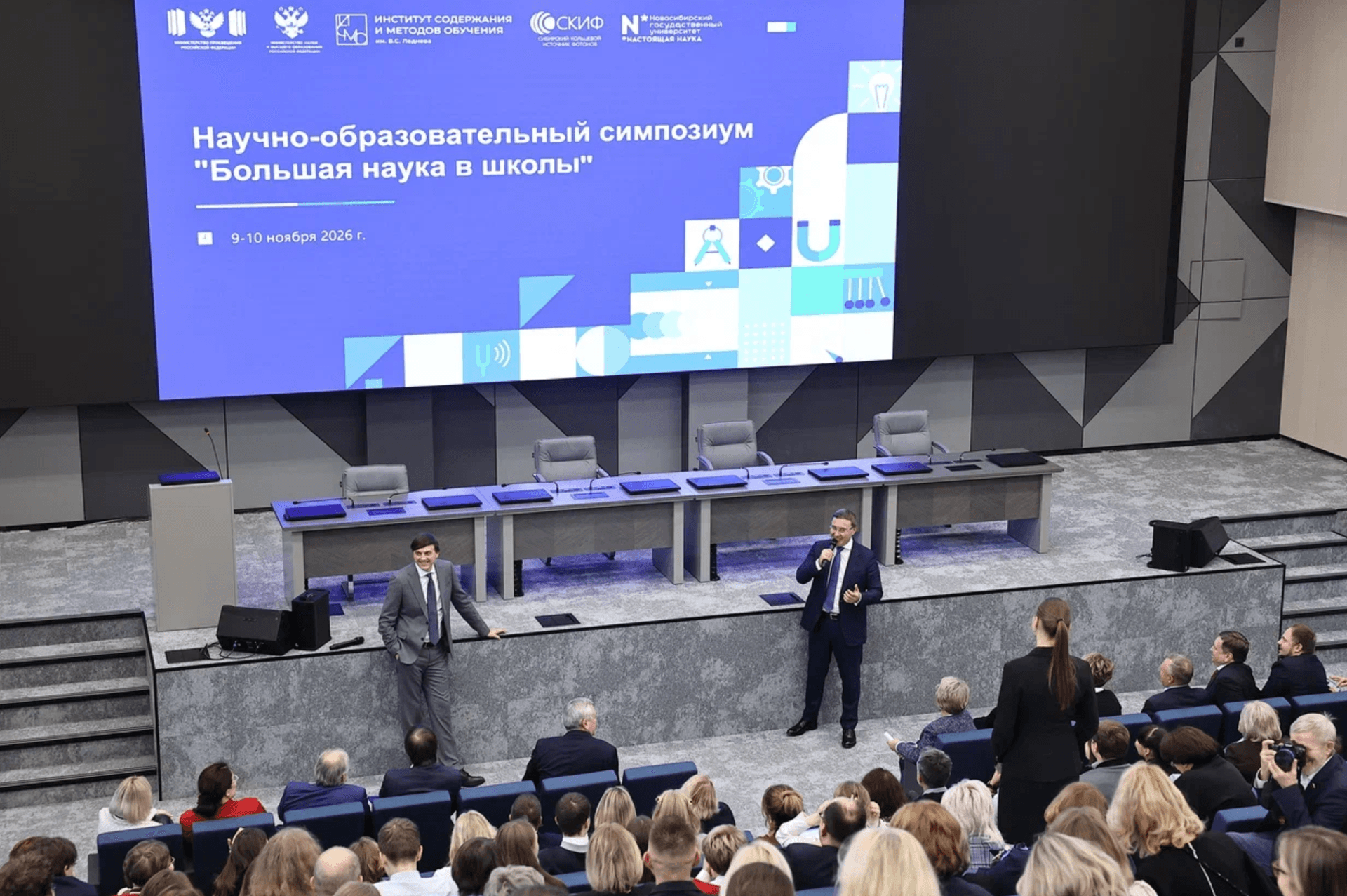
Russia has launched the educational project 'Big Science to Schools.' The agreement launching it was signed on November 9 by Education Minister Sergei Kravtsov and Minister of Science and Higher Education Valery Falkov. The ceremony took place in the Novosibirsk Region at the site of the Siberian Ring Photon Source (SKIF), the press service of the Ministry of Education reported, citing a publication by Life.ru. Before the meeting, schoolchildren and teachers visited the inside of the synchrotron's main storage ring and toured the experimental hall.
What will change for schoolchildren as early as this academic year
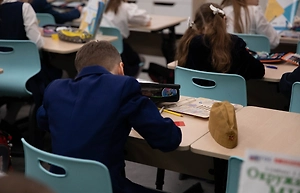
What makes the project distinctive is that its impact is not limited to the launch ceremony: as early as the current academic year, lessons in the 'Russia — My Horizons' course will explain to schoolchildren how major research facilities are built and what experiments are carried out on them. Participants in the program will also be able to visit leading research centers, while scientists and methodologists will prepare materials for lessons and extracurricular activities.
Which facilities will be connected next
The program decided to start with SKIF and the regions of Siberia. Then the plan is to connect the Kurchatov Synchrotron Radiation Source, the PIK research reactor, and the NICA accelerator complex. These are plans, not yet operational elements of the project. In addition, together with Rosatom, Rostec, and Roscosmos, the agencies intend to hold vacation schools to introduce students to professions in the nuclear, high-tech, and rocket and space industries.
Context
In August, Russian President Vladimir Putin visited SKIF; the center became the first facility in a new network of research installations that Russia is building through 2030. The publication does not say exactly how materials about the large facilities will be distributed across grade levels or when the first vacation schools will open.