The key facts
- The classified memo, overseen by Rubio, was circulated among senior officials ahead of Trump's May visit to China
- It was based on electronic surveillance of Alice Huang of Megaspeed, which had purchased AI processors amid an investigation into chip smuggling to China
- Trump refused to impose restrictions on Huang and Nvidia; the company's board announced an independent investigation
A secret memo ahead of the China visit
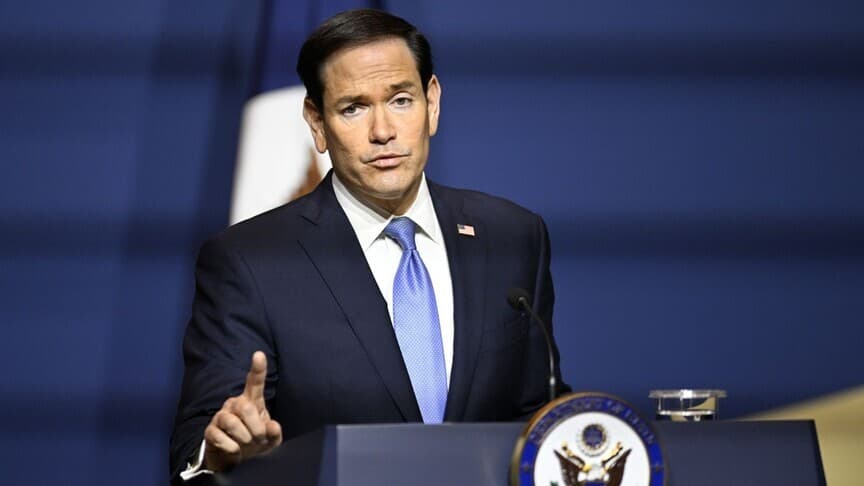
US Secretary of State Marco Rubio oversaw the preparation of a classified intelligence memo, in which senior officials of the Trump administration were warned that Nvidia chief Jensen Huang had formed a close relationship with a suspected Chinese intelligence agent. The New York Times reported this. The memo was prepared in the spring of this year under Rubio's supervision and circulated among officials with high-level clearances ahead of President Donald Trump's bilateral state visit to China in May.
Where the information came from
The document resulted from electronic surveillance of the Chinese businesswoman Alice Huang (a namesake of the Nvidia chief; the two are not related). She held a senior position at the Singapore-based company Megaspeed International — a data center operator that was purchasing advanced AI processors while under a federal investigation into the illegal smuggling of semiconductors into mainland China. When intelligence officers sought to identify the American featured in intercepted communications as being in a close relationship with her, it turned out to be Jensen Huang. Counterintelligence agencies concluded that Alice Huang had been recruited by China's Ministry of State Security.
Trump intervened personally
Initially, Jensen Huang was not included in the official delegation accompanying Trump to China. However, after media reports about his absence, the president intervened personally: he ordered that Huang greet Air Force One during the refueling stop in Alaska and publicly called him 'the magnificent Jensen Huang.' No restrictions were imposed on Huang or the company: according to the outlet, Trump considered Nvidia's market dominance vital to US economic competitiveness and the financial markets.
The parties' reactions
Nvidia's board of directors announced an independent investigation following the publications. Earlier, the company itself had said that Huang's contacts with Alice Huang were 'not unusual and not unexpected,' characterizing them as standard business interactions, and that Megaspeed had never received classified corporate data or trade secrets. In October, Beijing rejected the related New York Times report, calling the claims 'unfounded' and 'nothing short of slander against China.' The White House, the State Department, and the CIA declined to comment, and Alice Huang herself did not respond to media inquiries.