The key facts
- Fossilized red blood cells and heme were found in the femur of Aratasaurus museunacionali, which lived 115 million years ago
- For the first time, the nature of such structures has been confirmed by chemical analysis rather than morphology alone
- No traces of fungi, bacteria, or pyrite mineralization were found — iron, carbon, and nitrogen were detected inside the structures
Fossilized blood in a theropod bone
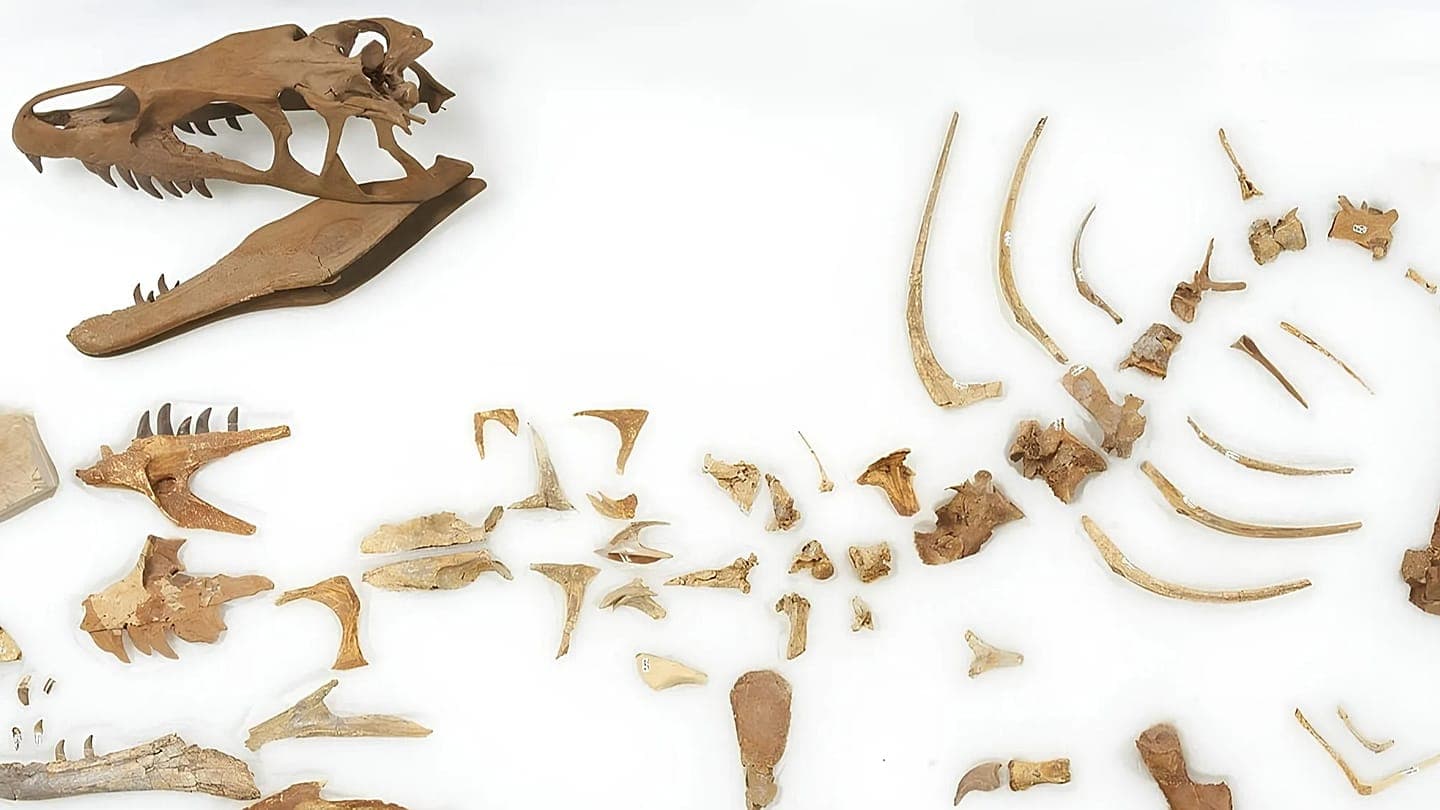
An international research team led by scientists at Curtin University (Australia) has for the first time confirmed, through chemical analysis, the nature of structures that had previously only been tentatively regarded as cells. In a paper published in the journal Proceedings of the National Academy of Sciences , the authors describe mineralized red blood cells and preserved heme-containing biomolecules in the bone of a forelimb of the small theropod dinosaur Aratasaurus museunacionali, which lived 115 million years ago. The discovery was reported by Kun.uz.
How foreign inclusions were ruled out
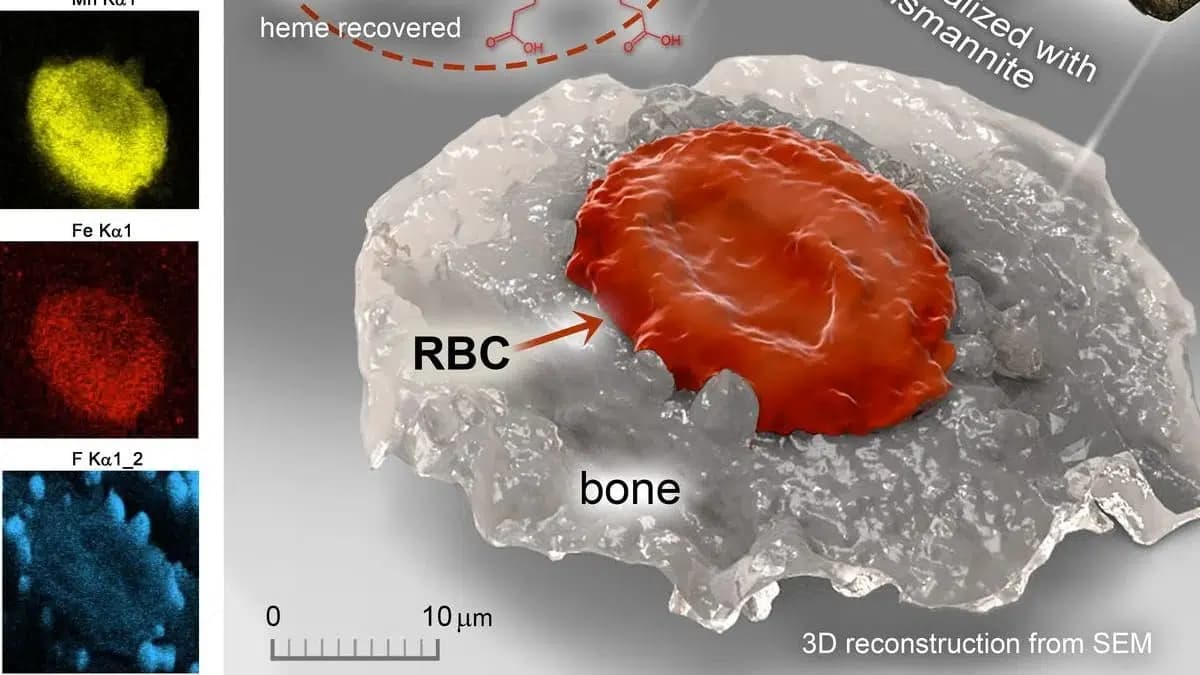
The fossil remains were found in 2008 in a mine in northwestern Brazil. Examining the interior of the bone, the researchers noticed fossilized blood vessels containing numerous ellipsoidal microstructures resembling fossilized red blood cells. There remained a possibility that these were the remains of fungi or other microorganisms that had entered the bone after the animal's death but before fossilization began — in that case, filaments, spores, or bipolar structures should have been present. The scientists found no such traces. Geochemical analysis also revealed neither pyrite mineralization nor sedimentary particles that could have resembled cellular structures.
What exactly the analyses showed
The key evidence came from mapping the distribution of elements in the sample. Inside the cell-like microstructures, iron, carbon, and nitrogen were detected — components of heme, the molecule that is part of hemoglobin and carries oxygen. The rest of the bone has a different composition: phosphorus, calcium, fluorine, and carbon. Thus, for the first time, convincing evidence has been obtained that biological structures and molecules, including red blood cells and components of hemoglobin, can be preserved in dinosaur fossils. This contradicts the long-held view that organic matter decomposes completely over millions of years. It should be noted that in previous decades several research groups had already reported findings of proteins and cells in dinosaur bones, but it was extremely difficult to confirm that the biomolecules discovered belonged to the animal itself rather than having entered from outside after its death.