The key facts
- Leo XIV spoke in Argentina for the first time, addressing Milei, the cabinet, governors, and the diplomatic corps at the Palacio Libertad
- He warned of the damage caused by organized crime and corruption and stressed the personal integrity of those in power
- The pontiff mentioned Francis, whose homeland is Argentina, and called for treating those who disagree as fellow countrymen
First speech in Argentina
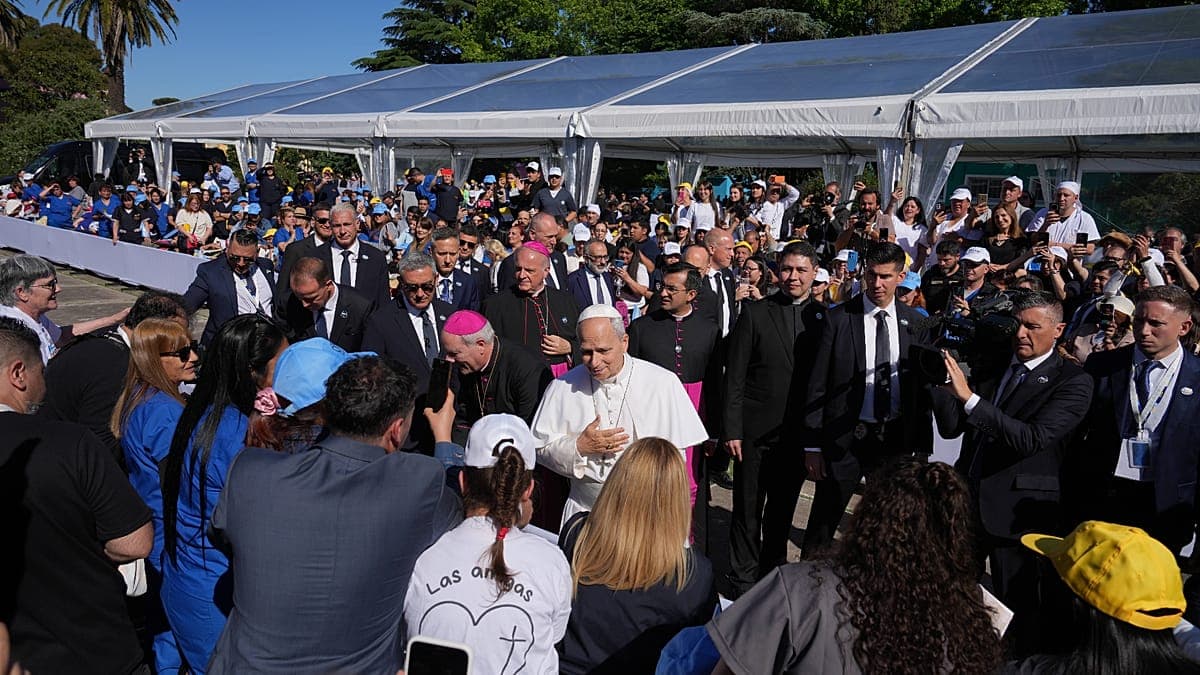
Pope Leo XIV delivered a programmatic address in Buenos Aires on Sunday, calling for national unity, the preservation of democracy, and a renewed commitment to institutional integrity. According to Anadolu, he spoke before President Javier Milei, the full cabinet, legislative leaders, provincial governors, Supreme Court justices, and the diplomatic corps at the Palacio Libertad.
Economy, corruption, and polarization
Addressing the audience in Spanish, the pontiff stated that economic systems must serve the human person: 'The economy must be at the service of the person, not the person at the service of the economy.' He directly warned of the destructive influence of illegal networks and corruption: in his words, organized crime, human trafficking networks, arms and drug smuggling, as well as corruption, undermine social coexistence, fuel violence, and divert resources needed for the common good. Combating these phenomena, he stressed, requires coordinated state action grounded in institutional strength, which also depends on the personal integrity of those entrusted with governance — corruption undermines citizens' trust in institutions.
Hints without direct accusations
According to Anadolu, avoiding direct political accusations, the pope made clear allusions to the current climate of polarization in Argentina and to the cost of sweeping austerity measures that have affected pensioners, people with disabilities, education, culture, and scientific research. The most resonant moment of the speech, met with applause, was the call to accept those 'who think differently': democracy, according to the pontiff, is also strengthened by everyday conduct in public life — a willingness to listen, care in language, patient pursuit of consensus, and the ability to see in those who disagree fellow citizens with whom one shares a common destiny.
In Francis's footsteps
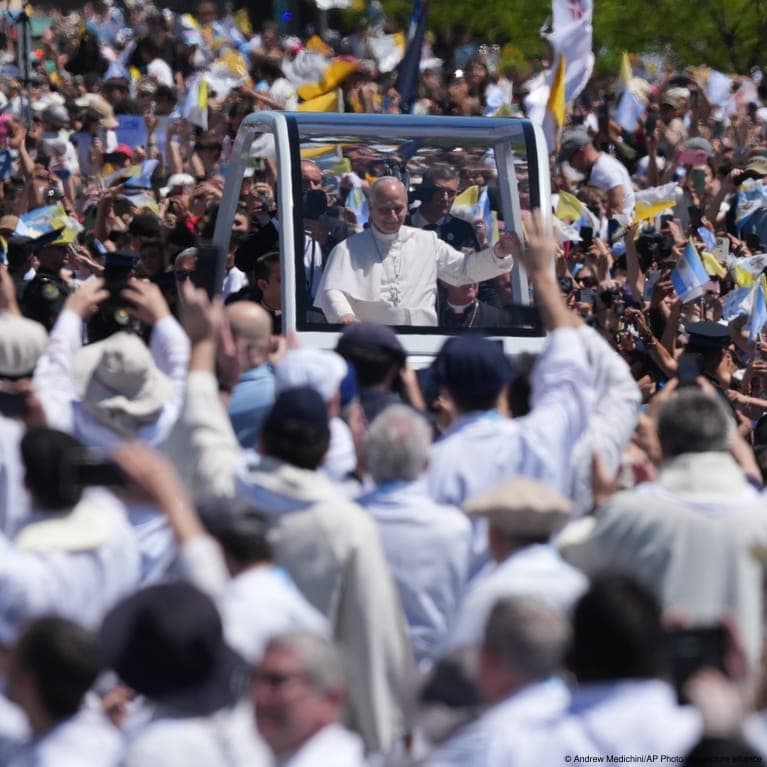
The speech was the political culmination of a packed first day of the visit following the pope's arrival from Uruguay: earlier he visited the Casa Rosada, held a private meeting with Milei, and received the keys to the city of Buenos Aires. In his address, Leo XIV reflected on the personal and spiritual significance of visiting the homeland of his predecessor: 'For twelve years the universal Church listened to the voice of an Argentine pontiff,' he said, prompting a fresh wave of applause at the mention of Francis. 'Today, succeeding him in the Petrine ministry, I am in a sense retracing his path in reverse, coming to the homeland where Pope Francis began a story that ultimately became intertwined with the history of the whole Church.' He also wove cultural references into the speech — from 'Martín Fierro' and Jorge Luis Borges to tango and Carlos Gardel.