The key facts
- Leo XIV arrived in Argentina on November 9 — the first papal visit to the country since John Paul II in 1987
- The pontiff did not criticize the government directly, but called for putting the economy at the service of people
- Milei, who had previously sharply criticized the Vatican, called Pope Francis 'the most important Argentine in history'
A visit almost 40 years in the making
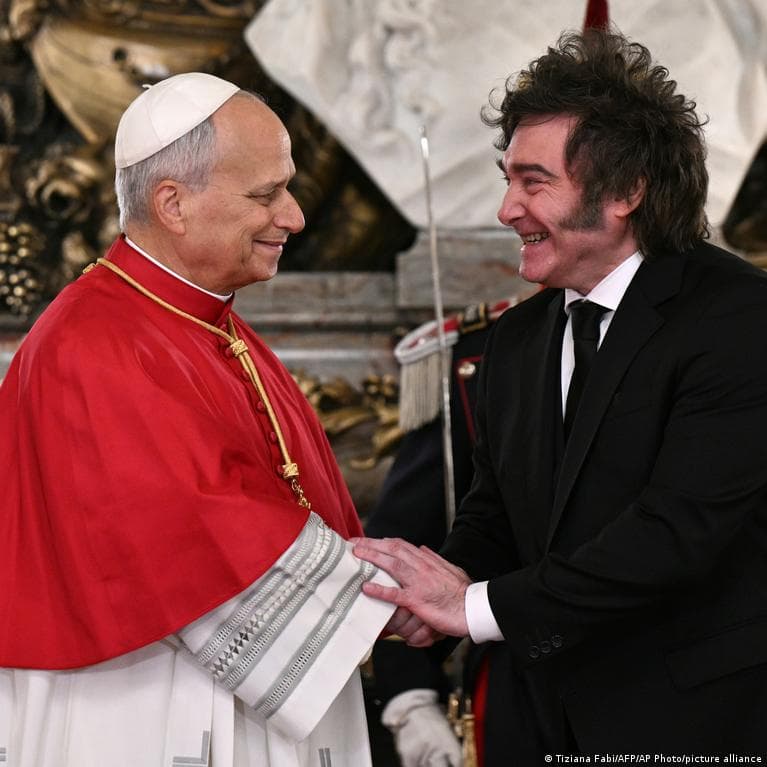
Pope Leo XIV arrived in Argentina on Sunday, November 9 — the first papal visit to the country since John Paul II's trip in 1987, reports Deutsche Welle. The 71-year-old pope, who underwent surgery for lung cancer less than a month ago, arrived from Uruguay and will continue his tour in Peru on Wednesday. The visit to Buenos Aires is the second leg of his South American itinerary, during which he will visit several cities in the predominantly Catholic country.
Words on the economy and democracy
The pontiff's speeches were closely scrutinized for criticism of President Javier Milei 's harsh austerity program and cuts to social spending. Leo XIV offered no direct assessment of the government's policies, but stated that 'the economy must be at the service of people, not people at the service of the economy.' Addressing Milei and other officials, he pointed to the situation of those who 'despite hard work, struggle to make ends meet.' The pope called democracy 'part of Argentina's heritage that must be defended,' adding that holders of power are obliged to act prudently and direct decisions toward the good of society as a whole.
Context: Milei's policies and the Church
Milei's policies had previously drawn sharp criticism from Argentina's Catholic Church — above all cuts to social services, pensions, assistance for people with disabilities , and funding for public universities. The president, an ally of Donald Trump, defends the measures as necessary to stabilize the economy and curb inflation: according to Deutsche Welle, annual inflation has fallen from more than 200% to roughly 33%, but households continue to face financial strain, and public-sector layoffs and company closures are fueling discontent. Milei had previously spoken harshly about the Church and called Leo XIV's predecessor, Pope Francis , an 'imbecile,' but later softened his tone and met with him in Rome. On Sunday, the president struck a conciliatory note, calling Francis 'an exceptional figure' and 'the most important Argentine in history.'
Significance ahead of the 2027 elections
The pope's words carry particular weight ahead of the 2027 presidential elections, in which Milei intends to run for a second term. His harsh rhetoric and attacks on journalists and opponents are seen as a manifestation of growing polarization in the country; Leo XIV told the president that strengthening democracy requires 'a willingness to listen' and 'care with words.' The visit also brings renewed attention to Francis's legacy — the first Argentine pope, who died in April 2025 without ever returning to his homeland during his 12-year pontificate.