The key facts
- At least 39 people died in the boat wreck off the coast of Senegal, with one person rescued
- At least 39 people died in the boat wreck off the coast of Senegal, one person was rescued
- According to Walking Borders, 635 people died on the Atlantic route between January and May 2026
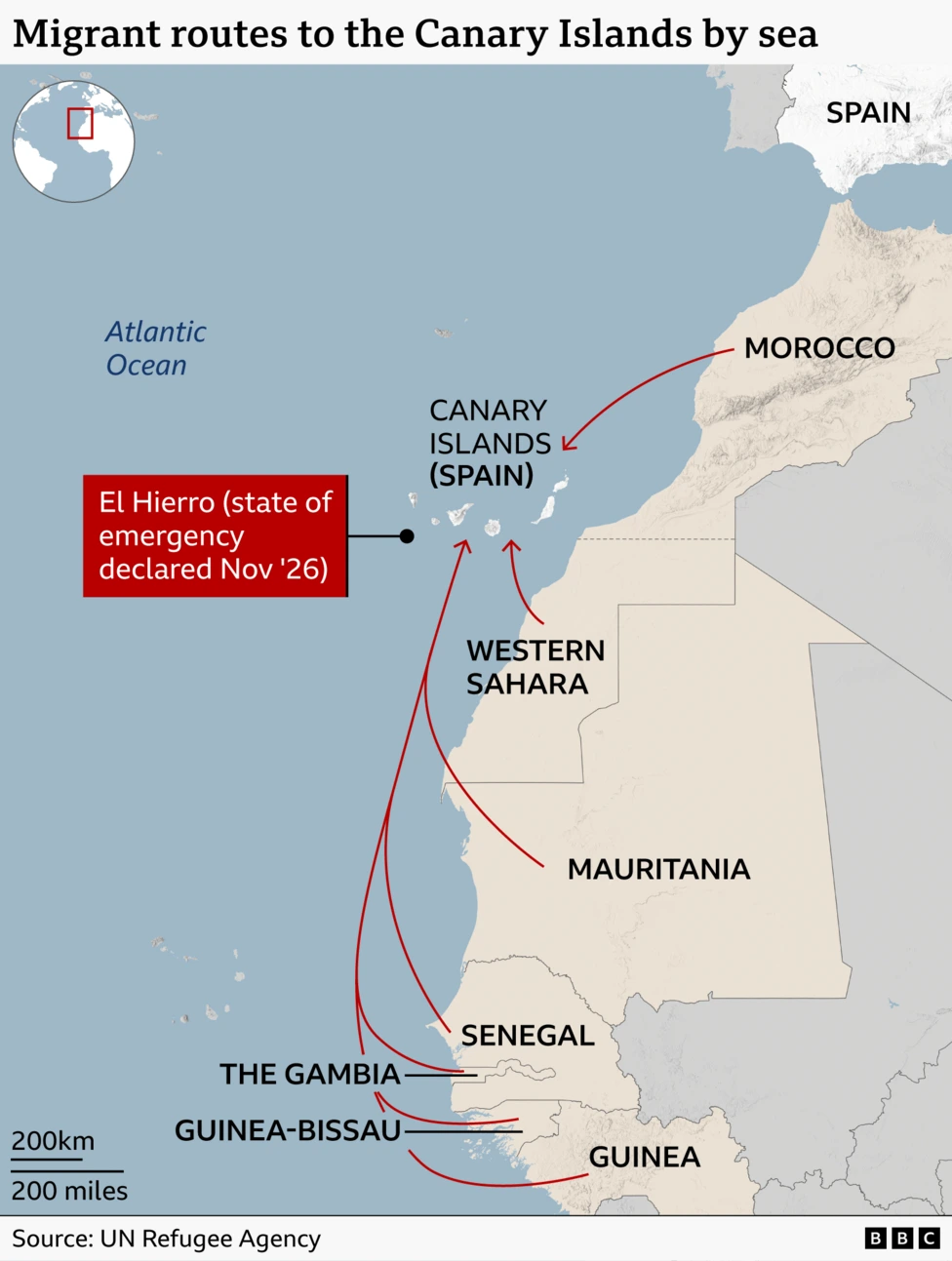
- A state of emergency has been declared on the island of El Hierro due to the influx of more than 3,300 migrants since the beginning of November
Shipwreck off the coast of Senegal
At least 39 people died after a boat carrying migrants capsized off the coast of Senegal, the Senegalese News Agency (APS) reports. The small wooden boat sank between the capital Dakar and the northern city of Saint-Louis while en route to the Spanish Canary Islands. The Ministry of the Interior said one person was rescued and the number of those missing has not yet been established. Saliou Diouf, founder of the Senegalese migrant aid group Boza Fii, told AFP that all the bodies recovered by Sunday evening were those of Senegalese nationals; the nationalities of the other people on board are still being determined, and the search continues.
Search and identification
On Monday morning, four bodies in an advanced state of decomposition were found; after a collective prayer organized by the fire service, they were buried. Rescue teams are combing a 25 km stretch of coastline, but the operation is hampered by inaccessibility and strong ocean currents that carry bodies southward. According to the authorities, 24 of the 39 victims have been identified and their bodies handed over to their families, while 11 more await identification. Senegalese President Bassirou Diomaye Faye expressed condolences to the families of the victims and urged citizens not to risk their lives on dangerous sea crossings. In a statement on X, he pledged to intensify the fight against the networks organizing such journeys: 'We will tirelessly continue the fight against those who organize these crossings, and the work that gives our youth reasons to hope here.'
Context: a dangerous Atlantic route
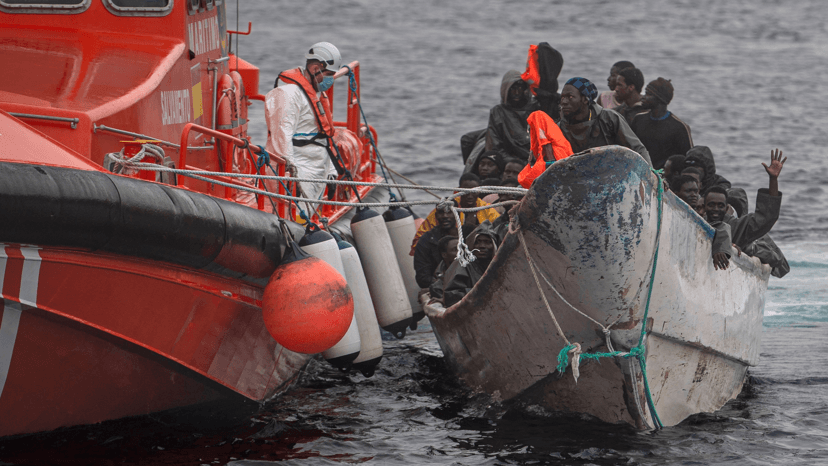
The tragedy occurred against the backdrop of a worsening migration problem on the Atlantic route. The Spanish human rights organization Walking Borders recorded 635 deaths on the way to the Canary Islands between January and May 2026 — the highest figure among the routes it tracks; by its estimate, for every 100 people who reach the islands, about 21 die. The route is gaining popularity amid tightened controls and expanding cooperation between European countries and North African states, which may have redirected some journeys from the central Mediterranean. According to the International Organization for Migration (IOM), the reasons for leaving Senegal include limited employment opportunities, family pressure, and established migration networks; in the second quarter of 2026, youth unemployment in Senegal reached almost 25% according to the national statistics agency, posing a challenge for Faye's government.
At the same time: a boat interception and a crisis on El Hierro
On Friday, Senegalese authorities intercepted another boat carrying 142 migrants trying to reach Spain; among them were 23 women, two infants, and two other children — nationals of Senegal, Gambia, Guinea-Bissau, Guinea, and Nigeria. Meanwhile, on the Spanish island of El Hierro, a state of emergency was declared on Saturday due to a sharp surge in arrivals: according to local authorities, more than 3,300 people on roughly 30 boats have arrived on the island since the beginning of November — almost a third of the island's population, one of the main entry points into Europe for migrants from West Africa. The president of the Canary Islands government, Fernando Clavijo, described the situation, according to Reuters, as 'absolutely unbearable.' Senegal's Ministry of the Interior stated that it will continue fighting people-smuggling networks, including by strengthening cooperation with neighboring countries.
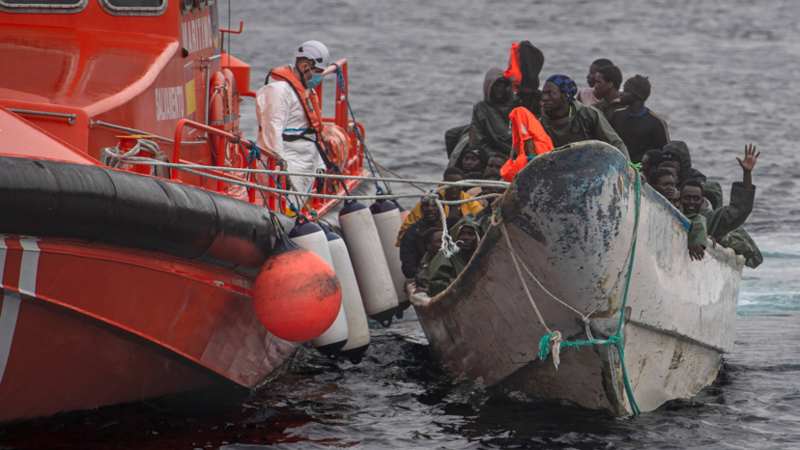 Image source, Getty Images
Spanish migrant rights group Walking Borders estimates that for every 100 people who reach the Canary Islands by sea, 21 die during the crossing (file photo)