The key facts
- The Center of Future Technologies in Nurafshan is promised benefits on par with IT Park residents; the list and timing have not yet been specified
- Instructions were given to develop the 'New Industry' platform, a robotics and electronics support program, and a '1000 Design Engineers' program starting in 2027
- Construction of the 36-hectare center began in July 2026 with planned investments of about $500 million and the creation of more than 5,000 jobs
New support measures for high-tech production
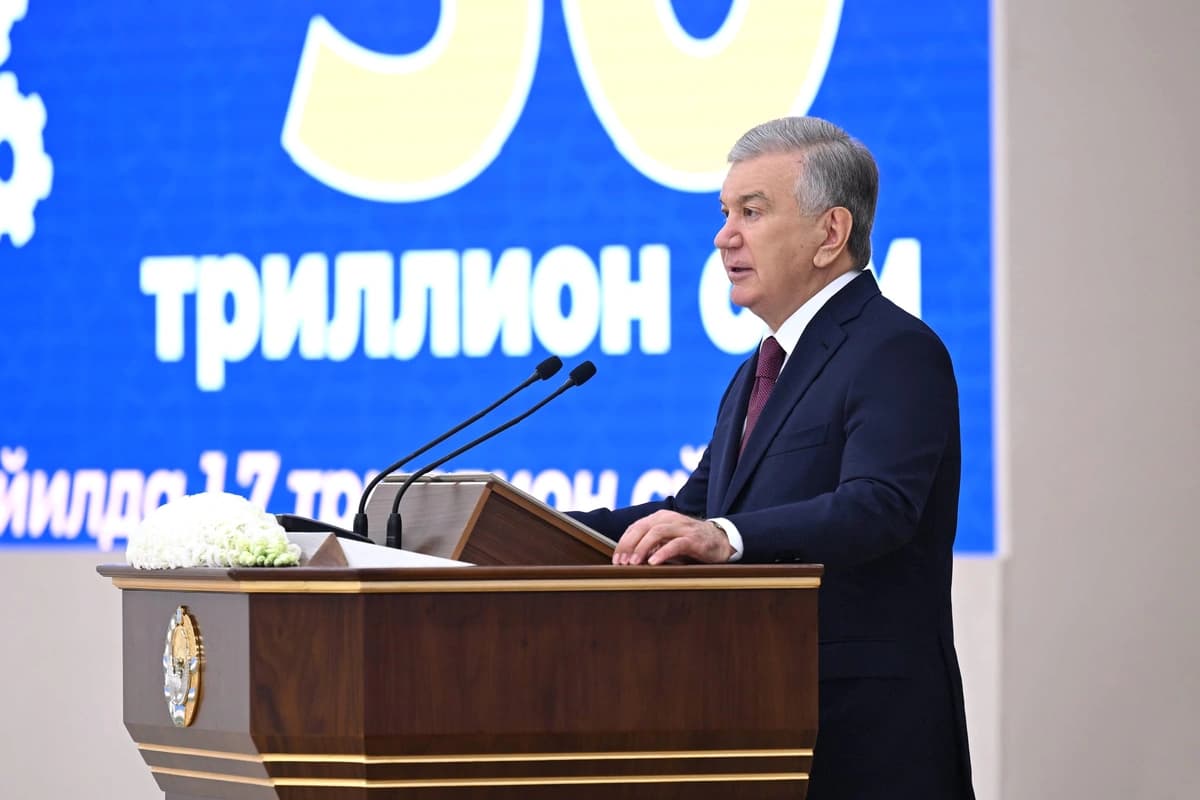
On November 9, President Shavkat Mirziyoyev, at a meeting with representatives of the electrical engineering industry, entrepreneurs and investors, announced new support measures for high-tech production, Gazeta reports. According to him, the country needs to form a unified industrial ecosystem that provides enterprises with modern technological equipment, industrial robots and electronic products. To this end, a Center of Future Technologies is being created in Nurafshan, Tashkent region, whose enterprises will receive the same benefits as IT Park residents.
What IT Park-style benefits are worth
The benchmark is the current IT Park Uzbekistan regime: according to IT Park itself, its residents are exempt from profit tax, VAT, social tax and turnover tax until January 1, 2028; their employees pay personal income tax at a rate of 7.5% instead of 12%; and exemption from customs duties on the import of technological equipment and components is valid until 2040. For export-oriented companies receiving more than 50% of revenue from abroad, certain benefits are also extended until 2040. As for the new center, it is promised to exempt raw materials and components for the production of robots, electronics and technological equipment from import duties, and not to tax income from scientific developments in these areas. However, the specific list of benefits, the procedure for their application and the timing of the new rules' entry into force have not yet been clarified — in effect, the decision remains declarative for now.
Platform, technoparks and personnel
To link science and industry, a national platform called 'New Industry' (Yangi sanoat) will be developed, uniting researchers and enterprises interested in implementing developments. The President instructed that by May 1, 2027, one R&D center or technopark in each region be adapted to new industrial directions, and sites for product testing be organized, designed to develop cooperation between large and small businesses. Responsible officials have been tasked with preparing, within two weeks, a draft resolution on the development of robotics, and by March 1, 2027, a comprehensive program to support the production of technological equipment and electronics. Starting in 2027, the '1000 Design Engineers' program will launch: specialists will be sent for professional development to South Korea, Japan, China, Turkey and European countries; currently, 20 students and researchers from technical universities are already studying at South Korean electronics industry enterprises, and their number is planned to be increased to 100. The New Uzbekistan, Inha, ToshTech and Turin Polytechnic universities have been instructed to expand joint programs with foreign universities.
Context: a center on 36 hectares and $500 million
Construction of the Center of Future Technologies began on July 22, 2026, when the President laid the first stone next to the state Cyber University in Nurafshan. It was reported at the time that about $500 million in investments were planned to be attracted to the 36-hectare complex, and the project's implementation should create more than 5,000 highly qualified jobs. The center provides for six laboratories in cybersecurity, artificial intelligence, cloud technologies and cryptography, an AI data center, an engineering cluster, production of secure computers and data transmission equipment, a testing ground for drones and robotics, as well as — with the assistance of the Asian Development Bank — a platform for commercializing domestic technologies. In September, the President also reviewed proposals for the development of the electrical engineering industry, including the creation of a Research and Innovation Center for the Fourth Industrial Revolution.