The key facts
- From November 9 — rain across most of the country, snow in the mountains and the north; from November 10 temperatures will begin to fall noticeably
- Strong winds, dust events, fog, snowstorms in the mountains, floods on the plains and mudflows in the foothills are possible
- According to ECMWF, the weekly temperature in Khorezm, the Bukhara and Navoi regions and Karakalpakstan will be 1–3 degrees below the long-term norm
What to expect during the week
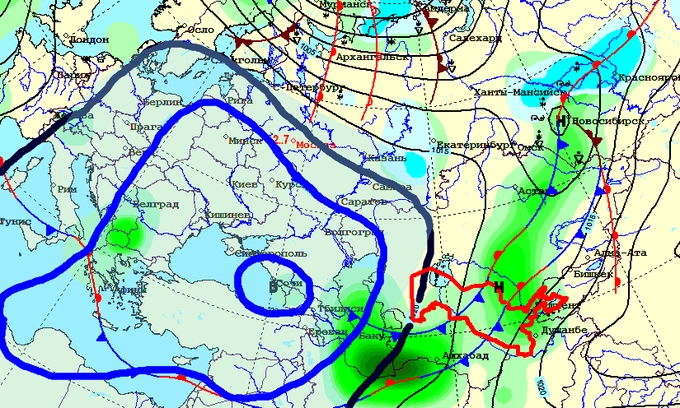
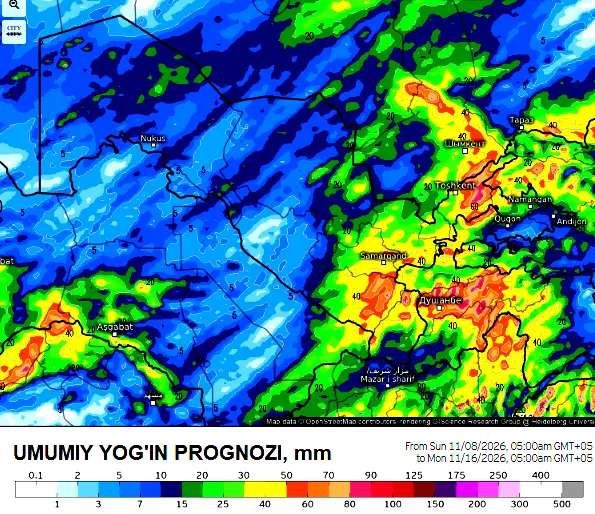
At the start of the week of November 9–15, a large moisture-bearing air flow is finally reaching Uzbekistan: behind it, an anticyclone with central pressure of up to 1035 hPa is moving from the Caspian Sea across the Caucasus. This is reported by Gazeta.uz citing forecasts from Uzhydromet, Meteoinfo.ru and the European centre ECMWF. On Monday, November 9, precipitation is expected across the entire republic, except for the provinces of the Fergana Valley, locally heavy and with thunderstorms. On Tuesday, November 10, rain will pass through the Bukhara, Navoi, Samarkand, Jizzakh, Tashkent, Syrdarya, Kashkadarya and Surkhandarya regions and the valley; in the north and in the mountains, precipitation may turn to snow, locally heavy. By Wednesday, November 11, precipitation will cease over most of the territory, especially in the north and in the Bukhara–Navoi region, with only light precipitation remaining in the mountains and in the east. Thursday, November 12, will be mostly dry; on Friday, precipitation is again possible in the south, in the Samarkand, Jizzakh, Syrdarya and Tashkent regions and the valley, while the weekend promises to be dry across most of the country.
Temperature: cooling from November 10
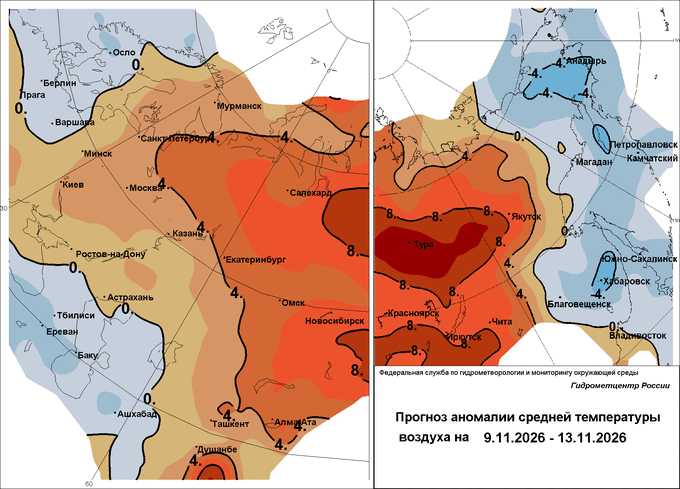
On November 9, except in Karakalpakstan and Khorezm, night and daytime temperatures will converge due to the arrival of humid air, ranging from +10 to +20 degrees over the course of the day. From November 10, temperatures will begin to gradually fall: on weekdays, at night locally down to 0…−5 degrees, during the day around +3…+13, while in the mountains and in the north thermometers will stay below freezing for most of the day. According to ECMWF and Uzhydromet, the average weekly temperature in the Khorezm, Bukhara and Navoi regions and Karakalpakstan is expected to be 1–3 degrees below the long-term norm, while in the other provinces, except the valley, it will be around the norm. At the same time, as the foreign meteorological service notes in the materials cited by Gazeta.uz, the current cold flow during November 9–13, except in Ustyurt, will still not be able to push the weekly temperature across most of the republic significantly below the average values for the same period last year: the weekdays will pass in a normal and even slightly warmer regime thanks to the cool and humid air mass. However, more precipitation is expected over the week than the mid-November average.
Risks and what this changes
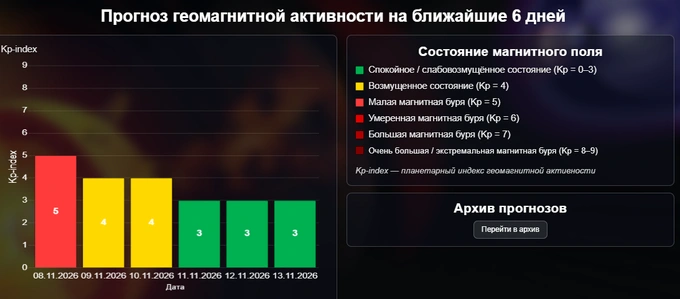
Uzhydromet warns that at the start of the week strong winds, brief dust events, fog, snowstorms in the mountains, flooding in lowland areas and mudflows in the mountains and foothills are possible due to heavy precipitation. According to Gazeta.uz, the main event of the week is the first serious cold wave of the current autumn-winter season, which will be a test for virtually every sector. In practical terms, this means a sharp change of conditions after the anomalous warmth of November 7–8: from November 10 in the north and from November 11 in the other regions, night and morning temperatures will drop below +5 degrees, and residents, especially in mountainous areas, will need warm and waterproof clothing. The outlet separately notes the effect on air quality: heavy precipitation at the start of the week will settle the dust raised by the wind, so the probability of fine-particle air pollution in large cities is assessed as fairly low. Impact on well-being: the most sensitive to the changes are the elderly, children and those suffering from respiratory and cardiovascular conditions; cold and humid air can worsen symptoms in some asthma sufferers. Forecasts also allow for yellow-level geomagnetic storms at the start of the week; however, as Gazeta.uz emphasizes, science does not yet have definitive conclusions about the effect of geomagnetic storms on health, and it would be a mistake to claim any clear impact.