The key facts
- The National Party coalition won 67 of 131 seats; the opposition bloc received 57
- A majority requires at least 66 seats; the margin is just one seat
- Final results, including 700,000 special ballots, will be announced on November 27
Preliminary result: a one-seat margin
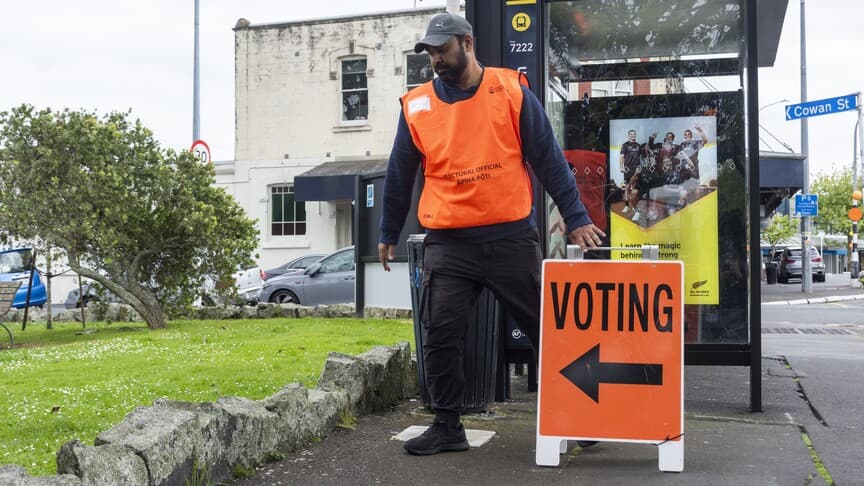
According to returns from all polling stations, the ruling coalition led by the National Party has won 67 of 131 seats in New Zealand's parliament — one more than the minimum of 66 needed for a majority. The opposition bloc, made up of the Labour Party, the Green Party and the Māori Party, received 57 seats. This was reported by NZ Herald, cited by the Anadolu agency. The contest between the National and Labour parties was extremely tight: each won just over 29% of the vote.
Why the result is not yet final
Although, judging by preliminary data, the coalition remains in power for a second three-year term, the outcome is not formally settled: about 700,000 special ballots still have to be counted — votes cast by voters abroad and those who voted outside their electorate. According to local media, such votes usually favor left-wing parties, so the one-seat margin could disappear. The Electoral Commission will announce the official results, including the special ballots, on November 27. National Party leader Christopher Luxon himself, speaking to supporters in Auckland, called the election 'too close to call' and said that forming the next government would require 'negotiations and compromises.' The total number of seats in parliament rose from 120 to 131 due to 11 so-called 'overhang' seats.
Who is Christopher Luxon and what complicated his campaign
The 56-year-old Luxon came to politics from business: he worked at Unilever for 18 years (1993–2011), including as president of Unilever Canada, and then headed the national carrier Air New Zealand (chief executive from 2012 to 2019). He was first elected to parliament in 2020 from the Auckland electorate of Botany, took over the National Party in 2021, and after winning the 2023 election became the country's 42nd prime minister with only three years of parliamentary experience. Among the achievements of his tenure, the Anadolu profile publication lists a free trade agreement with India, export growth, education reforms and tough measures against criminal gangs. At the same time, according to analysts cited by the agency, the economic recovery was slow, while the cost of living and unemployment rose during his three years in power. The final year of his term was turbulent: Luxon survived two confidence votes from his own party's MPs — in April and August 2026; the second was linked to a leadership challenge from then-defense minister Chris Penk, whom Luxon dismissed from the cabinet.