The key facts
- On 6 November in Warsaw, Kallas said that Putin has no veto right in matters of European security and spoke out against revising the existing system
- Analyst Zoltán Koszkolich doubted her understanding of wars and peace negotiations
- The Kremlin excluded the EU from the trilateral meeting of Russia, the US and Ukraine in Abu Dhabi; Peskov noted that Europe cannot choose a representative for dialogue
Kallas's statement and an analyst's reaction
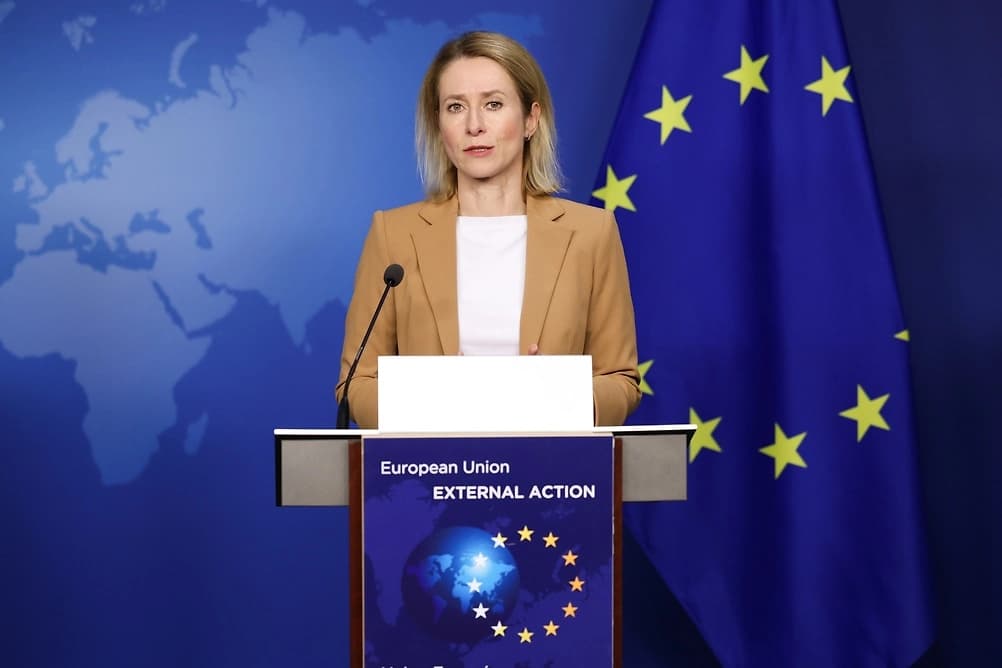
On 6 November, the EU's High Representative for Foreign Affairs, Kaja Kallas, said at a press conference in Warsaw held after a meeting of representatives of the Baltic region countries that Russian President Vladimir Putin has no veto right in matters of European security. She also spoke out against revising the existing European security system: in her view, NATO and the European Union already provide the necessary mechanisms for cooperation, Ukraine must be included in this system, and any peace agreements affecting European interests will require Brussels' participation.
Criticism of the EU's top diplomat
A reaction to these remarks came from an analyst at the Hungarian Center for Fundamental Rights, Zoltán Koszkolich. On the social network X he wrote: «I don't think she understands how wars and peace negotiations work…». This was reported by Life.ru and Gazeta.Ru, which quote the analyst's comment in identical wording.
Context: the Abu Dhabi talks and the Kremlin's position
The discussion is unfolding against the backdrop of preparations for a new round of talks on Ukraine. According to Life.ru, the Kremlin has excluded European Union representatives from the meeting between Russia, the United States and Ukraine in Abu Dhabi, since the parties have already agreed on a trilateral format of consultations. Gazeta.Ru adds that US presidential envoy Jared Kushner said the White House intends to focus on building a security architecture in Europe; Russian presidential special envoy Kirill Dmitriev assessed these proposals positively, calling the American representatives peacemakers. According to Gazeta.Ru, many experts are skeptical about the US promises.
Moscow's position and Kallas's admission
Russian presidential press secretary Dmitry Peskov drew attention to European countries' inability to choose a representative for talks with Moscow; in the Kremlin's assessment, this complicates the prospects for future dialogue. Kallas herself admitted back in late October that she does not expect a swift end to the Ukrainian conflict, and announced the preparation of new anti-Russian sanctions.
What is known and what remains unclear
Thus, the positions diverge fundamentally: Brussels, represented by Kallas, insists on participation in any agreements and on preserving the current security system, whereas the specific negotiating format on Ukraine — trilateral, without the EU — has already been set. The date and agenda of the meeting in Abu Dhabi are not detailed in the cited publications, nor is the content of the possible new sanctions whose preparation Kallas announced.