The key facts
- The IRGC claimed three tankers hit mines in the Strait of Hormuz on November 8; UKMTO confirmed eight attacks in the strait and three in the Arabian Gulf over the week
- Shipping traffic in the strait stands at about 20% of pre-war levels, according to Lloyd's List Intelligence
- The US is forming Task Force Iron Gate to blockade Iran's land borders; a third carrier, the USS Theodore Roosevelt, is heading to the region
Three tankers and the rescue of 22 people
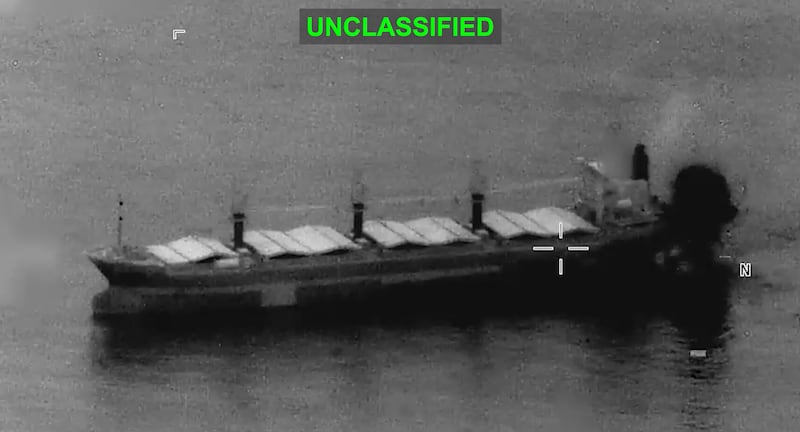
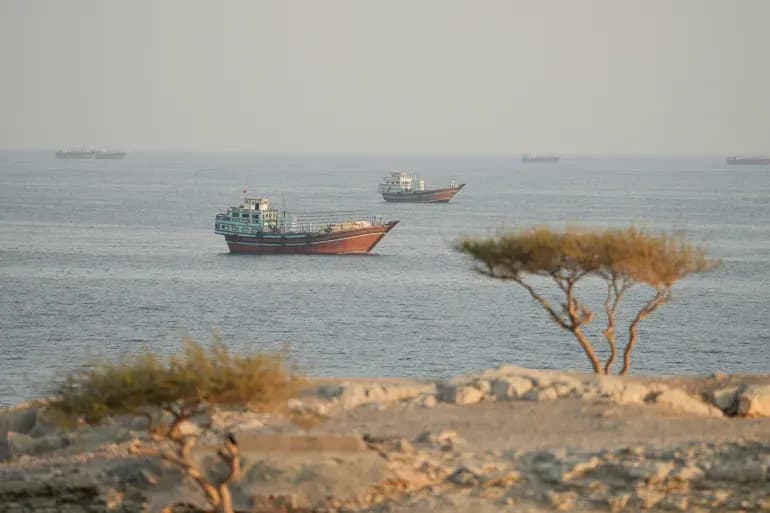
On Sunday, November 8, Iran reported that smoke from three sea mine explosions had 'blotted out the sky' over the Strait of Hormuz. The Islamic Revolutionary Guard Corps (IRGC) said three tankers caught fire while trying to pass through 'unauthorized routes' to bypass the Iranian blockade, having switched off their navigation equipment, and warned that other vessels choosing such routes 'will meet no other fate.' This was reported by The National.
What independent sources confirm
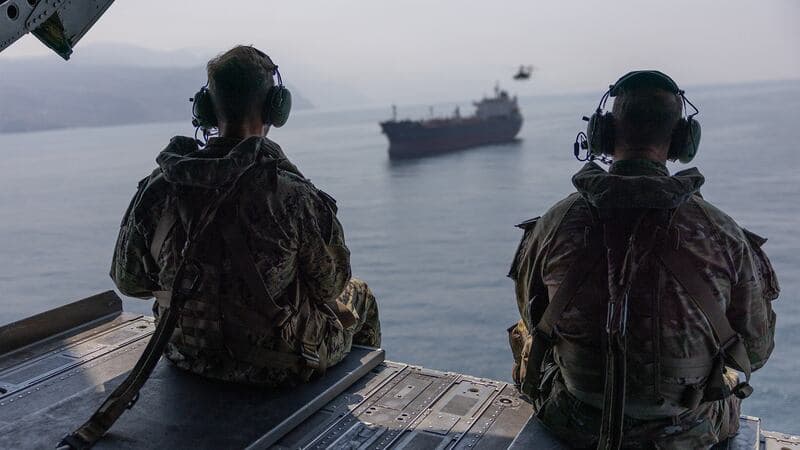
Some of the reports are confirmed independently of Iranian statements. The UAE National Guard rescued 22 people — all citizens of Arab countries — from a burning cargo vessel in the Gulf of Oman; a month earlier, the same service rescued the same number of people from a burning oil tanker in the Arabian Gulf. The British center UKMTO reported a second burning vessel off the coast of Oman and a third that sustained damage, and over the past week confirmed eight attacks in the Strait of Hormuz and three in the Arabian Gulf: three vessels sank and five had to be rescued. At the same time, analysts at the Institute for the Study of War note that most of the mine incidents claimed by the IRGC — which have been announced almost daily since mid-October — are unconfirmed, and in their assessment such reports are 'likely intended to create an information effect' to raise the perception of risk among shipping companies.
The scale of the crisis and the US response
According to Lloyd's List Intelligence, traffic in the strait remains at about 20% of pre-war levels. Iran is demanding concessions from the US in negotiations in exchange for opening the strait, offering to do so in two days instead of seven if Washington meets its demands, including lifting the naval blockade. The US, for its part, is expanding pressure: to cut off the flow of goods and revenue across land borders and the Caspian, the Task Force Iron Gate group has been created under the command of Centcom chief Admiral Brad Cooper, who called it a way to 'build on the success of our iron blockade of Iran at sea.' According to US data, the blockade has already cost Iran more than $25 billion in oil export revenue. IRGC representative Brigadier General Hossein Mohebbi called the plan 'merely a play on words.'
Diplomacy and military escalation
A third American aircraft carrier, the USS Theodore Roosevelt, is expected in the region this week, but no major strike has followed since the election: Qatar, Pakistan and other mediators are trying to prevent a resumption of the war. Iranian Foreign Minister Abbas Araghchi said he held talks with 12 heads of foreign ministries within 48 hours. Iran has also hinted that Yemen's Houthis could create similar chaos in the Bab el-Mandeb Strait if the war resumes; on Sunday the Houthis claimed responsibility for an attack on the Saudi oil company Aramco, in which shrapnel damaged a building. Against the domestic political backdrop, the outlet notes that the defeat of Trump's Republicans in the midterm elections was widely linked to the unresolved war and rising prices caused by the blockade.