The key facts
- The QR code in MAX will become an additional, not mandatory, method of identity verification when receiving a pension in cash
- The Ministry of Labor's draft resolution was presented on September 30, 2026, and the public discussion ended on October 15; further approvals and changes to the pension payment rules are still needed
- The digital pension ID is already in use, but confirming status and verifying identity when issuing cash are different procedures
QR code as an additional method, not a replacement for a passport
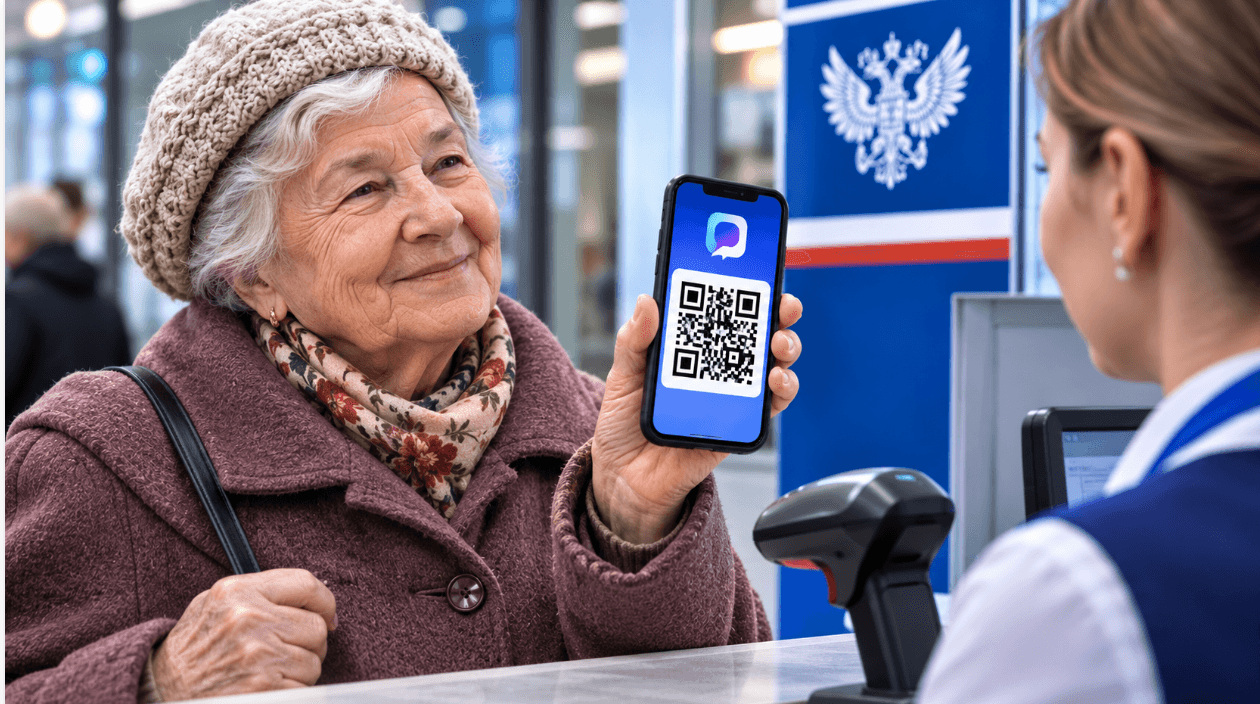
Pensions will be able to be collected in cash using a digital ID in the MAX messenger — but only voluntarily. This was stated by Candidate of Economic Sciences, Associate Professor at the Financial University under the Government of the Russian Federation Igor Balynin in a comment to RIA FederalPress. According to him, the QR code proposed by the Ministry of Labor will expand the list of identification methods for receiving payments, not replace the passport: money can still be received into a bank account, in cash at Russian Post offices, or delivered by a postman to one's home. «It is important to emphasize that the emergence of such a method will expand the range of options citizens currently have for identity verification when receiving pension payments in cash,» Balynin explained.
Who will benefit from this in practice
The innovation primarily concerns those who are used to collecting their pension at the post office: if a person has forgotten their passport at home, they will not have to go back for the document — it will be enough to show the office employee the QR code of the digital ID. The economist believes this approach matches the current level of digital technology and can reduce customer service time. Pensioners without smartphones will not need to change their usual routine, and the option of presenting a paper passport will remain.
The system is not yet operational
For now, the initiative exists only as a draft. The Ministry of Labor presented a draft government resolution on September 30, 2026: the document provides for the possibility of verifying identity with a MAX digital ID when a pension is issued at a post office or delivered to one's home. The public discussion ended on October 15, after which the draft faces further approval procedures; in addition, changes will need to be made to the pension payment rules. This is not about a picture with a QR code on a screen, but about a digital identity document with data verification through state information systems — the new method will only be available after such an ID is issued and a verification procedure is launched when money is handed out.
How this differs from the already existing digital ID
Electronic pension documents are already in use in Russia: as Life.ru reported on October 22, citing the Social Fund, interest in digital pension IDs is growing. Such a document confirms pensioner status without a paper certificate, contains the owner's name, SNILS, the type of pension awarded and its validity period, is issued through Gosuslugi, and can be presented, among other ways, via MAX — for example, to receive discounts in stores, pharmacies and cultural institutions. However, as Life.ru notes, confirming pensioner status and verifying identity when issuing cash are different procedures, which is why separate legislative changes were needed for the second option.
Background of the initiative
The question of a digital replacement for a passport when receiving a pension had been raised before: on October 24, Life.ru cited explanations by lawyer Kirill Karpov, who noted that the Ministry of Labor proposes to expand the use of the MAX digital ID, already used to confirm eligibility for certain benefits. State Secretary — Deputy Minister of Labor Andrei Pudov explained at the time that the electronic document would spare elderly citizens from having to constantly carry their passport, while home delivery of pensions and payments through banks would remain. Thus, the initiative concerns the convenience of identity verification, not the size of the pension or the way it is calculated.