The key facts
- The robot anchors were presented on November 5, 2026, at an AI forum held as part of the seventh World Media Summit in Beijing.
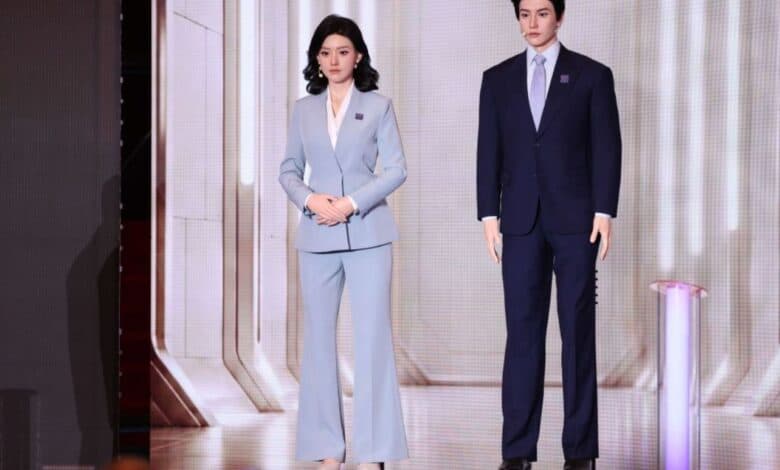
- The 'female' robot is named Xinyang and the 'male' one Xinyu; their creators are the Xinhua agency and UBTECH Robotics.
- The robots are connected to the 'Xinhua Yudian' platform, but a plan for their regular use on television has not yet been approved.
Demonstration at the media summit
On November 5, 2026, in Beijing, during the artificial intelligence forum held as part of the seventh World Media Summit, humanoid robot TV anchors were presented. They were created by the Chinese news agency Xinhua and the company UBTECH Robotics: the 'female' robot was named Xinyang and the 'male' one Xinyu. This was reported by Kun.uz.
How the robots work
The robots can stand in front of a camera, move, and reproduce human speech with synchronized lip movements and facial expressions. For a realistic appearance, UBTECH used bionic skin and its own technologies in the field of humanoid robotics. The hardware-software complex includes motion control tools, a language model for emotional communication, and a component of so-called embodied artificial intelligence, which enables the digital system to interact with the physical environment.
Appearance and connection to the news platform
The robots' appearance was overseen by the Chinese director Zhang Yimou, known for the films 'Hero' and 'House of Flying Daggers': he led the artistic design of the image and worked to ensure that the mechanical anchors met the requirements of television broadcasting, paying particular attention to facial expressions and how the character is perceived on screen. The robots are connected to the intelligent platform 'Xinhua Yudian,' which allows the use of verified news materials and the tracking of data provenance. According to UBTECH founder and CEO Zhou Jian, the system combines three components: information processing, its presentation, and control of the robot's physical movements.
What remains undecided
Although the presentation demonstrated the robots' ability to perform before an audience, a plan for their regular use on television has not yet been approved — meaning the showcase remains a technology demonstration rather than the launch of permanent broadcasting. This is not Xinhua's first experience in this field: back in 2018, the agency introduced a virtual TV anchor created using a computer model of human appearance and speech synthesis. The new robots differ in that they are physical humanoid devices, not digital avatars.