The key facts
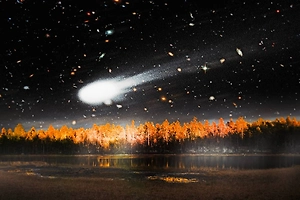
- The Chulyshman meteorite was entered into the international database on September 22, 2026 — the first for the Altai Republic and the 160th for Russia.
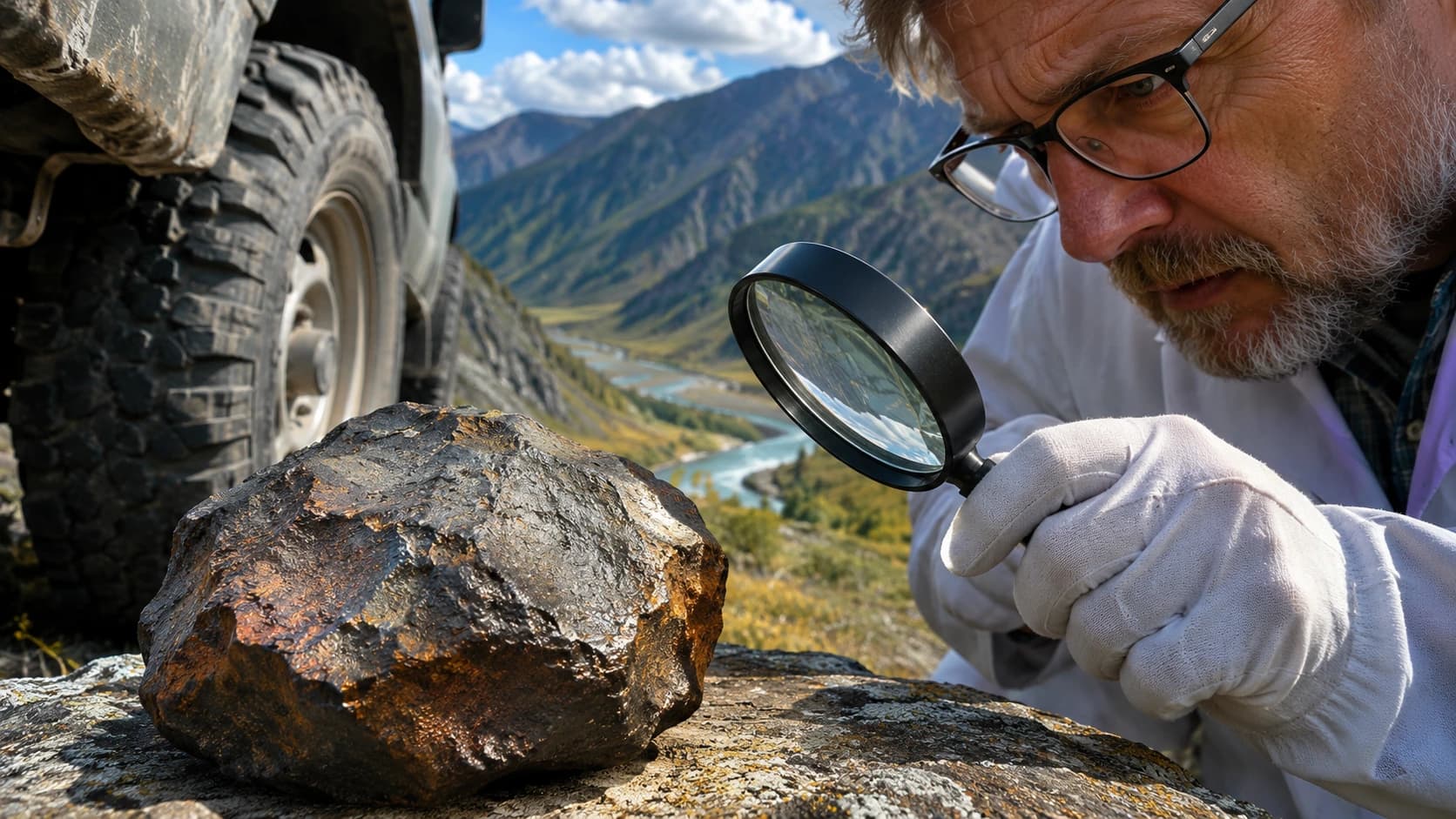
- The stone was found in 2005 in the Ulagan district; for a long time it was used to prop up a car wheel.
- Fragments will be distributed between the Central Siberian Geological Museum in Novosibirsk and the Samotsvety museum in Verkh-Uymon.
From a wheel chock to an international catalog
The story of the first officially recognized meteorite of the Altai Republic began in 2005, when a local resident found an unusual stone in the Ulagan district, on a slope near the Chulyshman River, by the Katu-Yaryk pass. As reported by the Sobolev Institute of Geology and Mineralogy of the Siberian Branch of the RAS, the find was for some time used in the most prosaic way — placed under a car wheel. The owner tried to find out the stone's origin and sell it, but ran into scammers, after which the rock lay with him for almost two decades.
Study and official registration
A new stage began in 2025: the owner handed the stone to Viktor Likhachyov, head of the Samotsvety (Gems) creative association in the village of Ust-Koksa's Verkh-Uymon, who suggested it was a space object, and the find reached specialists. Scientists of the IGM SB RAS Andrei Vishnevsky and Viktor Sharygin took up the research, studying the structure and chemical composition of the samples. On September 22, 2026, the find was entered into the international Meteoritical Bulletin database under the name Chulyshman — it became the first officially registered meteorite in the territory of the Altai Republic and Russia's 160th meteorite (according to Life.ru).
What the analysis showed
The meteorite was classified as an ordinary chondrite of the H5 group — the same type as the Chelyabinsk meteorite, Novosibirsk and Okulovka, whose fragment pierced the roof of a house in the Novgorod region last year. At the same time, the Altai find is distinguished by a high content of metal and sulfides and very strong oxidation: according to the researchers' estimates, the stone has been on Earth for at least several hundred years, and possibly considerably longer. Inside, olivine, pyroxenes, plagioclase, troilite, an iron-nickel alloy, chromite, pentlandite, ilmenite, native copper, as well as merrillite — a cosmogenic phosphate characteristic of meteorites — were found.
Where to see the find
Parts of Chulyshman will be distributed among museums: one fragment will be displayed at the Central Siberian Geological Museum in Novosibirsk's Akademgorodok, while the largest piece will remain in Altai — at the Samotsvety museum in the village of Verkh-Uymon. Thus, the stone has traveled from a car wheel chock to an officially registered space object with its own name in the international catalog.